
Need help applying this to your account?
Contact support and we will keep this article attached to your request.
Overview
Referral Factory can sit alongside your wellness website, consultation process and membership systems. You can capture and attribute the referral first, continue the prospective member into your normal consultation or signup journey, and tell Referral Factory when the prospective member reaches the milestone that should qualify the referral.
For strategy, reward and promotion ideas, explore our weight loss and wellness referral program guide.
The basic journey looks like this:
Existing client or member becomes a referrer → shares a Referral Link or QR code → prospective member details are captured → the person continues into the normal consultation and program journey → the first payment is made → the referral qualifies → the reward becomes Due.
Your audience, program process, qualifying milestone and reward may be different.
1. Decide who should become a Referrer
Weight loss and wellness businesses often start with satisfied clients or members who can make a relevant recommendation to a friend.
For example, a coaching program, fitness studio, nutrition service or wellness membership business might invite current members, former members or clients who have completed an initial program. Invite the chosen audience through email, a member portal, in-person conversations or follow-up messages, or let people join through the Branded Referrer Portal if self-sign-up is appropriate.
Choose the best way to promote your referral program
Wellness businesses often combine in-person interaction with ongoing member communication. Use QR codes at studios, clinics, gyms, consultations and member events, and give members a personal QR code or Referral Link through their referral experience. A Branded Referrer Portal supports ongoing access, while an On-Click Popup can provide access to the link, referrals and rewards inside a logged-in member area. Email or SMS follow-up after a positive customer milestone can invite the next referral.
Referral Factory captures and attributes the prospective member first. A CRM integration can connect that lead to the normal sales or client journey, while the CRM, client-management or billing system can record First Payment Made when the verified conversion occurs. Use the API, an inbound webhook or automation where another booking, client-management or billing system owns the event.
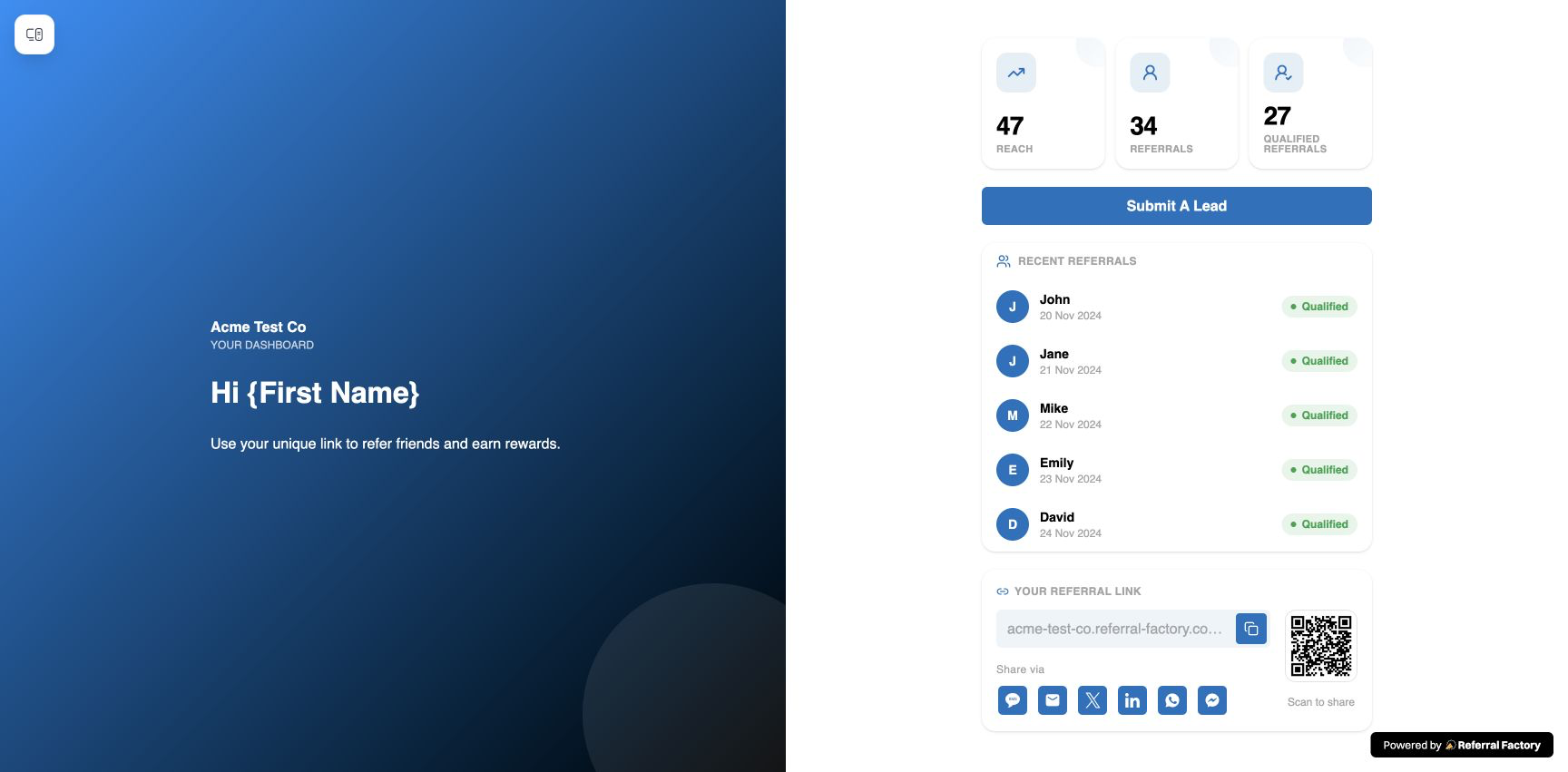
2. Give Referrers a place to access and share their referral link
Each referrer needs a way to get their own tracked Referral Link and share it with a friend or potential new member.
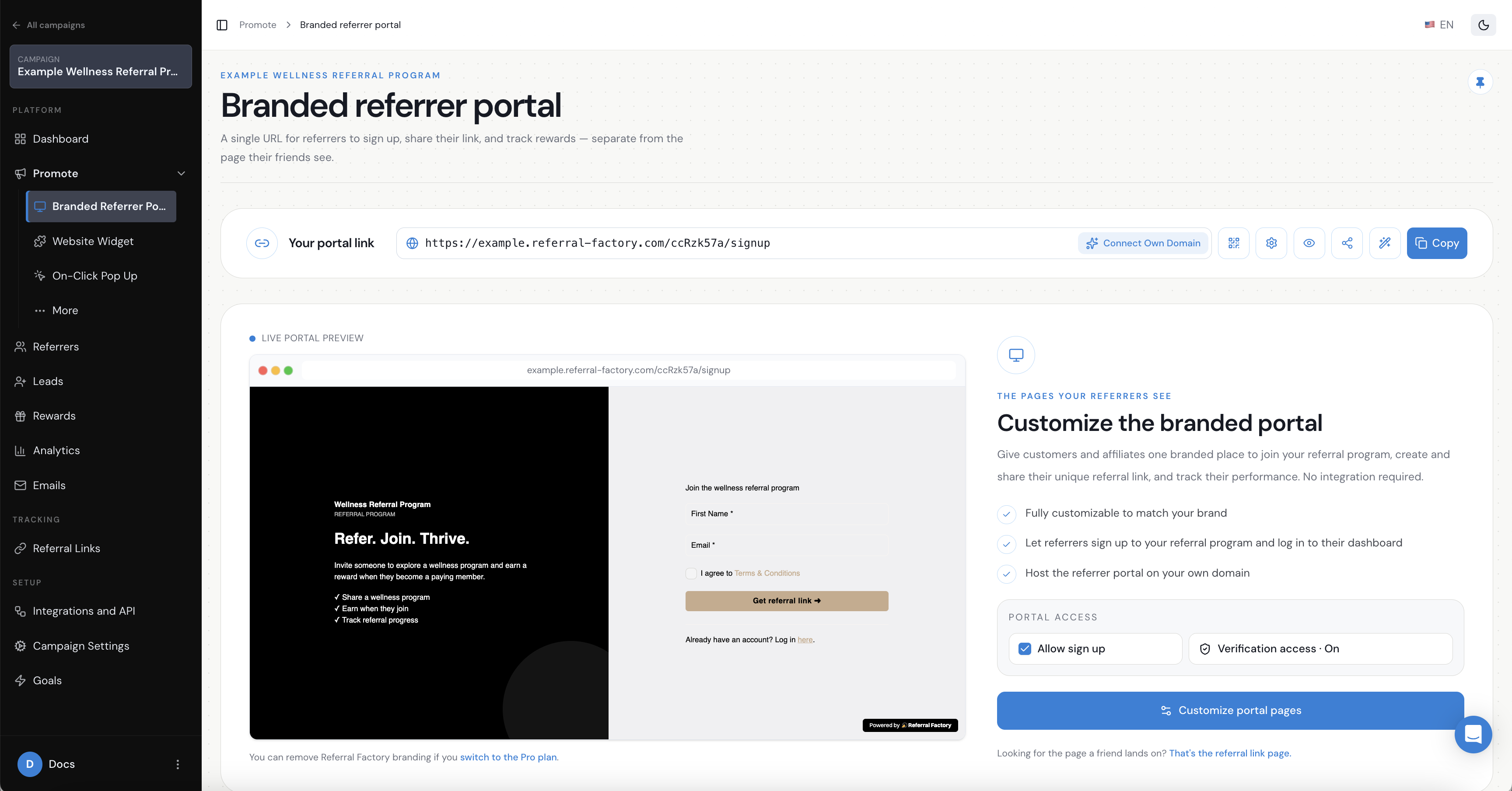
The Branded Referrer Portal can provide that experience. It includes sign-up, login and dashboard pages where referrers can access their link, share it and see referral activity. An On-Click Popup can provide the same access inside a logged-in member area, while a personal QR code or mobile-friendly Referral Link can work well at a studio, clinic, event or member meeting.
The portal does not need to replace your membership, booking, billing or client-management systems. Your existing systems remain responsible for member accounts, appointments and payments.
For more on the referrer experience, see How to create and use a branded referral portal.
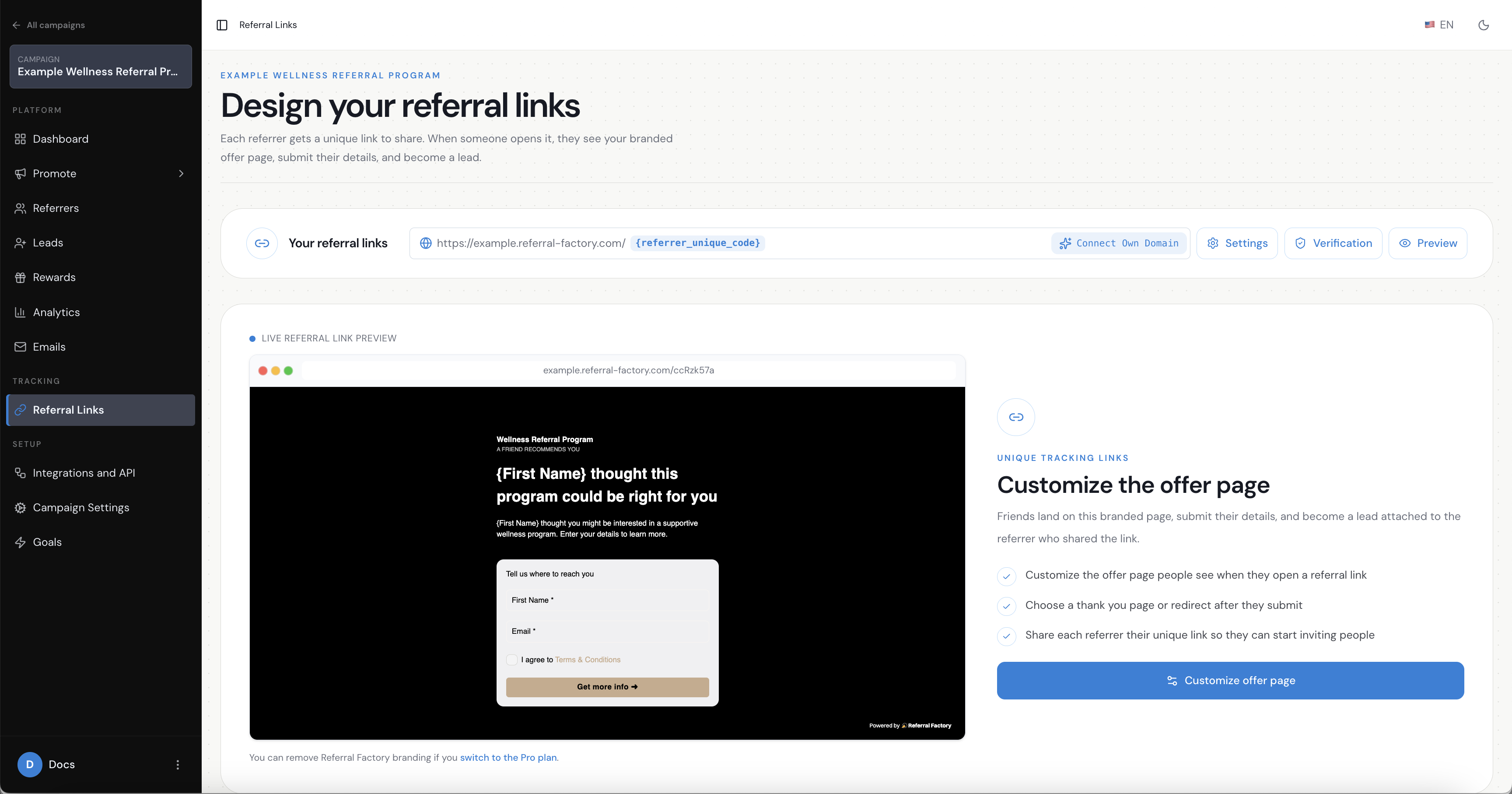
3. Create the Referral Link Page for the prospective member
When a referrer shares a Referral Link, the prospective member lands on the Referral Link Page. This page carries the referral context forward, introduces the program or service, captures the details needed to identify the lead and explains what happens next.
Keep the initial form simple. For example, collect only a first name and email address. Do not collect health, medical, weight-sensitive or other unnecessary personal information on the Referral Link Page. After submission, the prospective member can continue into the wellness business's existing consultation, assessment or membership journey.
See the Referral Link Page overview and How to design your Referral Link Page for the page setup options.
4. Continue the prospective member into your existing consultation and program journey
Referral Factory does not need to replace your booking, coaching, client-management or billing systems.
After the prospective member submits the Referral Link Page form, send them into the normal journey your business already uses. For example:
Referral Link Page → prospective member captured and attributed → consultation or assessment → program signup → first payment made.
The next step may live on your website, in a booking tool, in a client-management system or in a billing platform. Referral Factory keeps the lead connected to the referrer while your existing systems handle consultation, eligibility, signup and payment.
5. Decide what counts as a successful referral
A prospective member submitting the referral form or booking a consultation is not automatically a successful wellness referral. Decide which business event should qualify the referral.
Possible milestones include:
There is no single correct milestone for every wellness business. If your program has a meaningful paid commitment, make that the final qualifying event rather than an early enquiry.
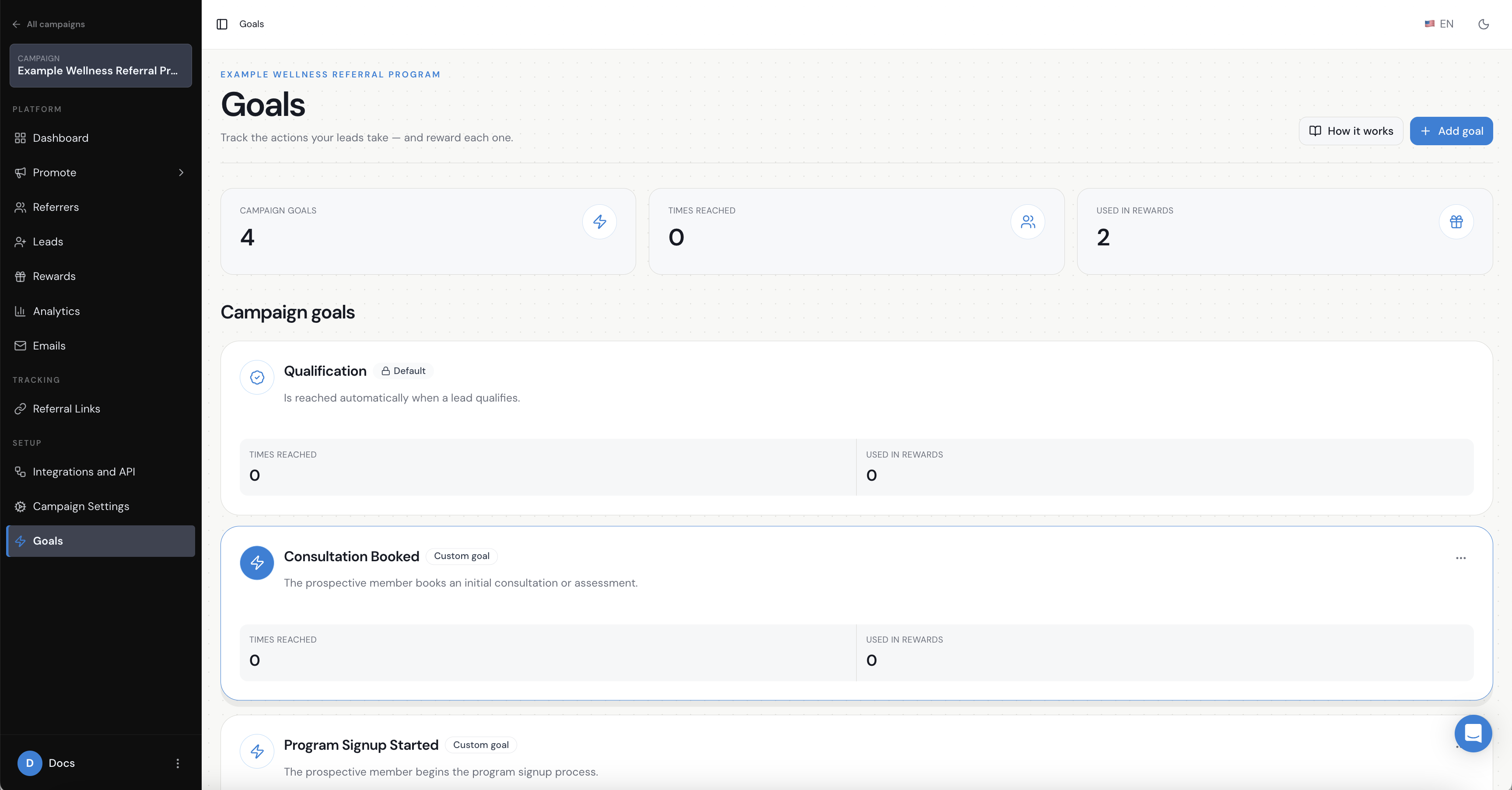
In this example, the journey is represented by three additional records under Goals. In Referral Factory, added records are labelled Custom goal:
1. Consultation Booked: the prospective member books an initial consultation or assessment.
2. Program Signup Started: the prospective member begins the program signup process.
3. First Payment Made: the prospective member makes the first payment for the program or service.
The example rewards trigger only when First Payment Made is reached. That illustrates the difference between capturing a lead, tracking progress and reaching the final reward condition.
- consultation booked;
- assessment completed;
- program signup started;
- first payment made; or
- another business-defined milestone.
6. Decide how Referral Factory will know when the milestone happens
The milestone is the business action you want to track. These records are managed under Goals in Referral Factory.
The milestone and the method used to record it are separate decisions. First define the business event and the evidence that confirms the first payment. Then choose how your systems will send or record that event in Referral Factory.
Depending on your systems, you may use:
Keep early stages visible if they help your team follow up, but do not make a consultation booking the final qualifying event unless that matches your economics and customer promise.
- a CRM integration, where relevant;
- the API;
- an inbound webhook;
- an automation platform such as Zapier, Make or n8n; or
- manual qualification by your team.
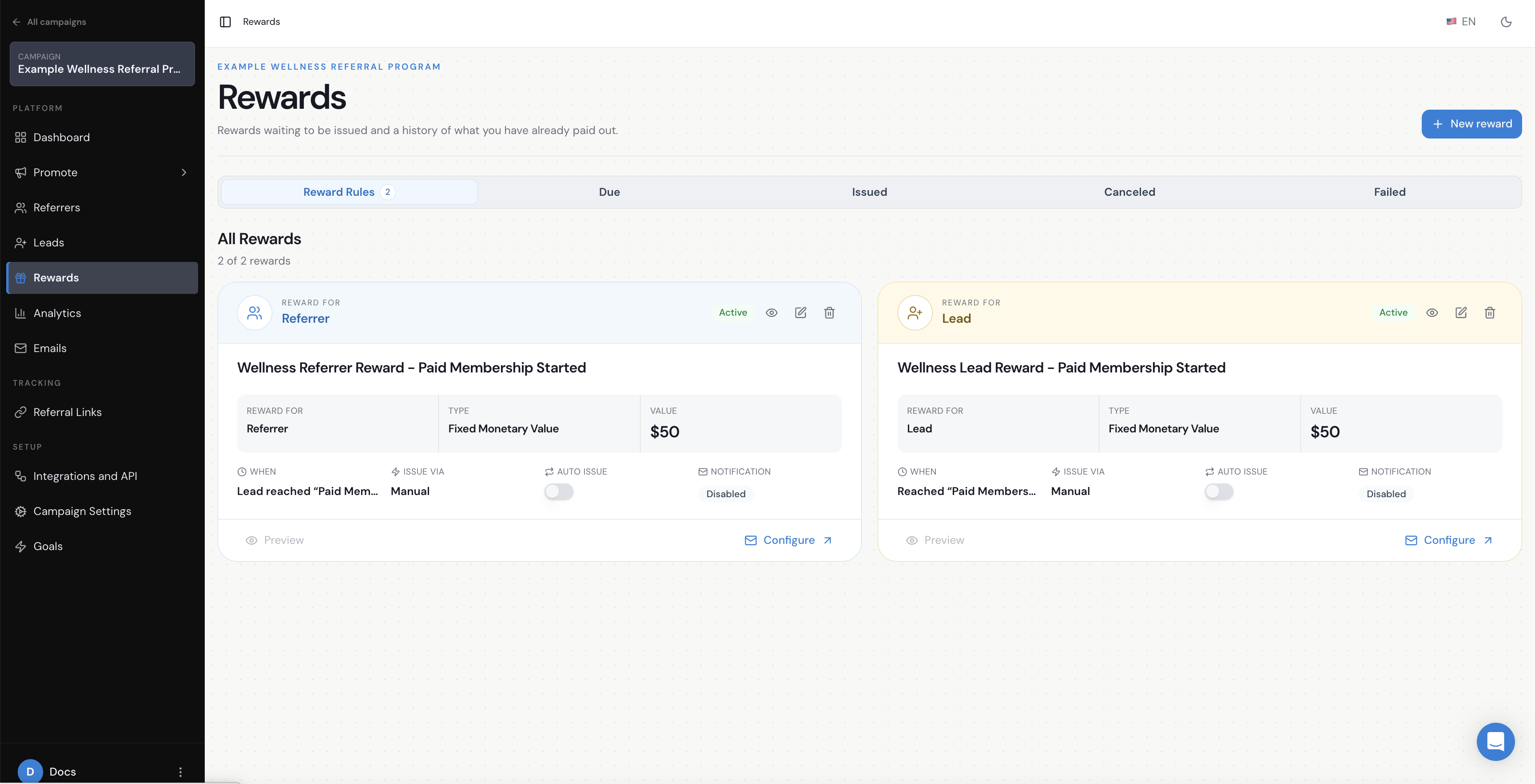
7. Set up the reward after the first payment
For example, both the referrer and the lead could have a manual fixed-value reward. Both rewards could be tied to the First Payment Made goal, with automatic issuance turned off.
This is only an example. You can reward the referrer, the new member or both. You can also use a membership credit, gift card, cash reward or another incentive. See How do I set up rewards for my referral program? for reward setup guidance.
Remember the difference between Due and Issued:
- Due means the reward has been created because the qualifying condition was met, but it still needs to be issued according to your process.
- Issued means the reward has been paid or delivered.
8. Test the full referral journey
Check that the referrer receives a unique link, the prospective member is captured and attributed correctly, the consultation or program destination is correct, the Goals are recorded as intended, First Payment Made is the only trigger for the example rewards, and no reward is Issued automatically unless that is intentional.
Important things to consider for wellness businesses
Keep the operational details short and decide how you will handle:
- existing members or prospects already in your membership system;
- duplicate referrals for the same person;
- self-referrals and staff referrals;
- cancellations, refunds and paused memberships;
- eligibility, consent and privacy requirements;
- avoiding health, medical or weight-sensitive information on the Referral Link Page; and
- collecting only the information actually needed to identify and follow up with the lead.
The wellness example in one view
For example, a wellness referral program can use this structure:
Existing client or member → Branded Referrer Portal or QR code → unique Referral Link → Referral Link Page → existing consultation and program process → Consultation Booked → Program Signup Started → First Payment Made → manual rewards become Due.
Use the same structure as a starting point, then change the audience, fields, program destination, milestones and reward rules to match your own wellness business.