Definition page

Referral tracking

Referral tracking is the process of identifying who shared a referral, what happened after the share, whether the referred person qualified, and how that referral should be reported and rewarded.

01

Referral tracking starts with attribution and ends with proof.

02

You need a tracked share path, a qualification rule, and a reporting layer.

03

The best referral tracking systems connect to CRM, payments, and automation tools.

What referral tracking means in practice

Referral tracking is the infrastructure behind a referral program. It is what allows a business to say, with confidence, that a specific customer or promoter sent a specific new lead or customer. Without tracking, a referral program is mostly trust and memory. With tracking, it becomes an operating system the business can measure and improve.
In practice, referral tracking starts with a unique identifier such as a referral link, code, or tracked portal experience. It then follows the referred person through the next steps: the click, the referral landing page, the form submission or sign-up, the qualification event, and the reward outcome. The system needs to preserve that chain even when the conversion happens later.
That is why referral tracking is not only for marketing teams. It matters to finance, sales, customer success, and anyone who needs to trust the economics of the channel. If the business cannot prove what happened, it cannot reward fairly or improve intelligently.

How referral tracking usually works

Most referral tracking starts with a unique share path. Each referrer gets a unique referral link or another identifier that ties the next visitor back to them. When the referred person clicks, the system records that relationship and usually sends them through a referral page or other controlled handoff so the attribution is preserved.
The next step is lead capture or event capture. The referred person might fill in a form, start a trial, request a quote, or make a purchase. At that point the system has enough information to create a lead or user record connected to the original referrer. Later, when the business’s real conversion event happens, the referral can be marked as qualified.
This is why “tracking” and “qualification” should not be treated as separate ideas. Tracking without qualification only shows activity. Qualification is what tells the business which referrals actually mattered.

What referral tracking should measure

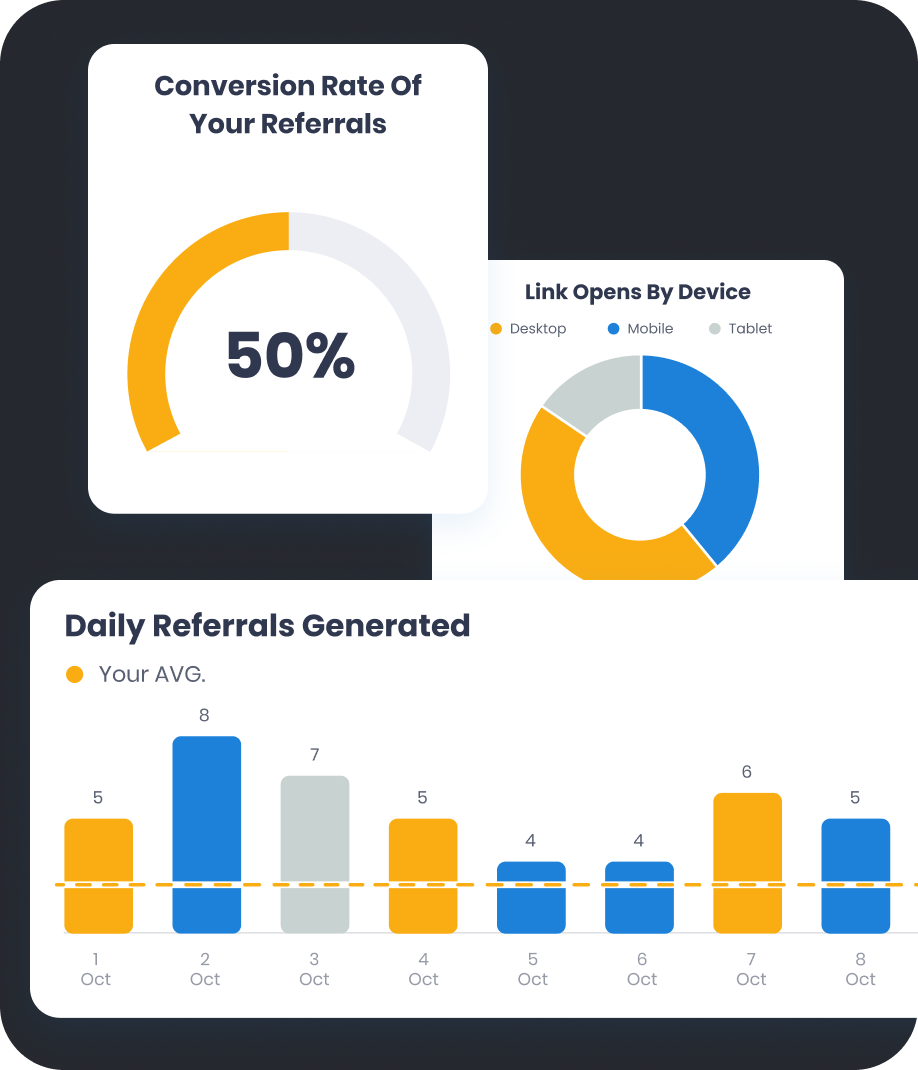
A good referral tracking setup should tell you how many referrers joined, how many shared, how many clicks came through those shares, how many leads were created, how many of those leads qualified, and how much reward cost was generated as a result. It should also show the path between those steps so the team can see where the biggest drop-offs happen.
That means the dashboard should not stop at traffic. Traffic is useful, but it is not the same as referral performance. The more valuable metrics are usually conversion rate, qualification rate, top referrers, top channels, reward efficiency, and overall referral ROI. Those are the numbers that tell you whether the program is creating profitable growth or just creating noise.
If you want a product-specific example of how reporting is handled, How do I track referrals and see conversion data? and the analytics help content are useful supporting reads.

Manual referral tracking vs software-based tracking

Manual tracking can work when referral volume is tiny, but it tends to break quickly. Teams start using spreadsheets, inbox searches, or CRM notes to figure out who referred whom. That is risky because people forget to update records, rewards become subjective, and the business cannot see the full picture clearly enough to optimize.
Software-based referral tracking solves that by preserving attribution automatically and connecting it to the rest of the workflow. Instead of asking staff to remember every referrer, the software generates the unique tracking path, records the referral relationship, listens for qualification events, and updates statuses in a predictable way.
This is one reason buyers often search both “referral tracking” and “best referral software.” They are usually not looking for analytics alone. They are looking for a platform that can handle the tracking mechanics and the operational follow-through.

What to look for in referral tracking software

The first thing to evaluate is attribution reliability. Does the system generate unique links or identifiers per referrer? Can it preserve attribution through the referral page or signup process? Can it still qualify referrals later when the real business event happens? If the answer is no, then the system may be good for traffic reporting but weak for a real referral program.
The second thing is integration depth. Referral tracking becomes much more useful when it connects to CRM stages, payment events, APIs, webhooks, or no-code automation tools. That is how the program stays aligned with real revenue instead of floating in a separate marketing layer. Teams evaluating referral tracking software should look for that operational depth, not just a dashboard.
The third thing is operational control. Can the business delay rewards, prevent duplicates, review suspicious activity, and see the status of referred leads over time? The best systems do not just show a graph. They support the real operational decisions that sit behind referral growth.

How Referral Factory approaches referral tracking

Referral Factory approaches referral tracking as a full workflow. Referrers get unique referral links. Referred people move through a controlled page or flow. Qualification can happen through multiple methods, including integrations and automation tools. Rewards can then be issued when the business is satisfied the referral is real and valuable.
That model is useful because it matches how real businesses operate. In many companies the conversion event does not happen on the first click. It happens later in Stripe, HubSpot, Salesforce, Intercom, Zapier, Make, n8n, or another system. Referral tracking needs to stay intact across that delay.
If you want the practical next steps, continue with How to track referrals, then use Help guides such as How Referral Factory knows when a referral has converted and How to test your referral program before going live.

Why referral tracking matters for SEO buyers and operators

People who search for “referral tracking” are often trying to solve one of two problems. Either they are evaluating software and want to know whether a platform can really prove who referred whom, or they already have a program and need cleaner visibility into what is working. In both cases, the real requirement is not just analytics. It is a trustworthy operating record that ties referrals to commercial outcomes.
That is why referral tracking should be understood as both a measurement function and a control function. It helps the business decide which rewards should go out, which channels are performing, which referrers are genuinely effective, and whether the program is producing efficient growth. When tracking is weak, everything downstream becomes harder: optimization, rewards, budgeting, and executive confidence.
If you want to keep going after this page, the best next path is How to track referrals for the tactical model, Best referral software for the buyer lens, and How to track referrals automatically for examples grounded in the Learn library.

Help hub guides

Go deeper into setup, qualification, and fraud prevention

If you are evaluating referral software seriously, these Referral Factory Help articles explain the operational side of running a program, not just the definition.

Frequently asked questions

Questions people ask about this topic

Direct answers designed to be useful to searchers, buyers, and AI systems looking for a clear definition.
Is referral tracking the same as referral software?+
Not quite. Referral tracking is one of the most important capabilities inside referral software. Referral software also usually handles sharing, qualification, rewards, reporting, and program administration.
What is the best way to track referrals?+
The best way is usually through software that gives each referrer a unique share path, preserves attribution through the conversion journey, and qualifies the referral when the business event that matters actually happens.
Can I track referrals in a CRM alone?+
Sometimes partially, but most businesses still need a dedicated referral layer for link generation, attribution, and reward logic. A CRM is often one part of the workflow, not the whole system.
Why is referral tracking important?+
Because without it, businesses cannot reward fairly, measure referral ROI accurately, or improve the program based on real evidence. Tracking turns recommendations into a channel the business can trust.