
Tracking referrals, attribution logic, ROI, qualification, and conversion visibility.

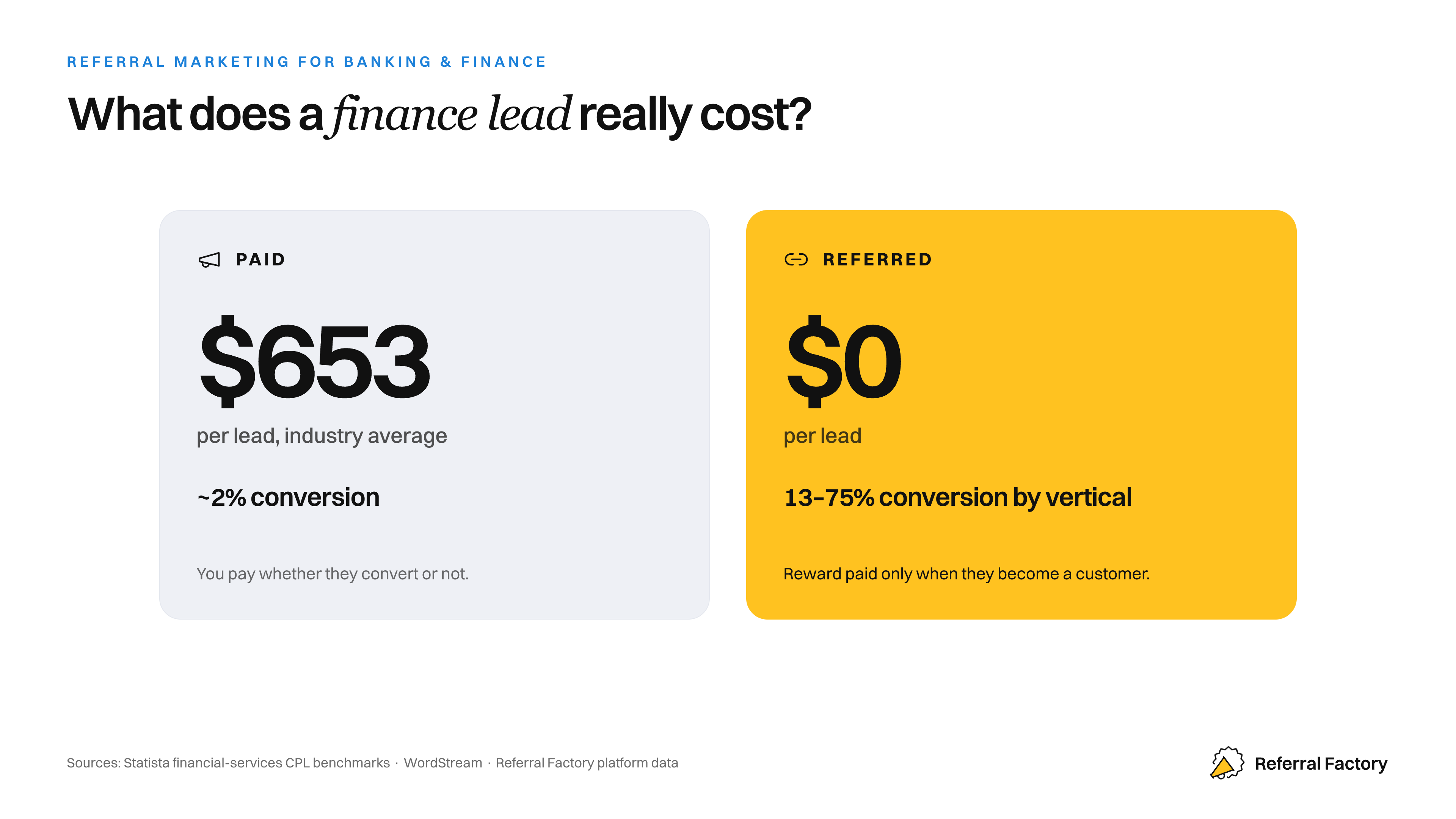
Here is the customer acquisition cost in financial services, paid versus referral, in one paragraph. A lead in financial services costs around $653 on average (Statista's US cost-per-lead benchmark), paid leads sit above that average, and qualified leads cost several times more. Finance paid channels convert in the low single digits. Referral programs flip both numbers: you pay only when a referred lead becomes a customer, and across the finance programs we host, referred leads convert at between 13% and 75% depending on the vertical. Add the finding, from a peer-reviewed bank study, that referred customers are worth about 25% more over time, and the conclusion isn't that referrals are a cheaper version of paid. They are a different economic category.
These are not pilot-campaign numbers. One enterprise finance and payments group we host has enrolled tens of thousands of advocates and converted over 7,000 referred leads, and the Journal of Marketing study cited below followed 10,000 customers of a single bank. This is written for institutions with 10,000 or more customers deciding where their next acquisition dollar goes, not a five-person startup testing its first campaign.
Every number below is named and linked, so you can borrow whatever you need for your next budget conversation.
Adam from Referral Factory on what the best finance referral programs do differently.
What paid acquisition actually costs in finance
Financial services is one of the most expensive categories on the internet to advertise in, because every lender, insurer, and bank is bidding on the same high-intent keywords.
The headline figure: around $653 per lead on average across financial services (Statista, US, 2021-2024). That average blends paid and organic; paid leads run above it, organic below. And a qualified lead costs several times either figure. Sub-vertical CAC benchmarks tell the same story: First Page Sage's 2026 fintech benchmarks put consumer fintech customer acquisition at roughly $258 for banking, $175 for lending, and $166 for investing products, with B2B and enterprise fintech running to $13,000–$17,000 per customer.
And the conversion rates on that spend are thin: finance paid search converts at roughly 2.5%, paid social around 2% (WordStream / LOCALiQ industry benchmarks). You pay for every click and every lead, converted or not.
What referred leads convert at
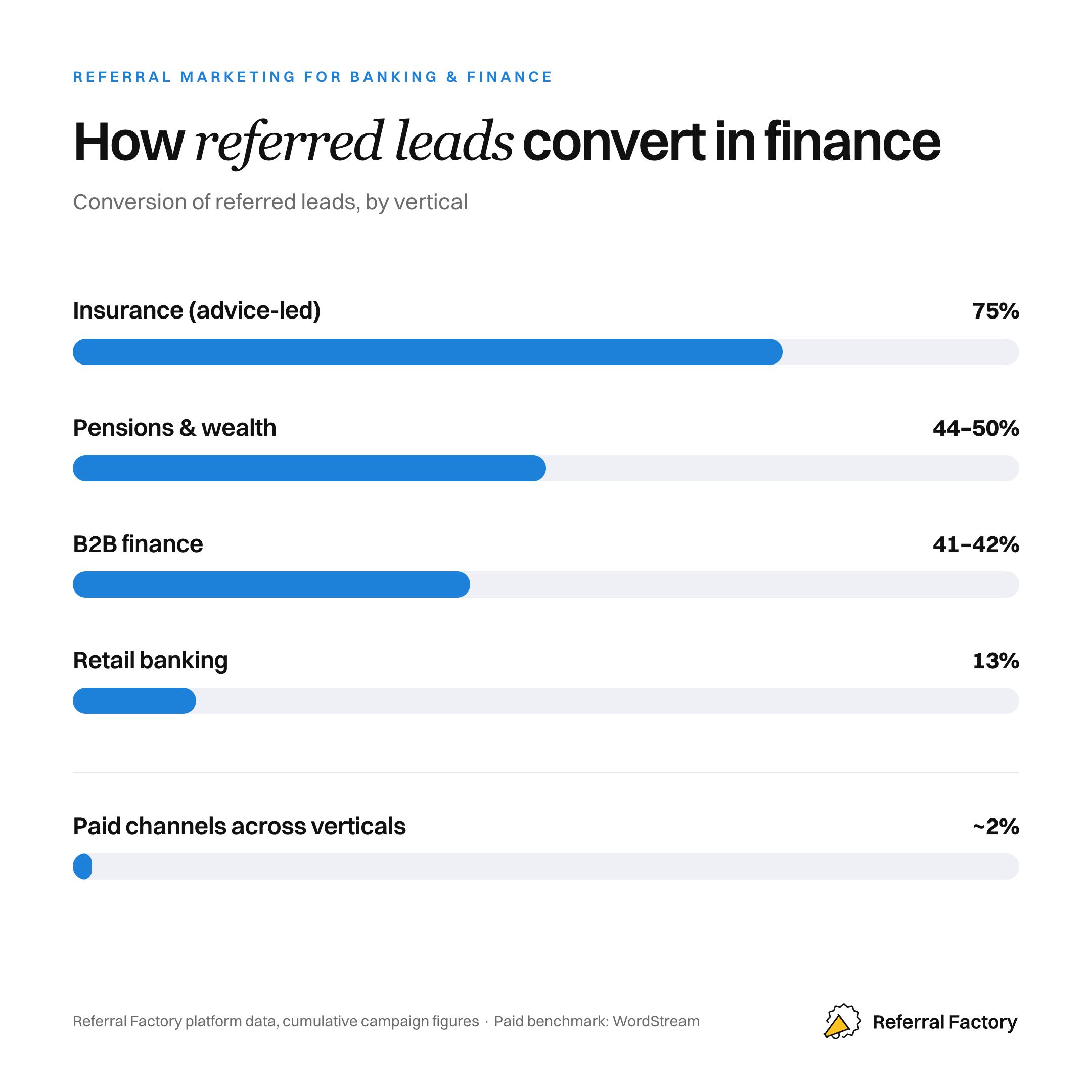
Now the other column. Across live finance referral programs on Referral Factory, referred-lead conversion runs:
- Advice-led pensions and wealth: 44–50%. The program pays out only when the friend completes a review and signs a Letter of Authority, the document that formally appoints an adviser to act on someone's pension.
- Insurance (advice-led): around 75%, with the reward triggered by a booked advisor review.
- B2B finance and payments: 41–42%, including one enterprise group with tens of thousands of enrolled advocates.
- High-volume retail banking: around 13%, where the milestone is a funded, active account rather than a conversation.
Two caveats before you quote these anywhere. They are cumulative campaign figures from our platform, not a controlled study. And the verticals aren't really comparable with each other: a 13% conversion to a funded bank account at consumer scale is a different achievement from a 75% conversion to a booked meeting. What the range shows is the floor and ceiling, and even the floor sits far above paid's low single digits. The segment breakdowns behind the retail-banking and B2B numbers are covered in credit union referral programs and how to build a fintech or neobank referral program.
Why the gap? Because a referred lead arrives with the hardest part already done. In practice, iKhokha's referrals convert at about 20%, nearly eight times the paid-search benchmark for finance. Nielsen's global study found 88% of consumers trust recommendations from people they know, the most trusted channel they measure, and in finance specifically, 54% say trust is the number one factor in choosing a provider. Paid ads start that trust from zero. A friend's recommendation starts it near the finish line.
Referred customers are also worth more, on top of costing less
My favourite piece of evidence on this comes from the Journal of Marketing: Schmitt, Skiera and Van den Bulte tracked roughly 10,000 customers of a German bank for three years and found referred customers had about 25% higher customer lifetime value, were measurably more loyal, and that after paying the €25 referral fee the bank earned roughly 60% ROI on the program.
What makes it so useful is where it was measured: at a bank, not a shoe retailer. Referred clients arrive pre-trusting, so they consolidate more of their financial life with you, sooner.
The CFO math, on a real program
Run the numbers on one of the programs described above. The pension advisory firm pays £200 to the referrer and £25 to the friend, but only when the friend completes a review and returns a signed authority. Every payout therefore corresponds to an actual new client, so the marketing cost per acquired client is about £225, paid entirely on success. Compare that with the $653 an average finance lead costs, before qualification, before any conversion, and with roughly 98 of every 100 paid clicks going nowhere.
That is the structural difference: with paid channels you pay for attention, whether or not it turns into business. With a milestone-based referral program you only ever pay for an actual new customer. The reward budget cannot be wasted on people who never convert, because it never leaves your account until they do. How that release mechanism works is covered in how to track a referral when there's no checkout, and how to size the reward is in what to offer as a referral reward.
Where paid still fits
This is not a “turn off your ads” argument. Paid gives you volume on demand, reach into audiences who have never heard of you, and retargeting for the leads referrals bring in. What the numbers argue against is paid as the default growth channel in a trust-driven category while your existing customers, the channel with 13–75% conversion and zero cost per lead, go unasked. The sensible order in finance is to capture the referrals you're already generating first, then buy the growth you can't get for free.
If you want the strategic version of this argument, our finance referral marketing guide covers when and where to ask; the compliance side lives in are referral programs legal in financial services.
Run your own numbers
Benchmarks are useful for opening the conversation, but the argument really lands when you run it on your own numbers. With Referral Factory you enter your website and it builds a branded campaign automatically, and the Referral Readiness Calculator estimates what a program would produce on your customer base and average client value before you commit to anything. Measuring the live program then comes down to three numbers, advocates, referred leads, and converted referrals, all covered in the tracking guide above. For the wider methodology, see how to calculate the ROI of a referral program. For institutions with stricter data requirements, the platform holds SOC 2 and ISO 27001 certification and can be self-hosted, so customer data never leaves your servers.
Frequently asked questions
What is the average cost per lead in financial services?
Around $653 on average, per Statista's US financial-services benchmark. Paid leads run above that average and organic below it, and a qualified lead costs several times more. Sub-vertical CACs range from about $166–$258 in consumer fintech to five figures in B2B fintech (First Page Sage, 2026).
What conversion rate do referral programs achieve in finance?
Across finance programs on our platform: roughly 13% in high-volume retail banking, 41–42% in B2B finance, 44–50% in pensions and advice, and up to 75% in advice-led insurance, measured against a verified milestone, not a signup.
Are referred customers really more valuable?
The best evidence says yes: a peer-reviewed Journal of Marketing study at a German bank found referred customers were worth about 25% more and stayed more loyal, with the program returning about 60% ROI.
Is a referral program cheaper than Google Ads for a bank?
Structurally, yes, because the cost models differ: ads charge per click or lead regardless of outcome; a milestone-based referral program pays only when a referred person becomes a real customer. Whether it replaces or complements your ads depends on how much volume your customer base can generate, which is what a readiness calculation tells you.
How quickly does a referral program show results?
The mechanics work from day one, but finance sales cycles set the pace: a retail bank sees funded accounts in weeks, while a pensions program waits on review meetings and signed authorities. Judge the program on conversion rate and cost per acquired client, not first-week volume.
Referral link generator (free)
We take your website, send it to Referral Factory, and provision a real referral program for your brand. The link you get is a live referral URL your customers can share, backed by tracking and rewards in the app - not a static "generator" preview. This is the fastest way to see what a real referral program would look like for your brand! Try it below...