
Proof-driven examples of businesses growing through referrals and referral marketing.
Short answer: iKhokha, a regulated South African fintech, built a customer referral program with Referral Factory rather than building one in-house. Thousands of business owners have signed up to refer, referred businesses convert at close to one in five (nearly eight times the rate of paid search), and the program runs inside a regulated, fraud-controlled business without tying up a single engineer. Here's the full fintech referral program case study.
🏦 Industry: Fintech / Payments 💳 Business type: B2B, serving small businesses 🌍 Location: South Africa
iKhokha helps small businesses across South Africa take card payments and grow, with card machines, payment tools, and access to funding when they need it. Its customers are business owners, and business owners talk to each other about the tools that help them run their business. So when iKhokha wanted to grow without spending more on paid ads, it built on the strongest asset it already had: happy customers who were glad to recommend it to other business owners.
This is how a regulated fintech turned that word of mouth into a measured, fraud-controlled growth channel, the call it made to buy referral software rather than build its own, and what the results tell any banking and financial services business weighing up the same move.
Why referrals work for a B2B fintech like iKhokha
iKhokha already had a strong name in the market, and its customers were recommending it to other business owners without being asked. But that word of mouth was happening at random. There was no way to see who was referring, no way to reward them, and no way to encourage more. Left unstructured like that, word of mouth stays small. It never becomes something a business can actually rely on to grow.
A referral program changed that. It turned those scattered, unpredictable recommendations into a channel iKhokha could measure, reward, and grow on purpose, the same way it would treat any other route to new customers. It also brought those customers in for far less than paid advertising. And while the cost of paid ads climbs every year, the cost of a referral doesn't. That combination, high trust and low cost, is why referrals work so well for a B2B referral program in financial services.
The results
| Metric | Result |
|---|---|
| Business owners signed up to refer | Thousands |
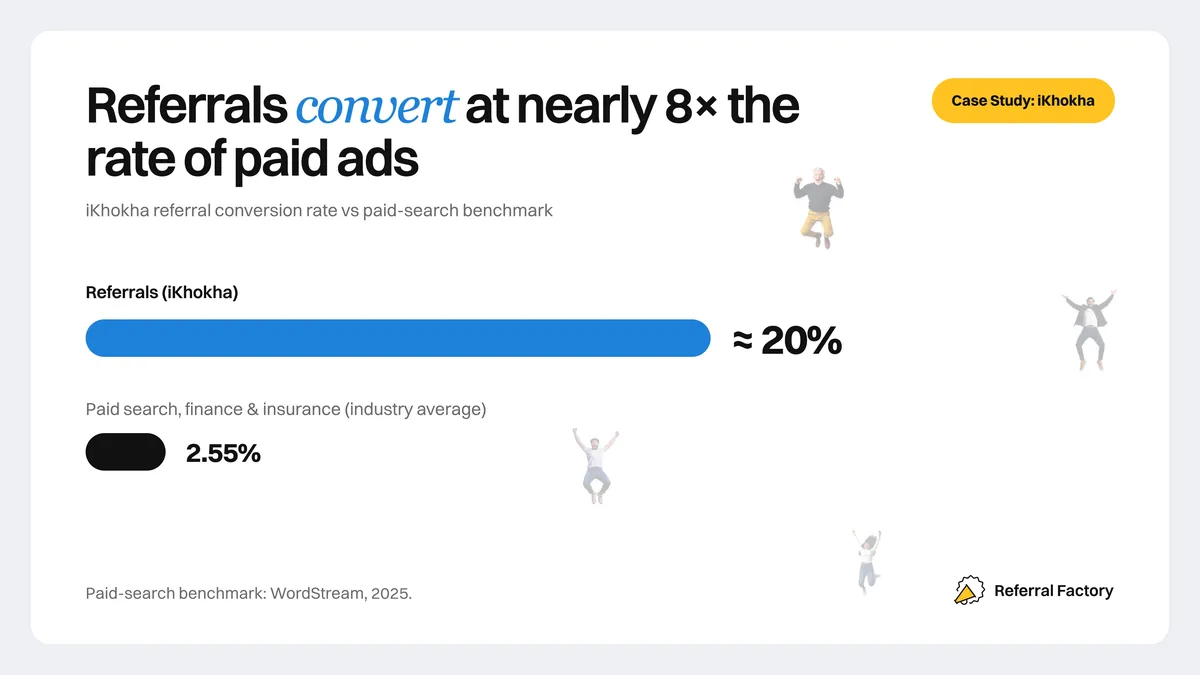
| Referral-to-customer conversion | About 1 in 5 (~20%) |
| Paid-search conversion, finance & insurance | 2.55% (WordStream, 2025) |
| Referrer reward | R500 cash |
| New-customer reward | 10% off a card machine |
| Reward pays out when | The referred business is verified and has traded R1,000 |
Thousands of business owners have signed up to recommend iKhokha. These are real customers who chose to put their own name behind the company, at a scale most paid channels never reach. Close to one in five of the businesses they refer goes on to become an active, paying customer. By comparison, only about 2.55% of people who click a paid search ad in finance and insurance go on to become a customer (WordStream, 2025). In other words, iKhokha's referrals convert nearly eight times better than paid advertising, at a fraction of the cost. Another B2B financial services business running Referral Factory converts two of every three referrals, so iKhokha's result is far from a one-off.
And because the program runs on automation, it produces those numbers without pulling engineers off core product. That last point is the one most financial services teams get wrong about referrals, so it's worth looking at how iKhokha decided to run it.
Why iKhokha chose to buy, not build
As a fintech, iKhokha has its own in-house development team, so building the program from scratch was well within reach. It chose not to. Rather than tie up developers building, and then having to maintain something that wasn't their speciality, iKhokha launched quickly with software that already existed and ran it as a test first. It kept the reward simple, got the program live fast, and let the early results make the case for carrying on. As Cindy Reynders, iKhokha's Head of Lifecycle Marketing, puts it, "it's proven its value."
This is the reframe that matters for any larger business: speed-to-value isn't just for companies that can't build. iKhokha could have spent six months building. It chose to spend that time on the product only it can make, and let a specialist tool run the referral program. The decision made sense even to the people who could have built it themselves.
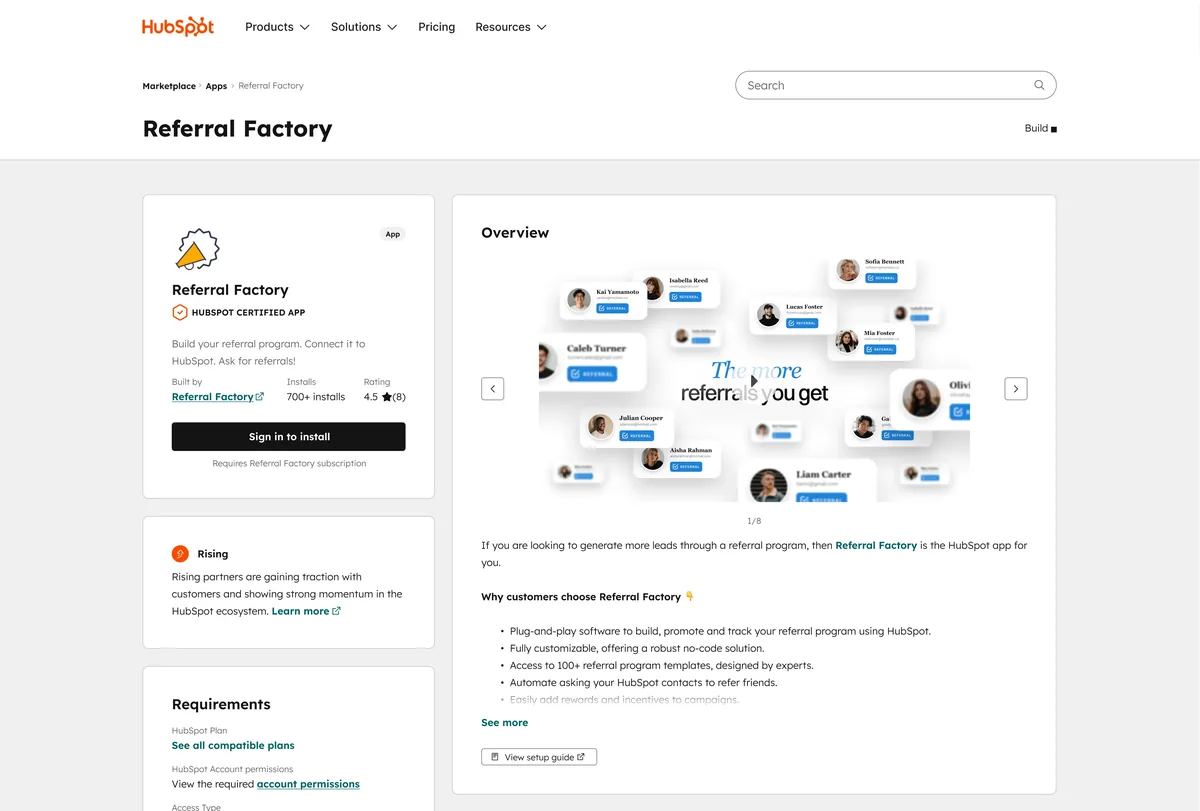
iKhokha runs its CRM and marketing on HubSpot. That's where the team found Referral Factory, a HubSpot Certified App that integrates directly with the platform. The whole program was set up without any help from the engineering team, and it sits entirely with iKhokha's marketing team: an automation specialist builds the landing pages and the automated emails, and a marketing manager answers customer questions. It's a lot of program for a small footprint, which is exactly the point.
If your assumption is that a referral program means a big development project, iKhokha is proof that it doesn't have to be. For a larger business, this is a full-featured customer referral program that a marketing team owns end to end.
How the program works
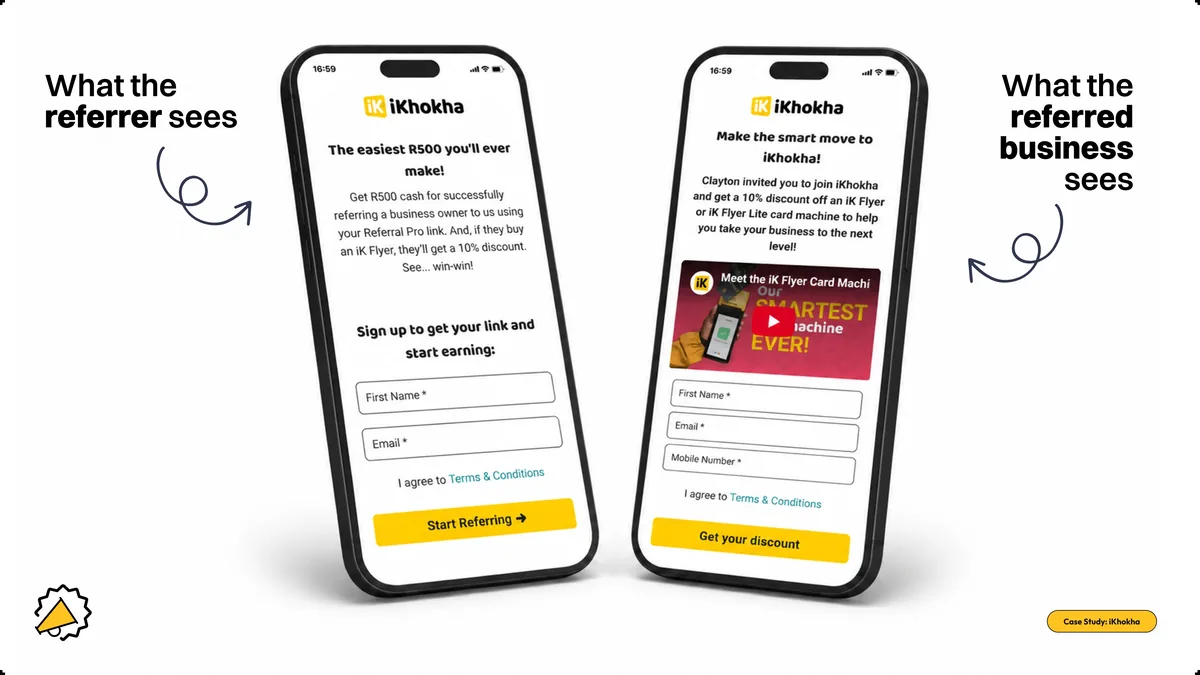
The reward is simple, and both sides get something, which is what makes a double-sided referral program easy to share.
- The person making the referral earns R500 (South African Rand) in cash for each successful one.
- The new customer gets 10% off their card machine.
- The R500 is only paid once the referred business is genuinely up and running, meaning it has signed up and processed at least R1,000 in payments.
That last point is where iKhokha is smart. They don't pay a reward just because someone signed up. They pay it once the new customer is actually trading. It means every reward iKhokha pays out is tied to a real, paying customer, and it makes the numbers ones a finance team will accept. Every referral is tracked automatically through the CRM, the same way iKhokha would want to track referral customers and rewards across any channel.
There's a B2B lesson in who gets rewarded, too. iKhokha pays the R500 in cash to the person who makes the referral, not as a discount or account credit to their business. In B2B this matters more than it sounds, because the person recommending you is often not the person who would feel a company discount. A personal cash reward is what actually gets them to send the referral. It's a small design choice that makes a big difference to how many referrals you get, and it's one of the things a good B2B referral program gets right that a consumer one doesn't have to think about.
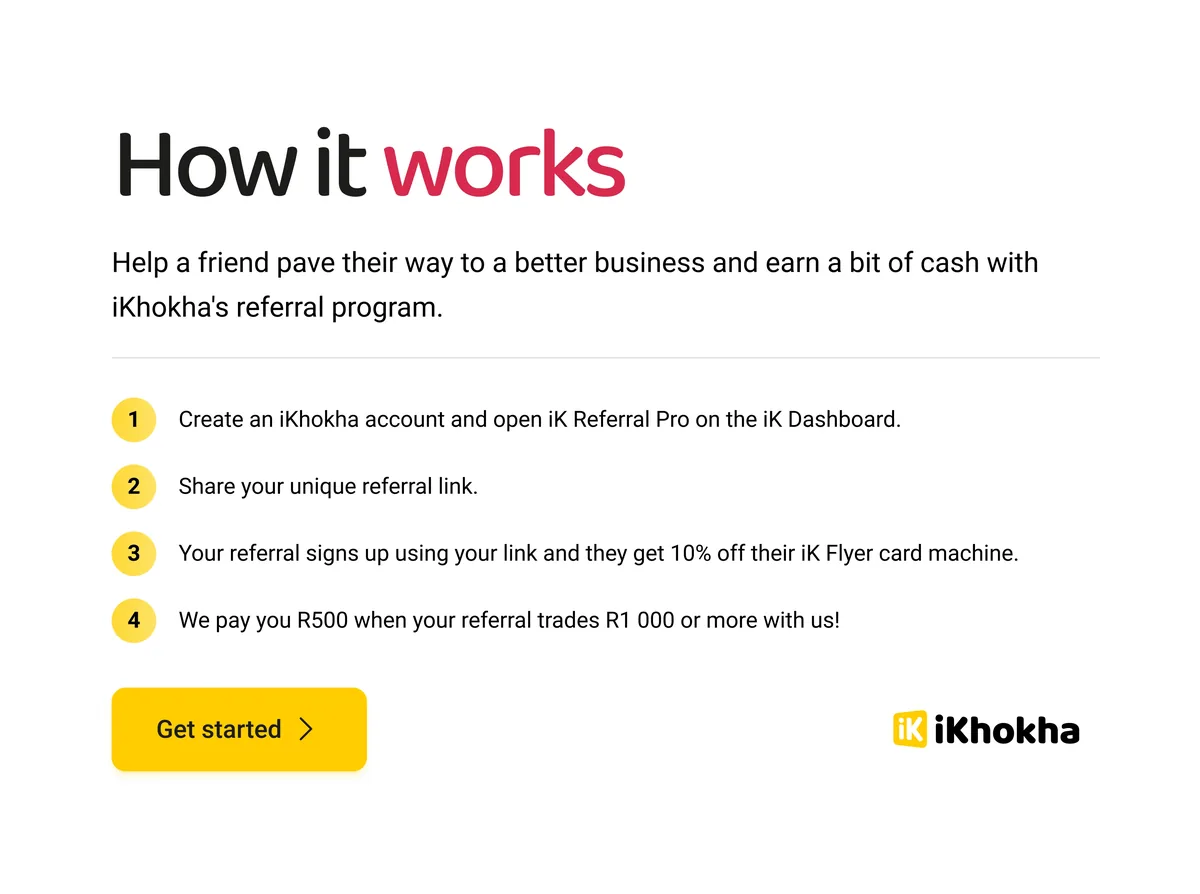
iKhokha also put together a short video walking through the program from the referrer's side.
Designing out fraud
For a regulated business, the interesting part isn't the reward, it's the control around it. Any reward will attract a few people who try to cheat it, and the bigger the reward pool, the bigger the abuse surface. iKhokha planned for that from the start, which is exactly what referral software for regulated industries has to make possible.
An earlier version of the reward was simpler, and it left a gap. Someone dishonest could sign up a card machine, put through one small payment just to meet the qualifying amount, collect the reward, and then walk away from the machine. Rather than accept that cost, iKhokha redesigned the program so rewards are only paid when a referral becomes a genuine, paying customer. On top of that, iKhokha checks the IP addresses behind referrals before it pays out, so it can spot a syndicate trying to game the program from a single location.
The lesson for any finance business running a reward program: only pay out when a referral turns into a real, paying customer, not just a sign-up, and check for fraud before you pay. iKhokha does both.
A bonus most businesses miss: you can go beyond your customers
For most businesses, the biggest referral opportunity is exactly where iKhokha started: their own customers. Customers already trust you, they already use you, and they talk to other people in the same position. iKhokha's own customers are exactly that kind of engaged audience, and they're where most of those referrers come from. It's where nearly every business should begin.
iKhokha then found something extra. Some of its most active referrers aren't customers at all. They're independent business people who have turned referring into a small business of their own. Some write articles comparing iKhokha to other payment providers, include their referral link, and bring in a steady flow of new sign-ups, earning R500 for each business they bring on board. As Reynders puts it, some of these referrers have "made a real business out of it."
The point isn't that every company should run an affiliate program. It's that a flexible referral platform lets you reward anyone you choose, so you're not limited to one group of people. iKhokha runs referrals from its own customers, from affiliates, and from influencer-style promoters through the same system, and it decides who is allowed to take part. Customers first, and then whoever else earns their place. You can see the same range across these fintech referral program examples.
A referral program needs ongoing attention
One useful point from Reynders for anyone about to launch: a referral program only keeps working if you keep giving it attention.
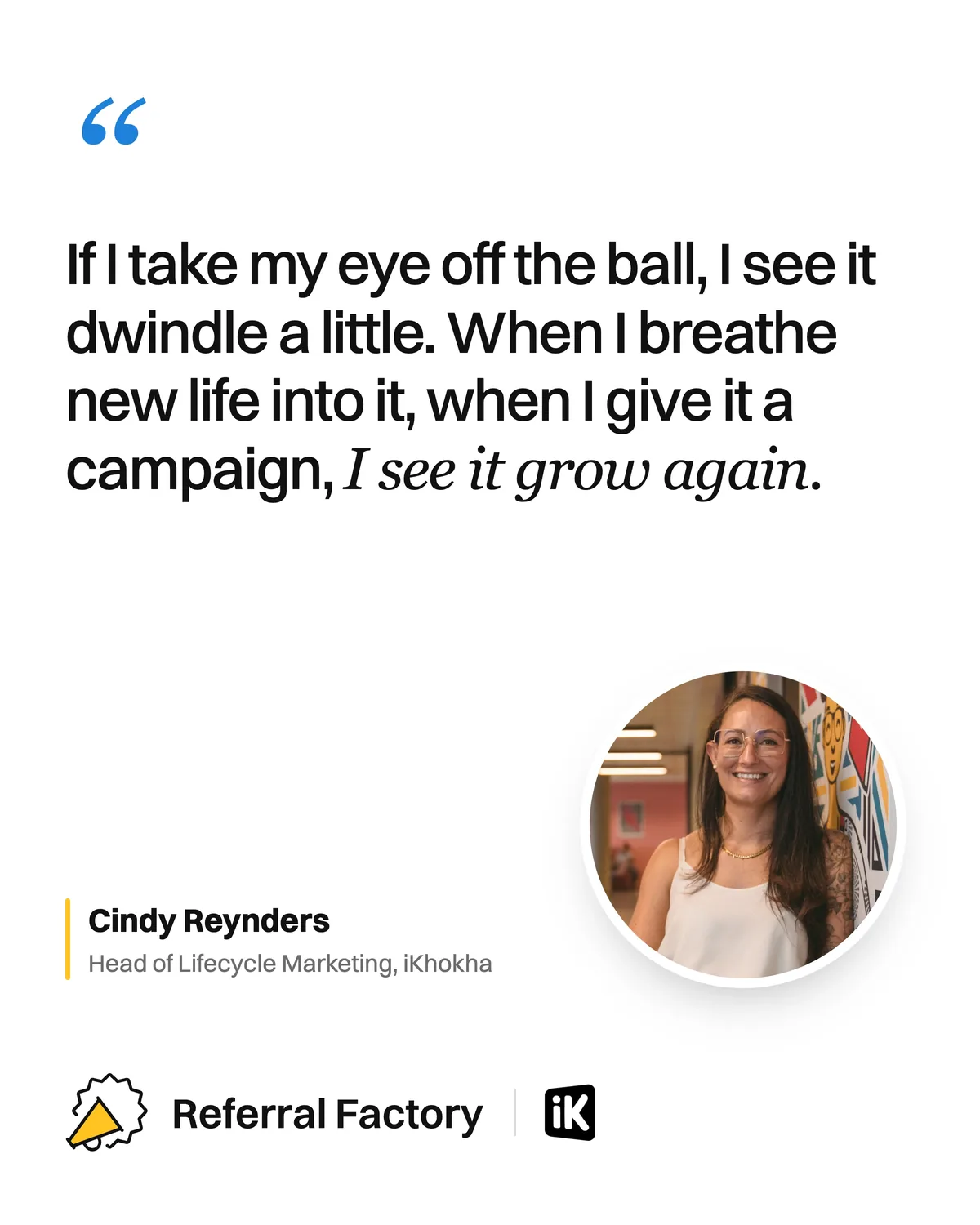
The referral programs that keep producing results are the ones someone keeps promoting. iKhokha's numbers show what that steady effort adds up to.
Is a referral program right for your business?
iKhokha is a strong fit for referrals, and it's worth being honest about why, because not every business is. Referrals work best when three things are true: your customers already trust you, your product gets recommended naturally, and you have enough customers to make asking worthwhile. A regulated fintech with tens of thousands of merchants ticks all three. If that sounds like your business, whether you're a bank, an insurer, or a B2B financial services company, the same approach will work, and it scales into a proper enterprise referral program as you grow.
Four decisions made this work for iKhokha, and none of them needed a big build or a big team:
- It chose to buy proven software rather than build its own, and launched fast.
- It kept the reward simple, and only paid it once a referral became a real, trading customer.
- It planned for fraud from the start.
- It began with its own customers, then opened the program up to others once it was working.
Want a referral program like this for your business? Book a demo or start a free trial to see what it looks like for yours. If you're still weighing it up, the Referral Factory calculator shows what referrals could add, and there are more referral program case studies to browse. iKhokha didn't invent a new way to grow. Its customers were already recommending it. What iKhokha built was the system that turns that word of mouth into a channel it can measure, reward, and grow.
FAQ
Do referral programs work for fintechs and financial services?
Yes. iKhokha, a South African fintech, has thousands of business owners signed up to refer, and referred businesses convert at close to one in five, well above paid search. Referrals work especially well in financial services because trust drives the decision, and a recommendation from a peer carries more trust than an ad.
How much should you pay for a referral?
Enough to be worth someone's while, but small next to what a new customer is worth to you. iKhokha pays R500 in cash, and only once the referred business is verified and actually trading, so every reward is tied to real revenue. Start from the value of the customer, not a round number.
How do you track referrals when there's no online checkout?
With referral links tied to your CRM. Each referrer gets a unique link, and the platform attributes every sign-up and reward automatically, so a business doesn't need an e-commerce checkout to run and measure a referral program.
What's the difference between a referral program and an affiliate program?
A referral program rewards your own customers for recommending you to people they know. An affiliate program rewards third parties, often strangers, for driving sign-ups at scale. iKhokha runs mostly customer referrals but can reward both through one system. For most businesses, your customers are the higher-trust place to start.
Refer a business to iKhokha
Run a business in South Africa? iKhokha will pay you R500 for every business you refer that signs up and starts trading with them, and they get 10% off a card machine. Join iKhokha's referral program.
Referral link generator (free)
We take your website, send it to Referral Factory, and provision a real referral program for your brand. The link you get is a live referral URL your customers can share, backed by tracking and rewards in the app - not a static "generator" preview. This is the fastest way to see what a real referral program would look like for your brand! Try it below...