
Industry-specific guidance showing how referral marketing works in real operating contexts.
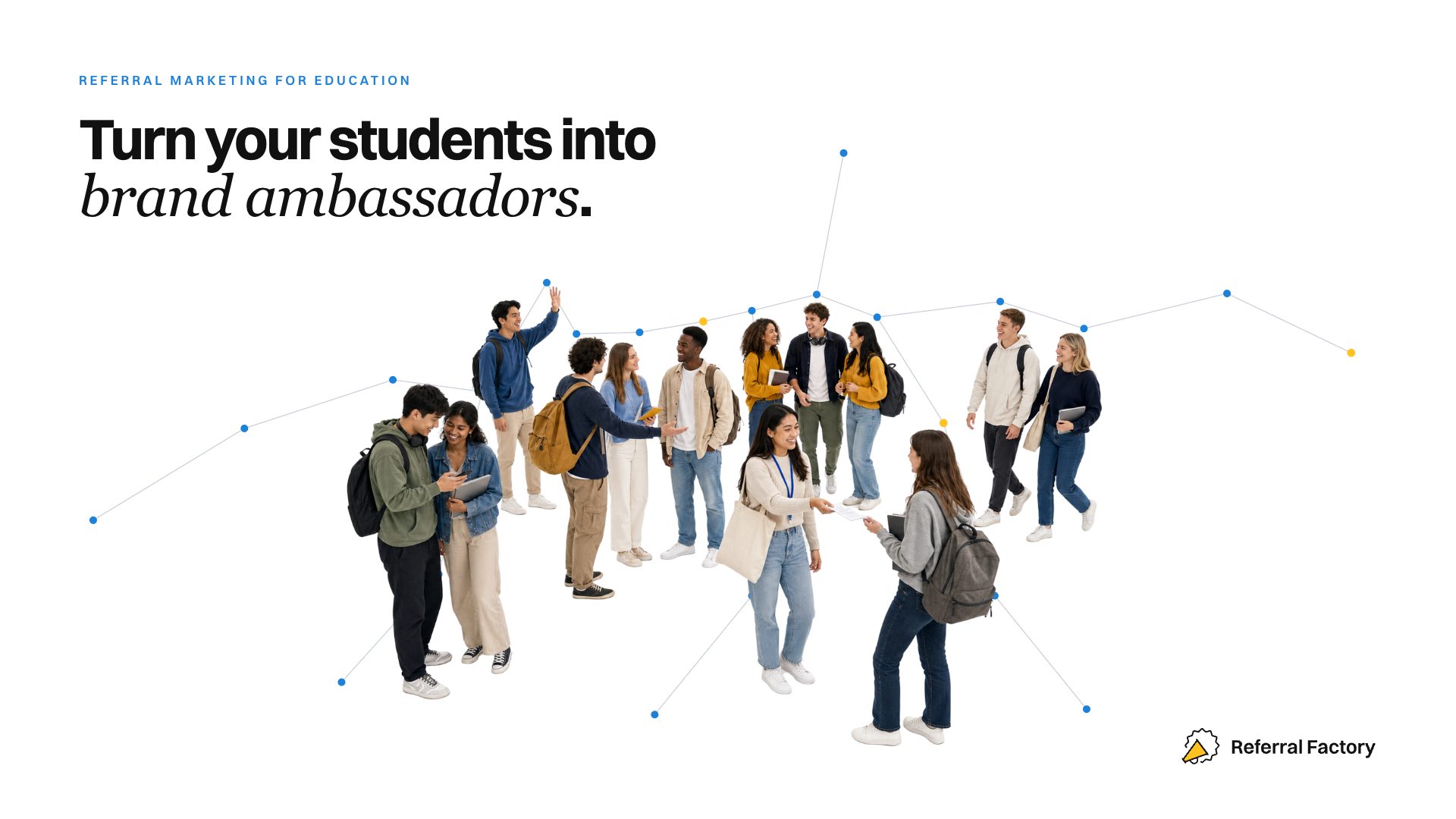
Every school, college and course has students who already talk you up without being asked. They tell their friends, they post about their results, they bring a mate to an open day. A student ambassador program turns that scattered goodwill into something organised, tracked and rewarded, so the students who love you become a reliable source of new ones. This post is about how to build one.
Our complete guide to referral marketing for education providers covers the whole of education. Here the focus is your single biggest and most enthusiastic audience: your current students.
Adam from our customer success team on how to get more of your students referring their friends.
Why students make natural ambassadors
Students sit on top of three things that make a referral program work, all at once. You can see it the moment you walk onto a campus: students who are proud of where they study, and happy to say so.
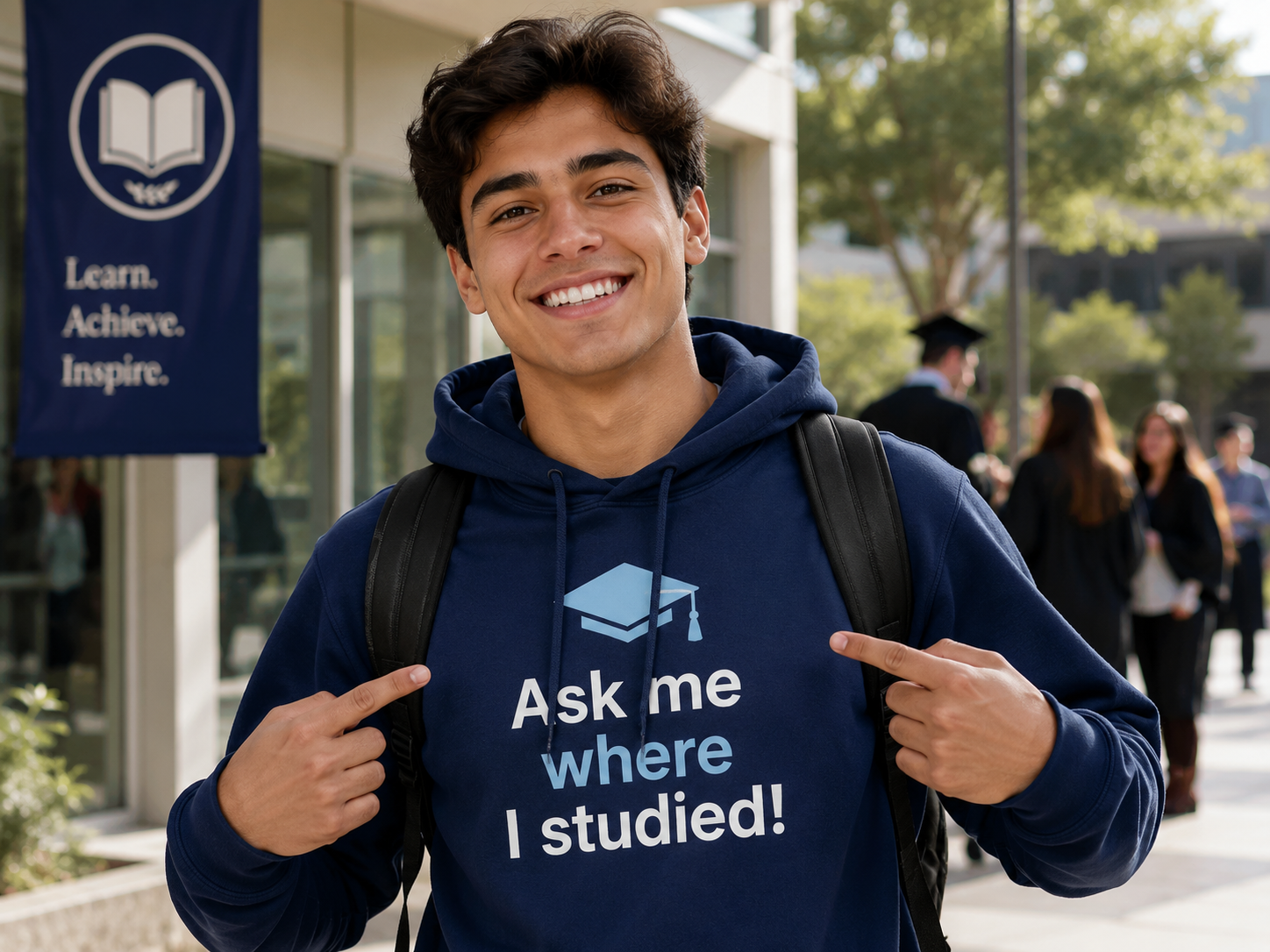
They already recommend you, and their word carries. Among their peers, a current student is the most believable voice there is. Encoura's Eduventures research found 86% of prospective students named at least one individual as influential in their decision, with peers ranking among the most trusted and most influential voices of all, well ahead of advertising. When a student vouches for you, the friend on the other end believes it.
There are a lot of them, and you talk to them constantly. As I always say, the single biggest driver of referral success is just how many people you ask and how often. A school or course typically has hundreds or thousands of students on its books, with touchpoints every week. That is a huge, warm audience and a constant supply of moments to make the ask.
They are networked with exactly the right people. A student's friends are other people the same age, at the same stage, with the same interests, weighing up the same choices. Their network is not random. It is full of your next intake.
Make it a role, not a one-off request
Here is the shift that turns a quiet referral link into a real ambassador program. Give it an identity. A student who is told “here is your link, share it if you like” does nothing with it. A student who is made an official ambassador, with recognition and a bit of status attached, shows up.
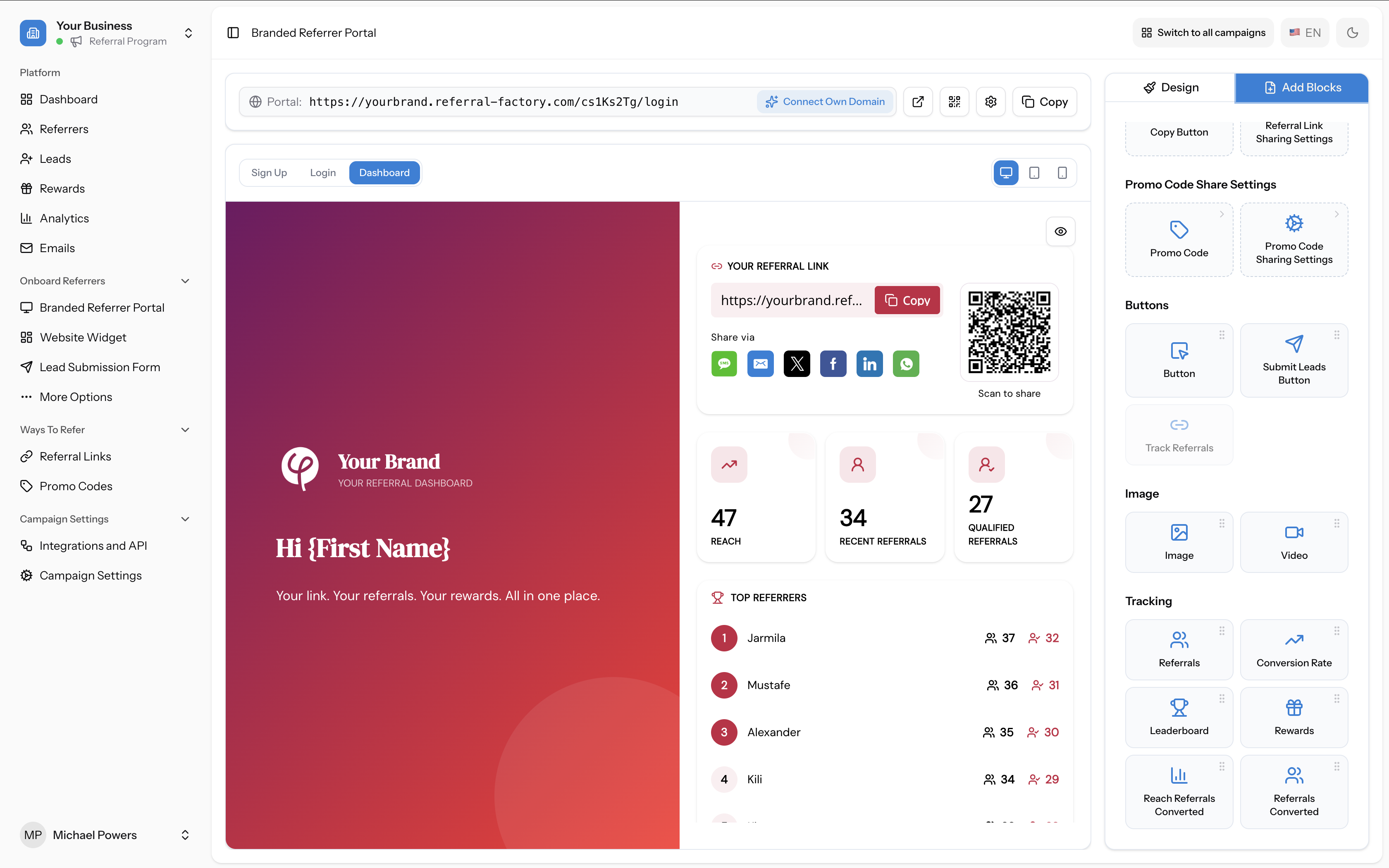
Students are competitive about progress, so lean into it. A visible dashboard where an ambassador can see their referrals, their rewards and where they rank turns referring into part of the experience rather than a favour to the institution. In Referral Factory you can build exactly that without code: a branded referrer dashboard and leaderboard your students log into, set up in an afternoon rather than built by developers.
Recognition is doing as much work here as the reward itself, which is the same principle behind any good programme that turns happy customers into brand advocates.
Reward the way students actually respond
A student ambassador program works on a mix of reward and recognition, and the balance matters.
Make the reward double-sided so the ambassador is offering their friend something real, like a discount or a free first session, rather than asking a favour. What you give the ambassador depends on where they are. A current student still studying with you responds well to account credit, course discounts or exclusive perks. A student who has finished, or an alum, has no more course to buy, so cash, vouchers or desirable swag land better.
Add recognition on top, a shout-out, a title, a spot at the top of the leaderboard, and you motivate the students who are proud of their progress and want to be seen. Our guide to education referral rewards explains how much to offer and when it should pay out.
Make sharing native to how students live
Students live on their phones and in social channels, so a referral link that shares in one tap into Instagram, TikTok, WhatsApp or a group chat will always beat a code they have to copy from an email. Give every ambassador a personal referral link or referral code, make it one tap to share wherever they already post, and keep it visible in the places they log into anyway.
When to recruit ambassadors and ask
Recruit ambassadors at the natural start points, at orientation, at the beginning of a term or cohort, right after onboarding while enthusiasm is highest. Then prompt them to share at the moments they feel proudest: after a good result, a completed module, a graduation, or an event they loved. A student riding a high will happily tell their friends. The same student asked cold in the middle of exam season will not.
Does it actually work?
Referrals from students convert far better than paid advertising in education. CBD College, an education provider running a program with us, converts 56% of referred people into enrolments against roughly 11% from Google Ads, and a separate online tutoring business generated 1,715 referred leads in ten months, converting over half of them against 8% on paid ads.
For career-change providers, where a graduate who landed the job is the most credible referrer of all, our guide to bootcamps and training providers goes deeper. In both, a small, motivated group of students drove most of the referrals, which is exactly how ambassador programs are meant to work.
Your job is not to turn every student into a salesperson. It is to give the enthusiastic few a role, a link and a reason, and to make the most of them.
How to build it
Give every student a referral link, wrap it in an ambassador identity with a dashboard and recognition, make the reward double-sided and matched to whether they are current or graduated, and prompt them at their proud moments.
Enter your website and Referral Factory builds a branded campaign for you automatically, pulling your brand straight from your site, then handles the tracking, leaderboards and payouts with no code, so the program runs itself. For reward ranges and what setup looks like for your sector, the education referral programs page lays it out.
Frequently asked questions
What is a student ambassador program?
It is a referral program that gives your students an official role, a personal referral link, and recognition for bringing in new students. Instead of hoping students recommend you, you organise, track and reward the ones who do.
How do I get students to refer their friends?
Give referring an identity and make it easy. Turn it into an ambassador role with a dashboard and recognition, give each student a link that shares in one tap into the social channels they already use, make the reward double-sided, and ask at their proud moments like results day or graduation.
What reward works best for student ambassadors?
A mix of reward and recognition. Current students respond to course credit, discounts and perks, while graduates respond to cash, vouchers or desirable swag. Recognition, such as a leaderboard place or a shout-out, motivates the students who are proud of their progress and want to be seen.
Do student ambassadors actually bring in enrolments?
Yes. Peers are the most trusted voice in a prospective student's decision, and referred students convert far better than paid traffic. In our education programs a small, motivated group of students typically drives most of the referrals.
When should I recruit student ambassadors?
At natural start points like orientation, the beginning of a term or cohort, or just after onboarding while enthusiasm is highest. Then prompt them to share at high points through the year rather than on a flat schedule.
How do I track which student referred whom?
Give every ambassador a unique referral link or code and use referral software to record referrals, enrolments and rewards automatically, including the leaderboard that keeps ambassadors engaged.
Referral link generator (free)
We take your website, send it to Referral Factory, and provision a real referral program for your brand. The link you get is a live referral URL your customers can share, backed by tracking and rewards in the app - not a static "generator" preview. This is the fastest way to see what a real referral program would look like for your brand! Try it below...