
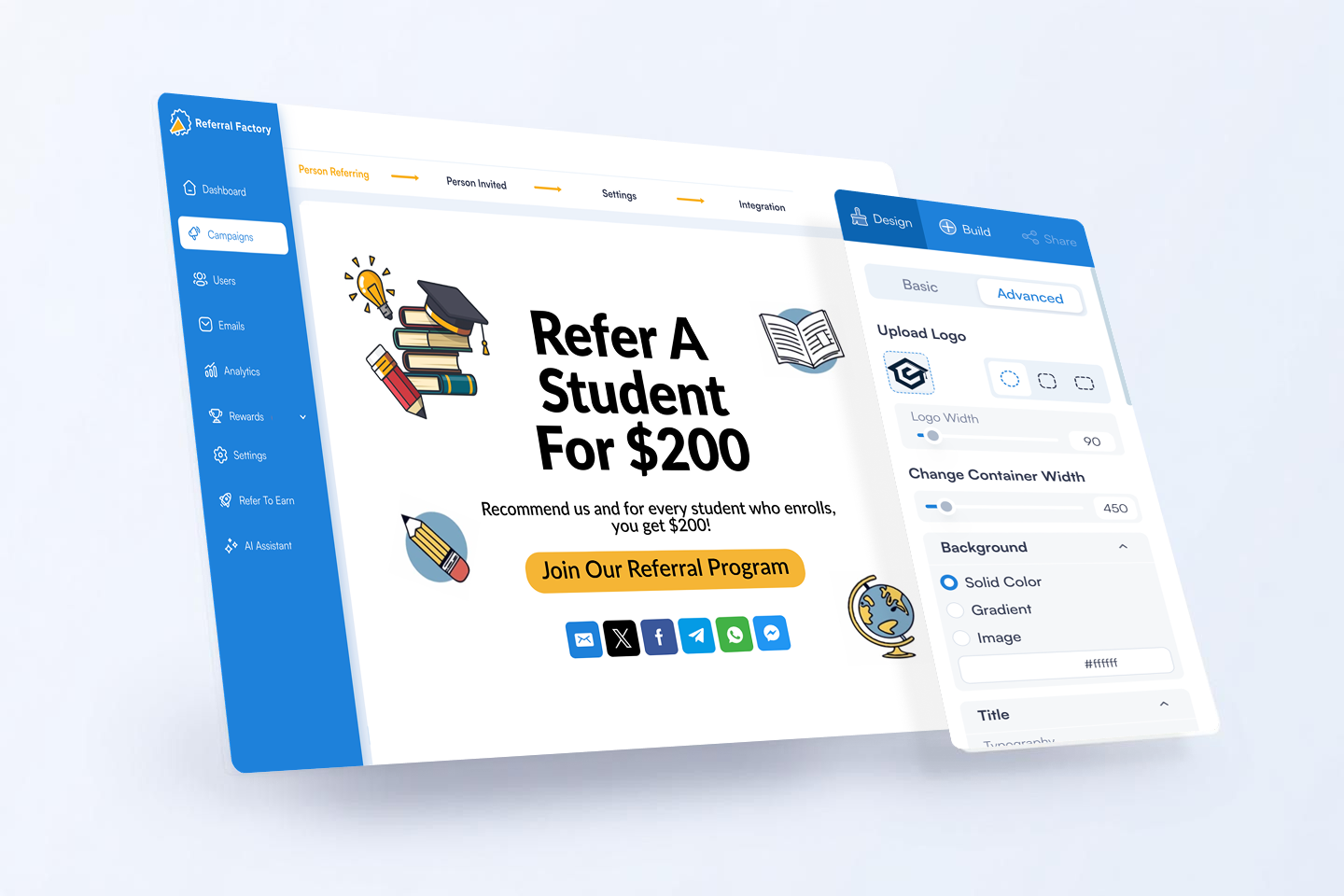
Typical reward range
$50-$500
Cash, tuition credits, or other simple incentives can work depending on the program and enrolment value.
Education
When students, parents, and alumni feel proud of the outcome, they naturally talk about it. This page shows how to turn those trust moments into a referral program that is clear, useful, and easy to run.
Typical reward range
$50-$500
Cash, tuition credits, or other simple incentives can work depending on the program and enrolment value.
CBD College referral conversion
56%
Referred people converted at roughly five times the rate of paid search.
Best time to ask
Referral timing matters
Best time to ask: after enrolment, graduation, or another visible success moment.
Watch the walkthrough
Education Referral Marketing: How to Build a Program That Fills Enrolments
Referral-ready criteria
Do not launch a referral program just because the industry has word of mouth. Launch when customers are happy, the referral moment is obvious, the reward makes economic sense, and conversion can be tracked.
Why this works
Education choices are driven by trust, proof, and social validation. People want to hear from others who already experienced the school, course, or provider.
92% of people trust recommendations from friends and family above all other forms of advertising (Nielsen). Explore more referral marketing statistics.

Students and parents want reassurance from someone who has already seen the experience and outcome up close.

Education communities create a built-in network effect because families and students often talk to others facing the same choice.
Build a student ambassador program
Enrollments, certificates, graduations, and career outcomes all create moments where people want to tell others what worked.
Referred prospects usually arrive with more trust and better context.
You can connect rewards to enrolment or attendance milestones to protect economics.
Parents, students, and alumni can all become referral sources over time.

Case study
Published education programs show what happens when providers turn advocacy into a structured referral motion instead of relying on informal word of mouth.
How many students, parents, or alumni will you ask to refer?
Estimated annual referral leads
The estimate shows the lead volume available when the ask becomes part of admissions and student-success follow-up.
A typical all-industry estimate assumes about 25% of customers asked will actively refer
A typical all-industry estimate assumes each referring customer generates roughly 2 leads per year
Program design
The best programs keep the reward simple for the advocate and the next step useful for the referred student or parent.
Reward design
Cash, tuition credits, or other straightforward rewards work best when the qualification rule is obvious and easy to explain.
See the education referral rewards guideFriend-facing offer
The referred student or parent needs a reason to engage, like a consultation, open-day invite, or program-fit conversation.
You do not want them saying:
"Use my link so I can get paid."
You want them saying:
"Use my link and get a free enrollment consultation and program-fit review."
That sounds helpful and informative. The reward motivates the advocate to share, while the offer gives the next family a reason to enquire.
Timing
Education has strong emotional milestones, and those moments are where referral prompts work best.
After enrolment, when the decision feels confirmed and positive.
At course completion, graduation, or certificate milestones.
After a positive parent-teacher or student-success moment.
When a learner achieves a visible career or academic outcome.
During periodic student or alumni follow-up so the referral channel stays active over time.
Timing rules
The best referral program still fails if the ask happens at the wrong moment. Build the timing into your process so the prompt shows up when the customer is most likely to share.
Ask after a success moment the student or parent can genuinely describe.
Lead with the value of the consultation or next step for the referred person.
Keep the journey simple so admissions teams can manage it without extra admin.
Referral flow
The referral process should feel easy for advocates and clear for admissions or enrollment teams to track.
Use a shareable link that works naturally in messages, email, or social conversations.

Lead with a consultation, open-day invite, or fit conversation that helps them move forward.

Track the journey from enquiry to application to confirmed enrolment.
Pay once the enrollment milestone is real so the system stays commercially clear.
Launch requirements
You need one system that connects advocates, enquiries, enrolments, and payouts so the process is easy for your team to manage.
Use one system to manage the program and keep customer, referral, and payout data tied together.
Give people a simple way to share that does not require a long explanation from your team.
Make the qualifying milestone explicit so everyone knows when the reward is earned.
Follow up at the moments that matter so participation does not depend on memory.
Your team should know exactly how to introduce the program when the customer is most likely to share.
Measure participation, lead quality, and revenue so you can improve the program over time.
Exclusive offer
The next step is a live demo. We will walk you through the setup, reward timing, and operating model for your category, and if you decide to build with Referral Factory afterwards, you can get 50% off your first six months.
See how Referral Factory would fit your team, referral flow, and qualification milestones before you commit.
After the demo, if you decide to launch with Referral Factory, you can unlock 50% off your first six months.
Use proven timing, reward, and admissions-friendly operating patterns instead of managing referrals informally.
FAQ