
Examples, templates, checklists, and practical inspiration you can adapt quickly.
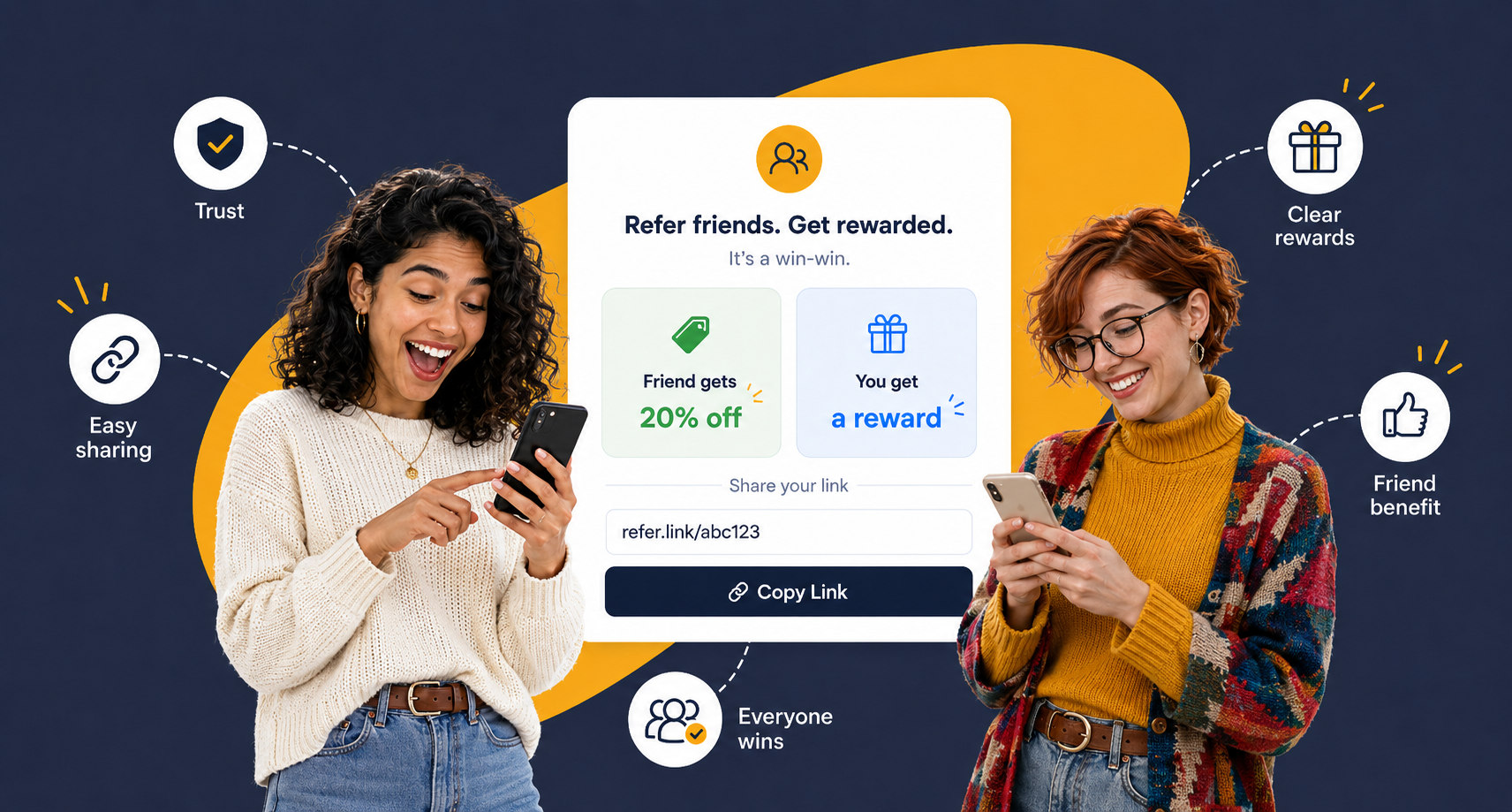
Most businesses assume that if customers are happy, referrals will happen naturally.
Sometimes they do. A customer has a great experience, tells a friend, and that friend becomes a lead or customer. That is word-of-mouth marketing at its best: organic, trusted, and driven by a real customer experience.
But many happy customers never refer.
Not because they hate your brand. Not because they have nothing good to say. And not always because your reward is wrong.
Often, they do not refer because something gets in the way.
They do not know who to refer. They do not want to look pushy. They are worried their friend might have a bad experience. They do not understand the reward. They cannot find their referral link. They do not trust that the referral will be tracked properly. Or, very often, no one has actually asked them to refer.
That is where referral psychology matters.
83% of satisfied customers say they are willing to refer, but only 29% actually do. The important word here is willing. Willing does not mean active. A customer may be happy to recommend you in theory, but still never take action unless the referral feels easy, relevant, valuable, and low-risk.
Because a referral is not just a marketing action. It is a social decision.
When a customer refers your business, they put their own name behind your brand. They are saying, "I trust this company enough to recommend it to someone I know."
That is powerful. But it also means your referral program needs to do more than offer a link and hope people share it.
You need to understand what motivates customers to refer, what makes them hesitate, and how to remove the barriers that stop happy customers from becoming active referrers.
Key takeaways
- Referrals do not happen just because customers like your brand.
- Customers refer when they trust you, know who to refer, feel good about helping their friend, understand the offer, can share easily, trust the tracking, and are asked at the right moment.
- The biggest referral blockers are often confusion, friction, weak rewards, poor timing, lack of visibility, and lack of trust in the process.
- Double-sided rewards work because they make the referrer feel generous, not selfish.
- A referral program without a meaningful reward is usually not a fair test of referral marketing.
What is referral psychology?
Referral psychology is the reason customers choose to recommend a business to someone they know, and the reason they sometimes hesitate even when they are satisfied.
At the simplest level, referrals work because people trust people more than they trust ads. An ad is a brand talking about itself. A referral is a real person sharing their own experience.
But referral psychology is not only about trust. Customers also refer because they want to help someone, share a good experience, feel useful, give their friend a benefit, or earn a reward.
They also hesitate for psychological reasons. They do not want to recommend something that could reflect badly on them. They do not want to look like they are using a friend to make money. They do not want to explain a confusing offer. And they do not want to take action if they are unsure whether the referral will be tracked.
So a strong referral program needs to do two things: increase motivation and reduce hesitation.
Most businesses focus on the first part. They ask, "What reward should we offer?"
That matters, but it is not the whole story. A better question is: "What could stop a happy customer from referring, and how do we remove that friction?"
The 7 psychological drivers behind customer referrals
The best referral programs are built around how customers actually think and behave.

| Psychological driver | What the customer is thinking | What brands often get wrong | How to fix it |
|---|---|---|---|
| Trust | "Do I trust this brand enough to recommend it?" | Asking too early or after a weak experience | Ask after moments of value |
| Relevance | "Who do I know that this would help?" | Using vague CTAs like "refer a friend" | Make the ideal referral clear |
| Generosity | "Will my friend get something valuable?" | Rewarding only the referrer | Use a double-sided offer |
| Clarity | "Do I understand how this works?" | Vague reward terms and confusing rules | Say what each person gets and when |
| Ease | "How much effort will this take?" | Making customers find links and write messages themselves | Use referral links, QR codes, and pre-written messages |
| Confidence | "Will this be tracked and rewarded fairly?" | No visibility, delayed rewards, unclear statuses | Track referrals and issue rewards on time |
| Visibility | "Have I actually been asked?" | Sending one email and calling it a strategy | Promote the program across customer touchpoints |
1. Trust
Customers only refer when they trust you enough to put their own name behind your brand.
This is especially important in high-trust industries like finance, healthcare, education, insurance, home services, and B2B software, where a bad recommendation can damage the customer's reputation too.
Ask for referrals after moments of value, not before the customer has experienced what makes your business worth recommending. That could be after onboarding, a successful consultation, a renewal, a positive support experience, a repeat purchase, or a strong result.
2. Relevance
Customers are more likely to refer when they know exactly who the offer is for.
A vague message like "refer a friend" sounds simple, but it still makes the customer do the thinking. They need to figure out who would care, why that person would care, and how to explain it.
A stronger referral message makes the ideal referral obvious:
- "Know another business owner who wants to simplify their accounting?"
- "Know someone who could benefit from better pension advice?"
- "Know a friend looking for a trusted private banking partner?"
The more specific the prompt, the easier it is for the customer to think of the right person.
3. Generosity
Customers want to feel like they are helping their friends, not using them.
If only the referrer gets rewarded, the referral can feel one-sided. The customer may feel uncomfortable saying, "You should buy from this brand," when the friend gets nothing and the referrer gets paid.
But when the friend also gets something valuable, the psychology changes. The referrer is no longer saying, "Please buy this so I can earn something." They are saying, "I thought this might help you, and you'll get something valuable too."
Double-sided rewards work because they motivate both sides. The customer gets a reason to share, and the friend gets a reason to act. More importantly, the referrer feels generous instead of selfish.
4. Clarity
Confusion kills referrals.
If customers do not understand your referral program, they will usually take the safest option and do nothing.
A referral program might sound clear to the marketing team, but vague to the customer. For example: "Share your link and earn bonus points when your friend signs up."
That sounds simple until you start asking questions. What bonus points? How many? What does "sign up" mean? Does the friend need to buy? Does the friend get anything? When will the reward be issued?
A clear referral program answers four questions quickly:
- What do I need to do?
- What will I get?
- What will my friend get?
- When will the reward happen?
Weak copy says: "Invite friends and earn rewards."
Stronger copy says: "Give your friend $50 off their first order. Get a $50 gift card when they make their first purchase."
The second version works better because it removes uncertainty.
5. Ease
Even motivated customers will not refer if the process feels like work.
A customer might be willing to refer, but then they have to find their link, write a message, explain the offer, remember the terms, and send it manually. That is too much effort for most people.
The easier you make the referral, the more likely it is to happen.
Give customers a unique referral link. Give them a pre-written message. Let them share by email, WhatsApp, SMS, social media, QR code, or whatever channel makes sense for your business.
Referrals often happen in moments: a WhatsApp chat, a dinner conversation, a support call, a meeting, or a quick message from someone asking for a recommendation. If the customer can access and share their referral link quickly, you can capture that moment. If they cannot, the moment disappears.
6. Confidence
Referral tracking is not just an operational issue. It is a psychology issue.
Customers need to trust that if they make a referral, the business will track it properly and reward them fairly. If the process feels hidden or vague, doubt starts creeping in.
Did my friend use my link? Did the business track it? Did my friend get their discount? Will I actually get my reward?
This is why transparency matters.
If customers cannot see anything about the referrals they have made, the status of those referrals, or the rewards they are due, the program can start to feel shady, even if the business has good intentions.
Reward timing matters too. If you want customers to become your sales channel, you need to treat the reward promise seriously. Delayed or missed rewards can damage trust quickly.
They may still like your product. But they no longer trust your referral program.
7. Visibility
Customers cannot refer if they do not know the program exists.
This sounds obvious, but it is one of the most common reasons referral programs underperform.
Customers are busy. Even happy customers forget. They may miss the first email, mean to refer later, or never realize the program exists in the first place.
That is why one launch email is not a referral strategy.
If referrals are important to your business, promote your program like it matters. Add it to customer emails, onboarding flows, customer portals, app dashboards, post-purchase journeys, newsletters, support follow-ups, review requests, QR codes, account manager conversations, widgets, or pop-ups.
You do not need to annoy customers. But you do need to make the program visible enough that they remember it when the right referral opportunity comes up.
Referral psychology in action: how one private bank turned trust into 30% of incoming leads
A strong example of referral psychology in action comes from a private bank that turned referrals into 30% of its incoming leads.
In private banking, trust matters more than speed. People are not just choosing a product. They are deciding who they trust with their money. So when an introduction came from an existing client, the new lead arrived with built-in credibility.
The bank made the referral journey simple and visible inside its digital experience. Existing clients could access the program, understand the offer, and share it easily. The bank also rewarded both sides, so the referral felt valuable for the referrer and the new client.
To protect lead quality, the reward was only issued once the new client kept their account open for two months and deposited a month's salary.
The result was not just more referrals, but better referrals: over 16,000 referred leads, more than 6,900 converted clients, 100+ referrals every week, and a 60% referral lead-to-customer conversion rate compared with around 10% from paid ads.
The psychology is clear. When trust is transferred through a personal recommendation, people are far more likely to act.
How to design a referral program that removes hesitation
A strong referral program is not just a reward with a landing page. It is a customer experience.
Start by asking at the right moment. The best time to ask for a referral is usually after the customer has experienced value: after onboarding, after a successful review, after a renewal, after a positive support experience, or after a measurable result.
Then make the friend benefit obvious. If you want customers to refer, give them something meaningful to share. That could be a discount, account credit, free consultation, gift, upgrade, waived fee, or special offer.
The reward also needs to feel worth it. If the sale is high-value, a tiny reward can feel insulting. If the product is only bought once a year, a small discount on the next purchase may not motivate anyone. And if you are a B2B business where the company pays the bill, rewarding the company may not motivate the employee who actually made the referral.
This is also why testing a referral program without a meaningful reward can give you the wrong answer. You are asking customers to spend their time, energy, and social capital to recommend your business, but you are not giving them or their friend a strong reason to act.
Put simply: if you remove the incentive, you are not testing referrals. You are testing whether happy customers will do extra work for free.
Next, make the program easy to understand. The main offer should be clear in seconds: do this, your friend gets this, you get this, and this is when the reward happens.
You also need to make sharing effortless. Give customers their own referral link, pre-written messages, easy share options, QR codes, and a landing page that explains the offer for them.
Finally, keep customers updated. Let them know when someone signs up, when a referral qualifies, when a reward is due, and when it has been issued. A customer who sees that the program works is more likely to refer again.
This is where customer advocacy becomes practical. It is not just about having happy customers. It is about giving those customers the right message, the right moment, the right incentive, and the right tools to actively recommend your business to someone else.
Before launching, put your customer hat on and ask:
- Would I feel comfortable sending this to a friend?
- Would this make me look helpful or selfish?
- Would my friend get enough value?
- Would I trust this business to track my referral?
- Would I remember this program exists?
If the answer is no, the program may work operationally, but fail psychologically.
How Referral Factory helps businesses turn referral psychology into a working program
Understanding referral psychology is useful, but businesses still need a way to turn that psychology into action.
Referral Factory helps businesses build, launch, and manage customer referral programs that are easy to share, track, and reward. You can create branded referral pages, generate unique referral links, give customers multiple ways to share, offer rewards to one or both sides, track referrals from share to conversion, and connect your referral program to the tools your team already uses.
This matters because referral psychology only works if the customer can act on it.
If a customer is motivated but cannot find their link, the referral may disappear. If the friend does not understand the offer, they may not convert. If the referral is not tracked, the customer may lose trust. And if the reward is delayed or missed, they may never refer again.
A strong referral program removes those barriers. It makes the referral easy, visible, trackable, and rewarding. That is how businesses move from random word of mouth to a repeatable referral channel, and why referrals can help brands reduce customer acquisition costs with referrals instead of relying only on paid ads, cold outreach, or other expensive acquisition channels.
FAQs about referral psychology
What is referral psychology?
Referral psychology is the reason customers choose to recommend a business to people they know, and the reason they sometimes hesitate even when they are satisfied. It includes trust, reward motivation, timing, friction, and confidence in the referral process.
What motivates customers to refer?
Customers are motivated to refer when they trust the brand, believe their friend will benefit, understand the offer, can share easily, and feel confident that the referral will be tracked and rewarded fairly.
Why do happy customers not refer?
Happy customers may not refer because they are not asked, do not know who to refer, do not understand the program, cannot find their referral link, worry about looking pushy, or do not trust that the reward will be tracked.
Why are referrals more trusted than ads?
Referrals are more trusted than ads because they come from real people with real experiences. An ad is a brand talking about itself. A referral is someone the buyer knows putting their own reputation behind a recommendation.
Are referral rewards enough to motivate customers?
No. Rewards help, but they are not enough on their own. A reward cannot fix a confusing offer, poor timing, weak customer experience, lack of visibility, or a referral process that feels difficult.
Why do double-sided referral rewards work?
Double-sided referral rewards work because they motivate both people. The referrer gets a reason to share, and the friend gets a reason to act. They also make the referrer feel generous because they are giving their friend something valuable.
Final thoughts
The psychology behind referrals is not only about why customers refer. It is also about why they hesitate.
A customer might love your brand and still not make a referral if the offer is unclear, the reward feels weak, the friend gets no value, the process is difficult, or no one ever asks them.
So if you want more referrals, do not only focus on motivation. Focus on removing the barriers between a happy customer and a successful referral.
Make the offer clear. Make the friend benefit meaningful. Make sharing easy. Make tracking transparent. Reward people fairly. Promote the program consistently. And ask when the customer is most likely to feel confident putting their name behind your brand.
That is how you turn referral psychology into a referral program that actually works.
Referral link generator (free)
We take your website, send it to Referral Factory, and provision a real referral program for your brand. The link you get is a live referral URL your customers can share, backed by tracking and rewards in the app - not a static "generator" preview. This is the fastest way to see what a real referral program would look like for your brand! Try it below...