
Referral Factory Learn
Guides, ideas, and examples for teams building better referral programs.
Practical content organized around Referral Program and Referral Marketing so you can move from strategy to execution without guesswork.
What Is the Best Tool to Host Your Customer Referral Program (and Why It’s Referral Factory)
What is the best tool to host a customer referral program? Learn what actually matters and why Referral Factory is the most flexible, no-code option.
What Is A Referral Link and How To Create One
Learn what a referral link is, how it works, and how to create one to help grow your business by encouraging customers to refer others and earn rewards.
What Is Referral Marketing? Everything You Need To Know
It’s more popular than ever, but what is referral marketing? Learn how referral marketing works, how to design a campaign, and get started with a platform!
Learn search
Search every referral program and referral marketing article from one place.
Find strategy, launch, rewards, tracking, and referral marketing guides by searching titles first and article content second.
Free course
Want the structured version? Take the Referral Factory course.
If you want the key lessons in order instead of piecing them together article by article, the course walks through referral program fundamentals, setup choices, and launch planning in one place.
Main topics
Start with the two themes readers come here for most.
Referral Program
Guides for planning, launching, structuring, rewarding, and improving a referral program.
How to Create a Successful Customer Referral Program in 2026 (With Examples)
Learn how to create a successful customer referral program with step-by-step guidance, best practices, and real examples from top industries.
How To Launch Your Own Customer Referral Program
In this step-by-step guide, we'll walk you through the process of building and launching your own customer referral program.
Your Referral Program Checklist: What To Check Before Launch
Your Referral Program Checklist: What To Check Before Launch on Referral Factory Learn. Topics include Growth Marketing, Referral Marketing and business growth, get referrals, Referral Marketing.
Referral Marketing
Referral marketing strategy, examples, and growth ideas for teams using word of mouth to acquire better customers.
What Is Referral Marketing? Everything You Need To Know
It’s more popular than ever, but what is referral marketing? Learn how referral marketing works, how to design a campaign, and get started with a platform!
Develop a Referral Marketing Strategy in 7 Steps [Free Slides To Download]
Wondering how to get more customers? There's a simple answer: implement a referral marketing strategy. Learn how to do that in 7 easy steps.
Referral Marketing 101: Strategies For Success In 2024
Referral Marketing 101: Strategies For Success In 2024 on Referral Factory Learn. Topics include Referral Marketing and referral guide, referral marekting 101, Referral Marketing.
More topics
Go deeper with the topics that come up next.
Examples, templates, checklists, and practical inspiration you can adapt quickly.
Software selection, platform evaluation, tools, and buyer-side comparison content.
Industry-specific guidance showing how referral marketing works in real operating contexts.
Reward design, incentive strategy, payouts, and commission structures.
Tracking referrals, attribution logic, ROI, qualification, and conversion visibility.
Proof-driven examples of businesses growing through referrals and referral marketing.
Start here
Popular guides to begin with.

What Is the Best Tool to Host Your Customer Referral Program (and Why It’s Referral Factory)
What is the best tool to host a customer referral program? Learn what actually matters and why Referral Factory is the most flexible, no-code option.

What Is A Referral Link and How To Create One
Learn what a referral link is, how it works, and how to create one to help grow your business by encouraging customers to refer others and earn rewards.

What Is Referral Marketing? Everything You Need To Know
It’s more popular than ever, but what is referral marketing? Learn how referral marketing works, how to design a campaign, and get started with a platform!

What Is a Referral Code? How They Work, Examples, and How To Create One
A referral code or link is an easy way to turn loyal customers into brand ambassadors. If you’re unsure where to start, learn more with Referral Factory.
![What Is A Double Sided Referral Program? [With Examples]](https://referral-factory.com/storage/canvas/wordpress-import/8450/d584958efdfe-what-is-a-double-sided-referral-program-referral-factory-1.webp)
What Is A Double Sided Referral Program? [With Examples]
Learn how double-sided referral programs benefit both referrers and new users, boosting engagement and growth.

Top Referral Program Incentives (Backed by Data from Real Referral Programs)
What is the best referral program incentive for your business? Data from the top-performing referral programs on Referral Factory show that...
Latest posts
Recently added guides and articles.

How Referral Software Can Benefit Every Type of Business
Explore the benefits of referral programs for businesses, from lower acquisition costs to scalable growth across SaaS, offline, education, finance, and solar.

The Role of Referral Programs in SaaS Growth
Learn how referral programs drive SaaS growth through activation, retention, and subscription renewals, not just customer acquisition.
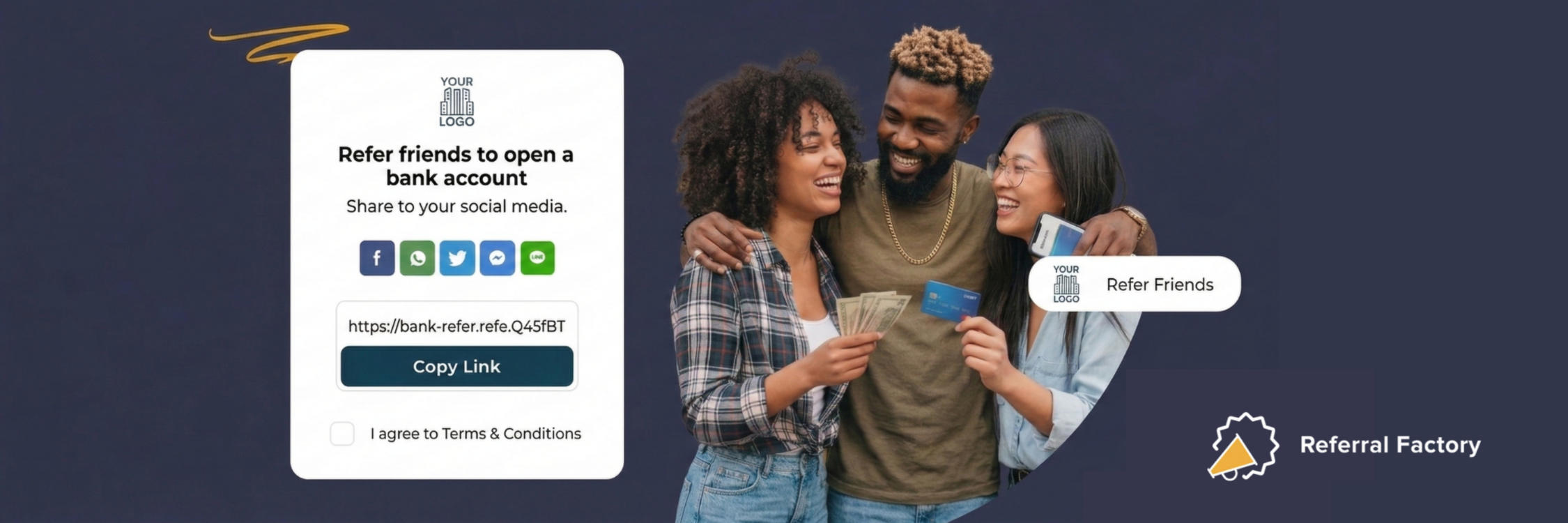
How Referral Software Can Help Regulated Industries Like Banking & Financial Services
Learn the benefits of referral programs in financial services and banking, and how referral software supports compliance, security, and scalable growth.

Customer Appreciation: 20 Ideas to Thank Customers and Build Loyalty (With Templates)
Customer appreciation helps you keep customers, earn trust, and get more referrals. Try these 20 easy ways to thank customers (plus copy/paste templates).

Referral Cards Explained: Ideas, Templates, Tracking and Industry Examples
A complete guide to referral cards: Physical vs digital cards, avoid common mistakes, and get referral card examples across 15 industries.
Maximize Referrals: How To Promote Your Referral Program on Social Media
Boost your referral program with proven social media strategies. Learn how to create shareable content and use platform-specific tactics for massive growth.

Legal Compliance for Referral Programs: An Essential Guide
Navigate referral program legal considerations and compliance. Cover mandatory FTC disclosures, global data privacy (GDPR, CCPA), anti-fraud rules, and more.

How Universities Use Referral Programs to Increase Student Enrollment
Learn how universities increase student enrollment using referral programs driven by students, alumni, and partners. See how referrals fit modern recruitment.