
Tracking referrals, attribution logic, ROI, qualification, and conversion visibility.

Referral programs can feel like a growth cheat code. Turn happy customers and partners into advocates, offer a reward, and watch new leads roll in. Simple, right? Not quite. Behind every successful referral program is a careful approach to referral program legal considerations that keeps your brand protected and your audience’s trust intact.
The truth is, referral programs are all about clarity, fairness, and playing by the rules. If participants don’t understand how rewards work, if personal data isn’t handled properly, or if misuse slips through the cracks, even the best program can quickly backfire.
That’s why running a compliant referral program comes down to the essentials: transparency around rewards, responsible data privacy under laws like GDPR and CCPA, strong program integrity to prevent fraud and abuse, and clear rules everyone can understand.
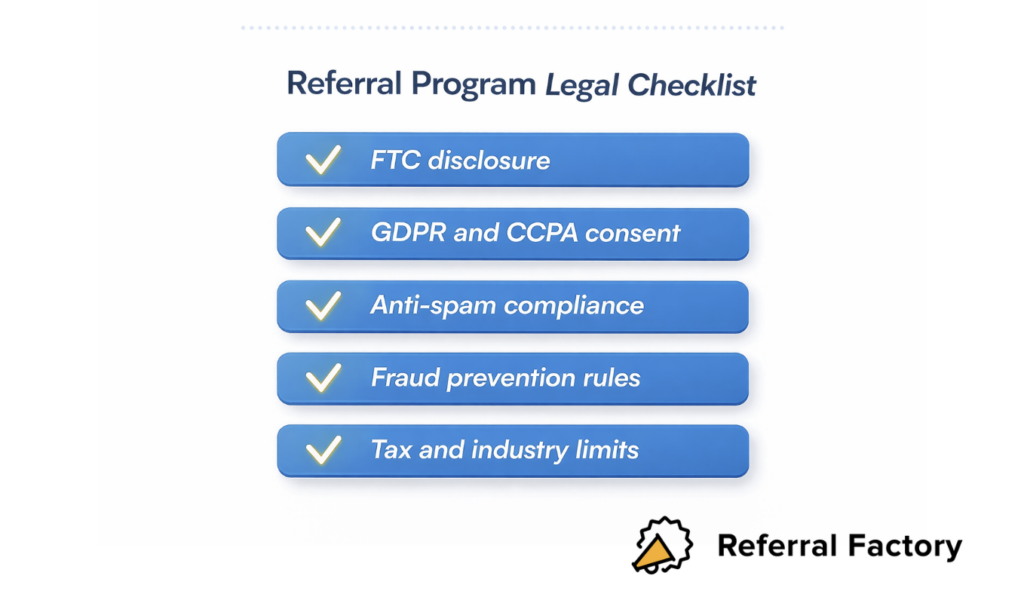
In this article, we’ll break down each of these areas, explain what they mean in practice, and show you how to build a referral program that drives growth without putting your business at risk.
Transparency and Truth in Advertising (The FTC Mandate)
Long before social media, regulators were protecting consumers from hidden incentives. Advertisers in the early twentieth century often staged testimonials, hid perks, or paid endorsers without disclosure.
Today, trust remains the foundation of successful marketing, which is why modern referral programs must operate with total transparency.
The Federal Trade Commission requires brands to clearly communicate when someone receives a benefit for recommending a product. This applies to a single referral link or an entire campaign.
Understanding Material Connections
A “material connection” exists whenever someone receives a reward, discount, or other benefit for promoting a product. Even small perks such as loyalty credits count. The key is to communicate the relationship in plain language that your audience can immediately understand. Hidden or vague incentives can break trust and risk regulatory action.
Applying Clear and Conspicuous Disclosures
The definition of clear and conspicuous disclosure is central to compliance and requires disclosures to be visible and easy to understand. Disclosures must be obvious and readable. They cannot be buried in footers, long captions, or hidden behind clickable text. On social media, each platform presents different visibility challenges
On Instagram, place it in the first line of a caption. On X, keep it within the character limit. On LinkedIn, include it in posts or articles so professionals see it right away. Hashtags alone are not enough.
Consequences of Non-Compliance
Ignoring FTC disclosure requirements for referrals carries real risks. The FTC can investigate, levy fines, and require public corrective actions. Misleading programs can also damage credibility and discourage participation. Users may report unclear promotions, exposing programs that were meant to be clever but fail compliance standards.
Transparency as a Strategic Advantage
Clear disclosure is not just a legal requirement; it builds trust. When people understand the terms of a referral, they are more likely to participate and recommend confidently. Honest communication protects both the brand and the referrer, creating the credibility needed for sustainable referral growth.
Global Data Privacy Obligations
Referral programs today must comply with global data privacy laws like GDPR in Europe and CCPA in California. These regulations dictate how personal information from referrers and referred friends can be collected, stored, and used. Non-compliance can result in fines and damage your brand reputation. Being proactive about privacy also signals to participants that you value their trust, which can increase program engagement.
GDPR requirements
Under GDPR, businesses often must obtain explicit consent before processing personal data. Participants need to know what information is collected and how it will be used. They also have the right to request deletion or export of their data at any time. Clear communication on forms and pop-ups makes it easier for users to participate confidently.
CCPA requirements
CCPA gives California residents the right to know what personal information is collected, opt out of its sale, and request deletion. Since referral programs often collect emails, names, and purchase history, forms and workflows should clearly reflect these rights. Transparent notices help participants feel safe sharing their information and can improve referral completion rates.
Embedding compliance into your program
Using secure platforms and clearly communicating privacy policies helps meet referral program legal considerations. Forms, landing pages, and emails should explain data usage in simple language and link to privacy statements for full transparency. Automating consent collection also reduces errors and ensures consistent adherence across campaigns.
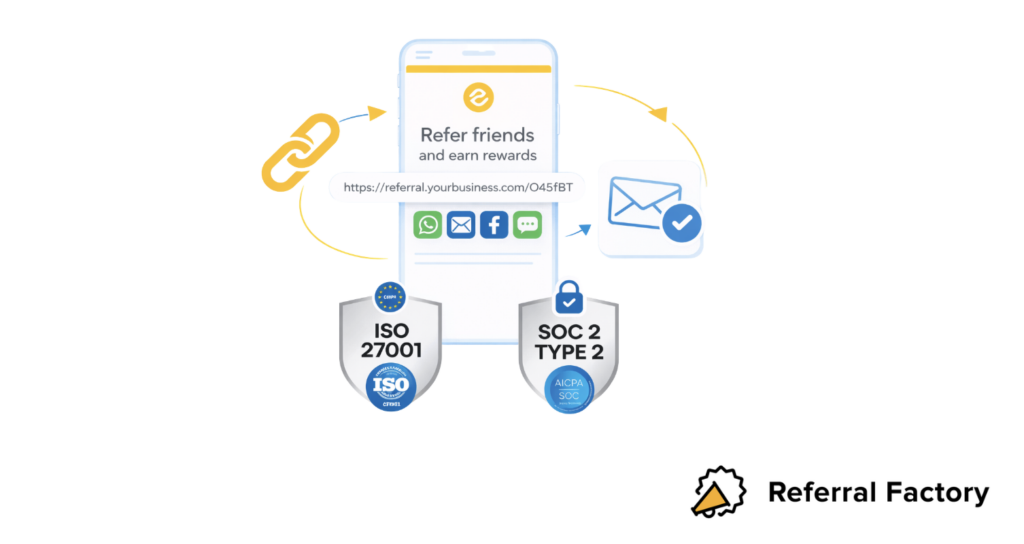
Referral programs often involve collecting personal data, so the platform you choose matters. Beyond features, it’s worth considering whether your referral software meets recognized security and privacy standards. Using a provider with trusted certifications like SOC 2 and ISO27001 helps ensure customer information is handled responsibly and reduces compliance risk as your program scales. Referral Factory is one of the few referral platforms that is both SOC and ISO27001 compliant, giving businesses added confidence in the security of their referral campaigns.
Industry-specific rules
Financial services and banking programs face additional oversight. Financial services referral compliance (FINRA) requires strict handling of any personal or transactional data shared during a referral campaign. Tracking, rewards, and reporting must follow both privacy and industry standards. This approach safeguards the business and avoids penalties.
The benefit of compliance
Embedding privacy protections into your referral workflow reduces risk while building trust. Participants engage more when they know their data is safe, turning GDPR and CCPA adherence into a driver for participation and long-term referral success. Privacy-conscious programs often see higher quality referrals because users are confident sharing with friends and colleagues.
Program Integrity & Anti-Spam Acts
Running a referral program isn’t just about rewards and growth. Maintaining program integrity protects your brand, participants, and compliance standing. Without clear rules, spam complaints, fraudulent referrals, or legal missteps can quickly undermine a program’s success. Below is how to safeguard your referral campaigns while keeping participants engaged.
Terms and Conditions
- Every referral program should have clear terms and conditions.
- Clearly define eligibility, rewards, and timelines. Participants should know what counts as a valid referral and how rewards are distributed.
- Incorporate guidelines to address unusual behavior, such as multiple sign-ups from the same user or suspicious activity.
- Including this information upfront protects your business and sets expectations for participants.
Anti-Spam Compliance
- Referral programs often rely on email to spread invitations. Following anti-spam laws for referral emails is critical.
- Ensure recipients have opted in, provide a clear unsubscribe option, and include accurate sender information.
- For Canadian audiences, comply with CASL requirements, while in the U.S., CAN-SPAM rules apply. These safeguards prevent complaints and potential fines.
Fraud Prevention
- Fraudulent activity can take many forms, including fake accounts, duplicate submissions, or manipulation of rewards.
- Implement monitoring systems to detect irregular patterns and flag potential abuse.
- Educating participants on proper behavior and rewarding verified referrals can help maintain program integrity.
- Knowing how to prevent referral program fraud legally should be part of your operational checklist to protect revenue and maintain trust.
Transparency and Reporting
- Keep clear records of all referral activity. Regular reporting ensures that rewards are issued fairly and disputes are minimized.
- Transparency in data handling supports GDPR referral program compliance and contributes to participant confidence.
- Auditing referral logs periodically can reveal vulnerabilities and improve program reliability.
Benefits of Integrity
- Programs with strong anti-spam safeguards, clear terms, and fraud prevention see higher engagement and lower risk.
- Participants trust a program that is fair and transparent, increasing the likelihood they will share with friends and colleagues.
- Following a legal checklist for referral programs is not just compliance: it strengthens the reputation and long-term sustainability of your referral marketing efforts.
Taxation & Industry-Specific Rules
Referral rewards can be an incredible way to motivate customers and partners, but they also carry important obligations for both businesses and participants. Understanding these rules makes sure your program runs smoothly and avoids penalties or compliance issues, especially in regulated industries.
Understanding Tax Reporting
Most referral rewards are considered taxable income, which highlights the tax implications of referral rewards for both businesses and participants. In the U.S., if a participant earns $600 or more in a calendar year, a 1099-MISC or 1099-NEC form is usually required. Rewards may come in cash, gift cards, discounts, or other incentives, each carrying potential tax obligations. Clear documentation helps both your business and participants avoid surprises and maintain trust in the program.
Financial Services Compliance
For industries like financial services, additional rules apply. Firms must follow FINRA guidelines when offering incentives, and some rewards, such as cash bonuses for client referrals, may be restricted or require approval. By establishing clear policies and keeping thorough records, businesses can stay compliant while still motivating participants to engage in the program.
Healthcare and Regulated Sectors
Healthcare and other regulated industries face stricter rules. Patient referral incentives, for example, must comply with anti-kickback statutes. In many cases, rewards should be non-monetary or nominal to remain legal. Reviewing sector-specific regulations before launching a referral program is essential to prevent costly legal problems and protect the reputation of your business.
Privacy and Consumer Protection
Referral programs that collect personal information must also comply with CCPA referral marketing rules for residents of California. Participants should clearly understand how their data will be used, and businesses need to provide opt-out options and proper data management. Respecting privacy not only avoids fines but also strengthens trust and encourages people to participate in the program.
Best Practices for Compliance
To keep your referral program both motivating and legal, maintain a structured system for tracking rewards, consult with legal and tax professionals, and design incentives that follow industry rules. Aligning your program with regulations maximizes participation while reducing the risk of penalties and protecting your brand’s reputation.
Ensuring Your Referral Program Remains Fully Compliant
Maintaining a compliant referral program means balancing creativity with responsibility. You need to be transparent about incentives, follow FTC disclosure requirements for referrals, respect privacy rules like GDPR and CCPA, and track all rewards carefully to meet tax obligations. Anti-spam laws for referral emails and sector-specific rules, such as FINRA guidelines for financial services or anti-kickback regulations for healthcare, also play a crucial role.
Remember, a fully compliant program begins with clear, easily accessible terms and conditions. Participants should understand exactly how rewards work, how their data is used, and what behaviors are permitted. Monitoring activity for suspicious patterns and using secure platforms can prevent fraud while building trust among customers and partners.
Compliance is not just a box to tick. It strengthens your program’s credibility and encourages long-term engagement.
By embedding legal considerations into every stage, from design to execution, you create a safer, more compliant growth channel. This approach allows your program to scale sustainably and align with the growing shift toward referral-driven marketing.
FAQs
What is considered a “material connection” under FTC guidelines?
A “material connection” exists whenever someone promoting a product receives a benefit in return, such as money, discounts, or rewards. For example, if an influencer shares a referral link for an online course and earns a free month for each signup, that relationship must be disclosed. The FTC expects this connection to be clear and noticeable, whether the promotion is on Instagram, a blog, or email. Hiding incentives can lead to fines and damage trust.
Do I need explicit consent (opt-in) or can I use an opt-out model for referral data?
Explicit consent is the safest approach. If a software company wants to collect emails from participants to reward referrals, users should actively agree to share their information. An opt-out model, where data is automatically collected unless declined, can violate GDPR or CCPA rules, especially for international audiences. Asking upfront protects your business, ensures transparency, and builds confidence in the program.
How should a company handle tax reporting (1099 forms) for referral rewards?
Referral rewards, such as cash or high-value prizes, can create taxable income for recipients. A fintech platform giving $200 for each referred user must issue 1099 forms if thresholds are met. Keeping accurate records, tracking payouts, and consulting a tax professional prevents surprises for both the business and participants. Clear communication about tax obligations also maintains trust and avoids compliance issues down the line.
What are the consequences of violating GDPR or CCPA with referral data?
Failing to comply with data privacy laws can lead to hefty fines and reputational damage. For example, an education platform collecting participant emails without consent or storing them insecurely could face enforcement actions under GDPR or CCPA. Beyond fines, users may lose trust and stop participating, reducing program effectiveness. Regular audits, secure systems, and clear privacy notices help companies stay compliant while keeping participants confident their data is handled responsibly.
Referral link generator (free)
We take your website, send it to Referral Factory, and provision a real referral program for your brand. The link you get is a live referral URL your customers can share, backed by tracking and rewards in the app - not a static "generator" preview. This is the fastest way to see what a real referral program would look like for your brand! Try it below...