Connect Zapier to the referral workflow you already run.

Zapier is useful when the real workflow spans multiple tools. Instead of forcing everything into one system, you can use Zapier to move referral events between the tools your team already depends on.
Best when your referral workflow needs to cross tools instead of living entirely inside one CRM or billing platform.
Live workflow
Zapier referral workflow

Automation

Cross-tool workflow

Zapier works best when the referral process needs to bridge systems rather than rely on one source of truth alone.

Milestone

Qualification rule

Tie referral qualification to the event in your stack that clearly proves the referral converted so rewards only move when the commercial milestone is real.

Why this matters

Why Zapier is a practical referral operations layer

Zapier matters when the real barrier is not referral tracking. It is the number of tools involved in getting a referral from sign-up to qualification.
Operational leverage
You can connect the rest of the stack

You can connect the rest of the stack

Move referral data between forms, CRMs, email tools, and internal systems without asking engineering to custom-build every handoff.
Qualification can still stay rule-based

Qualification can still stay rule-based

Even across multiple tools, you can keep one clear qualifying event rather than creating a messy chain of assumptions.
Teams can move faster on operational changes

Teams can move faster on operational changes

This is useful when the workflow changes often and the business needs a flexible automation layer rather than a fixed point integration.
The strongest integrations remove handoffs between customer data, qualification logic, and reward operations.
A clean milestone is more useful than a flashy automation because it protects both ops and unit economics.
Teams get more value when the referral workflow runs where they already track the customer relationship.

What this unlocks

What Zapier unlocks once Referral Factory is connected

The useful pattern is simple: enrol the right people, route the right referrals, and qualify the right outcomes without spreadsheet cleanup.
Built for live programs
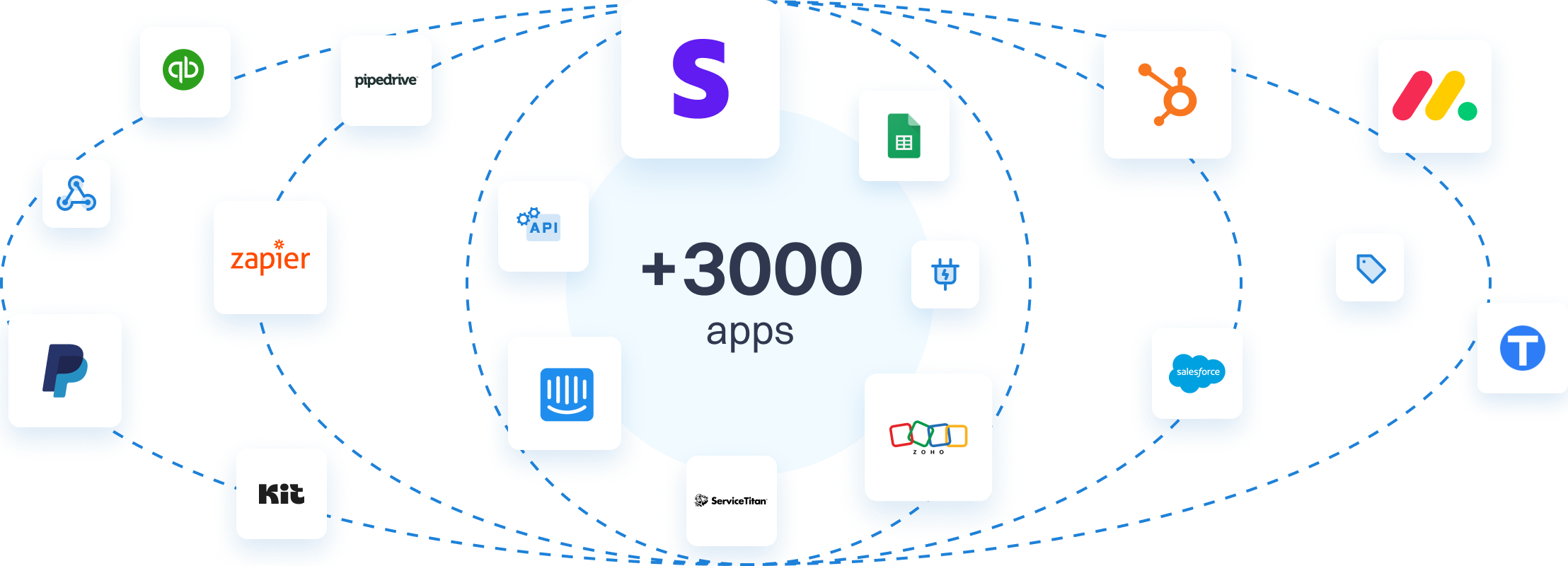
Push referral events into the tools you already use

Push referral events into the tools you already use

Use Zapier as the relay layer when referrals need to reach more than one system.
Bring qualifying events back into Referral Factory

Bring qualifying events back into Referral Factory

When another tool confirms the outcome, Zapier can pass the signal back cleanly.
Reduce engineering dependency

Reduce engineering dependency

For many teams, the win is not just automation. It is being able to change the workflow without a development ticket every time.

How the workflow runs

How the workflow runs when Zapier is the source of truth

The strongest Zapier setup uses one clear qualifying event and treats Zapier as the transport layer between the tools that matter.
Choose the systems that need to talk

Step 1

Choose the systems that need to talk

Map where customers start, where referred people should go, and where the qualifying event actually happens.
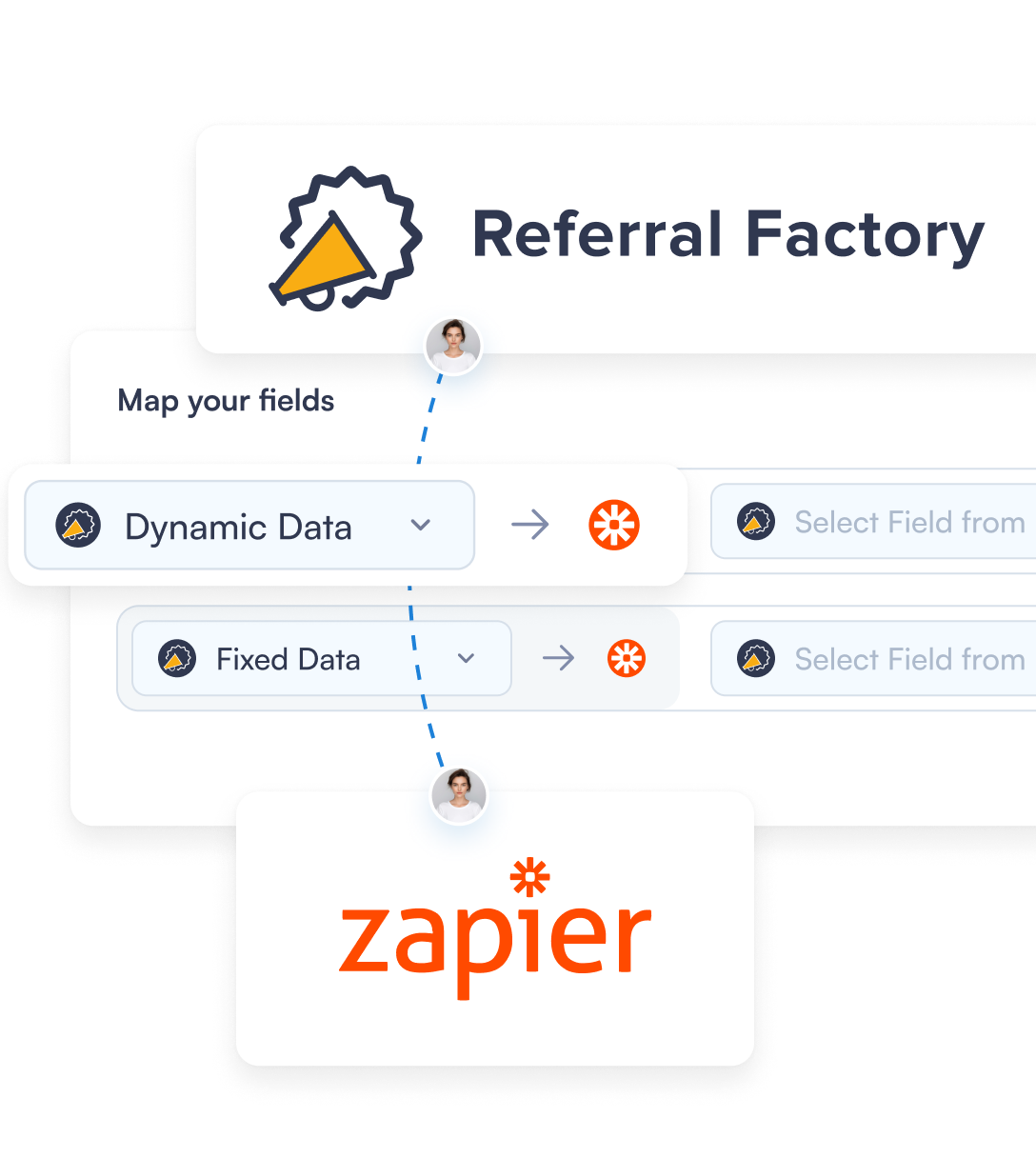
Send referral events out of Referral Factory

Step 2

Send referral events out of Referral Factory

Use Zapier to move those events into the CRM, helpdesk, database, or internal tool that needs them.
Watch for the conversion event in the right tool

Step 3

Watch for the conversion event in the right tool

Do not guess. Pick one event that clearly means the referral should qualify.
Pass the qualification signal back cleanly

Step 4

Pass the qualification signal back cleanly

That allows rewards and downstream referral logic to run without manual stitching.

Who this fits best

Best fit for teams already operating in Zapier

Best for teams with multi-tool workflows that do not want to custom-build every single referral handoff.

Lean teams without heavy engineering bandwidth

Useful when the business wants to connect tools quickly and iterate without code-heavy implementation work.

Teams operating across multiple apps

Useful when customer data, lead handling, and qualification already live in different systems.

Operators who value flexibility over one fixed integration

Good fit when the workflow changes often and the automation path needs to adapt with it.

Launch checklist

What needs to be true before you switch this on

The fastest launches happen when the milestone is clear, the owner is known, and the data already lives where your team works.

Clean records in the source system

Make sure Zapier already contains the customer or conversion data you want to use for referral operations.

A simple enrolment path

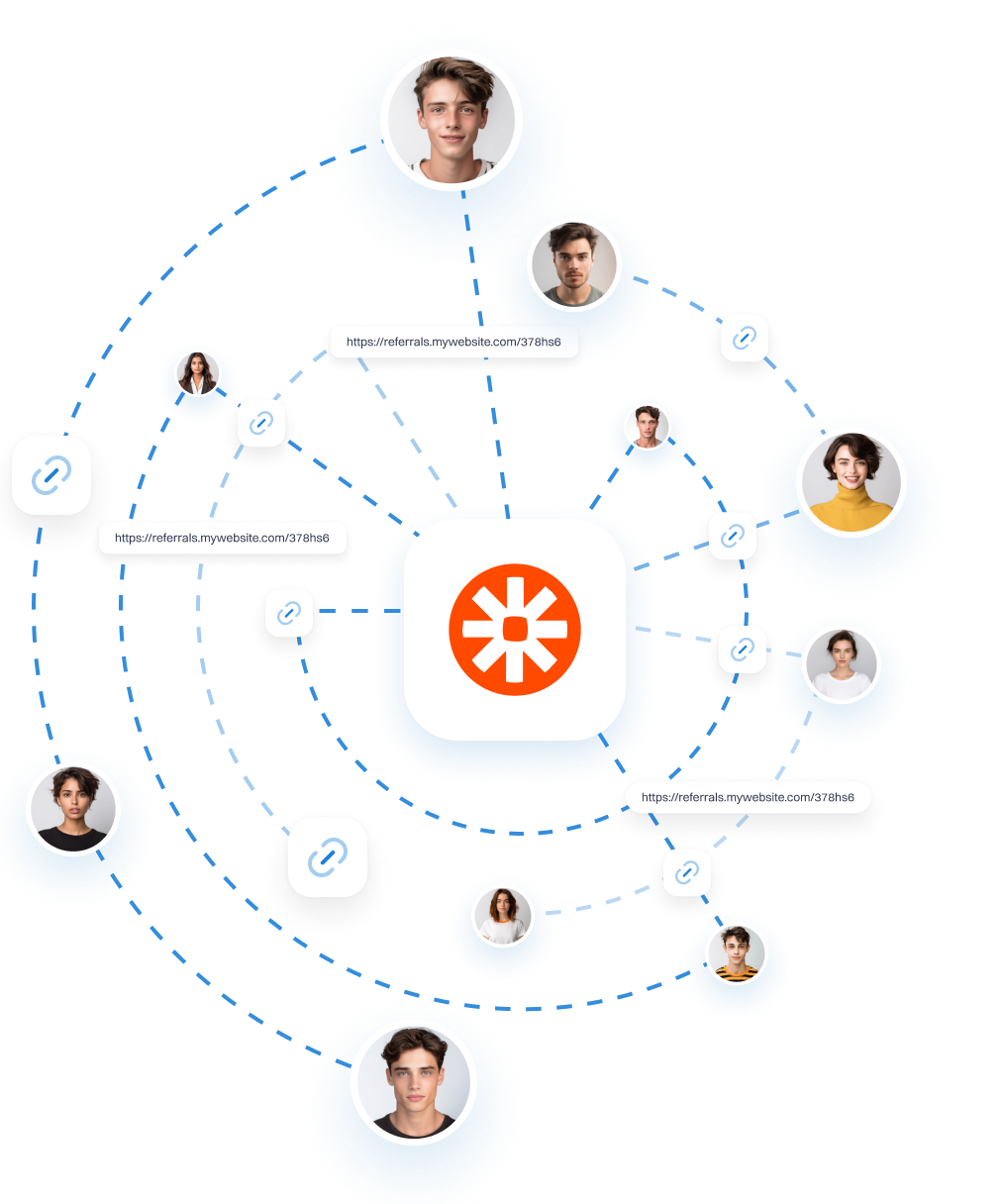
Decide whether you want to generate links from existing records, sign people up through a form, or support both motions.

One qualifying milestone: the event in your stack that clearly proves the referral converted

Pick a milestone the business already trusts so rewards are tied to real commercial progress instead of guesswork.

Automation ownership

Assign one ops or automation owner to own mappings, qualification rules, and what should happen after a referral converts.

Review and exception handling

Decide which scenarios can run automatically and which ones should pause for review before a reward is issued.

A reporting loop

Track enrolments, referred leads, qualification rate, and issued rewards so the team can improve the workflow instead of babysitting it.

Next step

Put Zapier to work in the referral channel

If the referral workflow crosses more than one tool, Zapier gives you a practical way to move the signal between them without turning the setup into a custom engineering project.
Zapier referral workflow

Use existing data

Keep customer, lead, or payment context inside Zapier instead of rebuilding the workflow somewhere else.

Qualify on real outcomes

Base rewards on the event in your stack that clearly proves the referral converted so the business can trust the trigger.

Reduce admin drag

Give the team a cleaner referral workflow without creating one more system to monitor manually.

FAQ

Questions teams ask before they wire this into a live program

The pattern only works when qualification, routing, and reward rules are clear. These are the questions most teams need answered before rollout.
What does the Zapier integration actually automate?+
Zapier helps you send referral events into the rest of your stack, watch for the qualifying event in the right tool, and return the signal when the referral should progress. The point is to move referral operations into the same workflow the team already trusts instead of creating a second admin process.
Do we have to change the way we already use Zapier?+
Usually not. Zapier is most useful when it adapts to the workflow you already have rather than forcing the team into a new operating model.
What should count as a qualified referral in Zapier?+
Use one milestone the business already believes in, such as the event in your stack that clearly proves the referral converted. When the qualifying event is obvious, rewards become easier to defend and easier to automate.
Who should own the setup?+
Give ownership to the person closest to the Zapier workflow. They should understand the data, the milestone, and what the team wants to happen after a referral is qualified.