
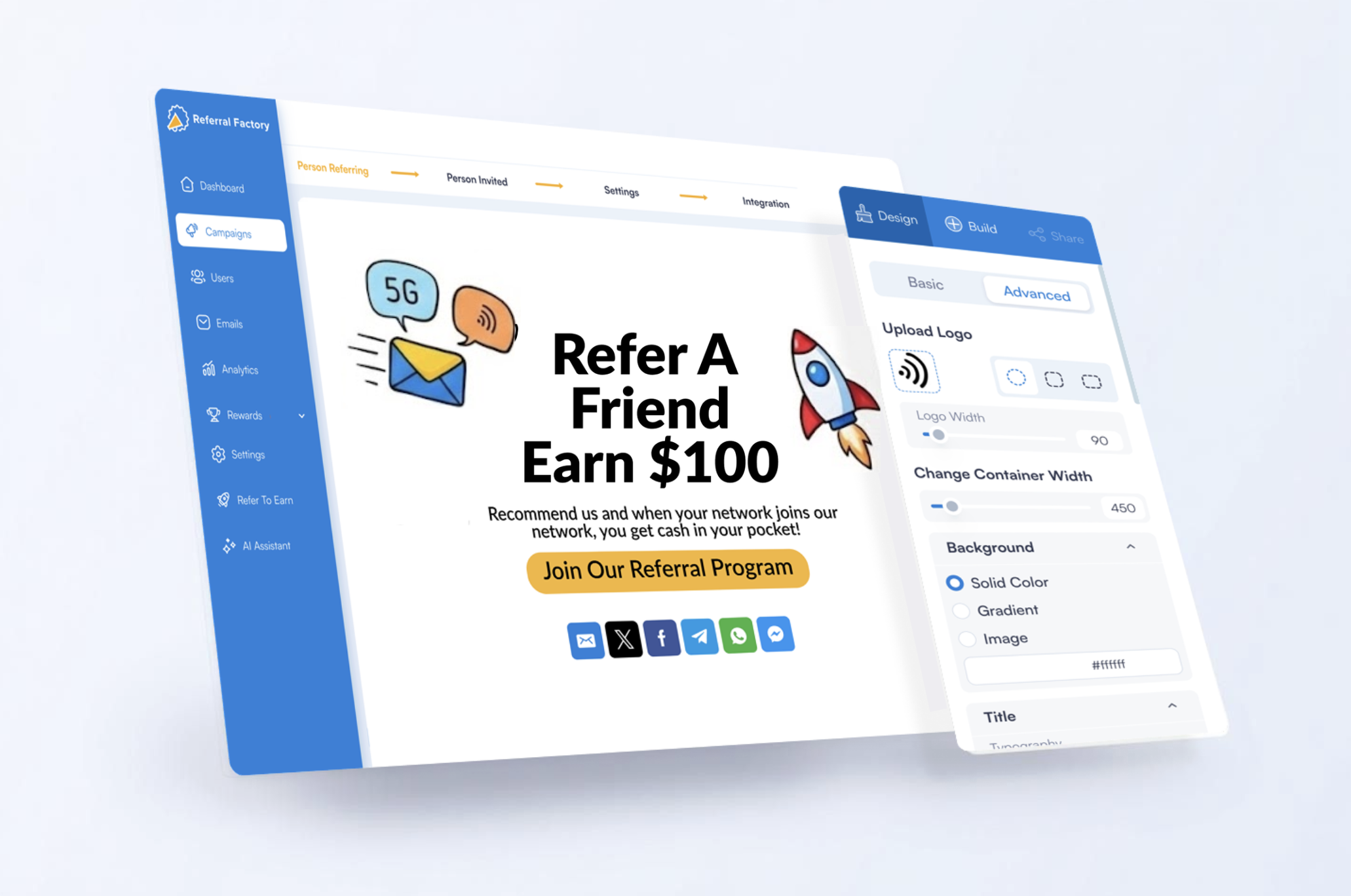
Typical reward range
$25-$150
Cash, account credit, or bill incentives often work well when tied to a verified activation milestone.
Telecommunications
When internet, mobile, or connectivity service works better than the alternatives, people tell the people around them. This page shows how to turn that behavior into a structured referral system with the right reward, timing, and activation rules.
Typical reward range
$25-$150
Cash, account credit, or bill incentives often work well when tied to a verified activation milestone.
Case-study activations
700+
Structured referral follow-up can turn strong service moments into a meaningful acquisition channel.
Best time to ask
Referral timing matters
Best time to ask: after service installation, activation, or another visible reliability moment.
Referral-ready criteria
Do not launch a referral program just because the industry has word of mouth. Launch when customers are happy, the referral moment is obvious, the reward makes economic sense, and conversion can be tracked.
Why this works
Connectivity products are emotional, visible, and social. People notice speed, downtime, and reliability, and they ask each other who they use.

When your service solves a frustrating problem, customers feel the difference immediately and can describe it clearly to others.

Installations, neighborhood availability, and shared buildings all create referral opportunities that feel local and relevant.

Neighbors, office parks, apartment blocks, and local networks make it easier for one happy customer to influence the next one quickly.
Referred customers usually arrive with more trust and more urgency.
You can pay only after activation or another verified service milestone.
Local service footprints make referrals especially relevant and easier to act on.

Regional ISP Success Story
700+ new subscriber activations
Case study
This case-study lens shows what happens when a telecom provider turns installation and service wins into a structured referral workflow.
How many customers will you ask to refer?
Estimated annual referral leads
The estimate shows the lead volume available when referral prompts become part of installation, activation, and retention moments.
About 25% of customers asked will actively refer
Each referring customer generates roughly 2 leads per year
Program design
The strongest telecom programs are easy to explain: the customer shares, the friend gets a practical service benefit, and the reward pays out once activation is confirmed.
Reward design
Cash or account credit usually works best because customers understand it immediately and it is easy for billing and operations teams to administer.
Friend-facing offer
The referred friend still needs a reason to switch, such as priority installation, bill credit, or setup support.
You do not want them saying:
"Use my link so I can get paid."
You want them saying:
"Use my link and get priority installation plus a bill credit when your service goes live."
That sounds useful, not salesy. The reward motivates sharing while the offer helps the next customer take action.
Timing
Telecom referral prompts work best when the user can clearly feel the improvement and explain it to someone nearby.
Right after installation or activation, when the upgrade feels immediate.
After a strong speed-test or reliability moment that makes the benefit tangible.
When a billing or savings benefit becomes visible.
After a service-support win that confirms trust in the provider.
Through periodic reminders so the referral program stays active after the first month.
Timing rules
The best referral program still fails if the ask happens at the wrong moment. Build the timing into your process so the prompt shows up when the customer is most likely to share.
Ask when the service difference is obvious, not before the customer has felt it.
Make the referred-person benefit clear enough to explain in one sentence.
Tie payout to a verified activation milestone so the economics stay healthy.
Referral flow
The process should feel easy for the customer and operationally clear for teams handling activation and billing.
Make the referral path easy to share in messages, email, or portal prompts.

Lead with a bill credit, setup benefit, or priority-install offer.

Track the path from enquiry to install or activated service.

Pay once the activation milestone is confirmed.
Launch requirements
You need one system that connects customers, referral links, subscriber activation, and payout logic without creating extra operational noise.
Use one system to manage the program and keep customer, referral, and payout data tied together.
Give people a simple way to share that does not require a long explanation from your team.
Make the qualifying milestone explicit so everyone knows when the reward is earned.
Follow up at the moments that matter so participation does not depend on memory.
Your team should know exactly how to introduce the program when the customer is most likely to share.
Measure participation, lead quality, and revenue so you can improve the program over time.
Exclusive offer
The next step is a live demo. We will walk you through the setup, reward timing, and operating model for your category, and if you decide to build with Referral Factory afterwards, you can get 50% off your first six months.
See how Referral Factory would fit your team, referral flow, and qualification milestones before you commit.
After the demo, if you decide to launch with Referral Factory, you can unlock 50% off your first six months.
Use proven activation, billing, and follow-up patterns that fit subscription and service-install workflows.

FAQ