
Typical reward value
1-2 months
Many SaaS teams anchor referral rewards to the value of one or two months of the plan being sold.
SaaS & Software
When users get real value from your product, they naturally tell peers. This page shows how to structure that behavior into a referral engine with the right offer, the right timing, and a simple operating model.
Typical reward value
1-2 months
Many SaaS teams anchor referral rewards to the value of one or two months of the plan being sold.
Case-study referrals
1,800
Product-led moments and structured reminders can create meaningful referral volume over 12 months.
Best time to ask
Referral timing matters
Best time to ask: right after a product milestone, support win, or visible ROI moment.
Referral-ready criteria
Do not launch a referral program just because the industry has word of mouth. Launch when customers are happy, the referral moment is obvious, the reward makes economic sense, and conversion can be tracked.
Why this works
SaaS users share tools that make them faster, smarter, or more effective. When a product creates visible wins, referrals become easier to explain and easier to scale.
Strong software gross margins often let teams offer a meaningful reward without losing the economics of the customer relationship.

When a product helps someone hit a goal, save time, or look good internally, that story tends to spread to peers quickly.
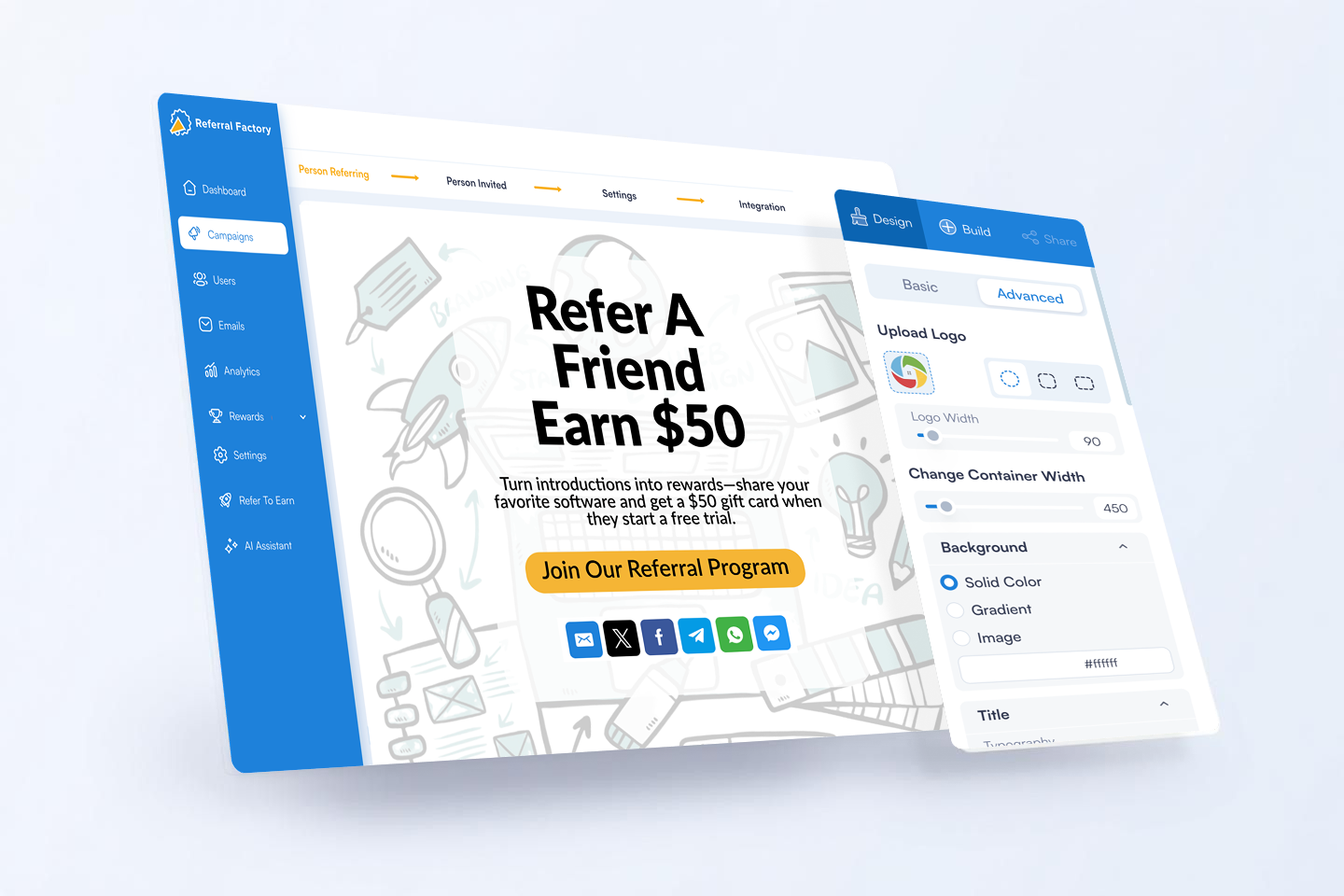
Software buyers trust other operators who have already used the product in a similar context.
Referred users usually start with more trust and a clearer understanding of the product.
You can align the reward with conversion or annual-plan milestones, which keeps the channel accountable.
The same product moments that improve retention can also power referral prompts.
Leading SaaS Company
Generated in 12 months
Case study
This view shows what happens when a SaaS team turns referrals into a repeatable growth motion instead of leaving them as occasional word of mouth.
How many customers will you ask to refer?
Estimated annual referral leads
The estimate shows the lead volume available when referral prompts are built into onboarding, support, and success milestones.
About 25% of customers asked will actively refer
Each referring customer generates roughly 2 leads per year
Program design
The strongest SaaS programs combine a commercial reward for the user with a clear reason for their contact to try the product.
Reward design
Cash, credits, or plan value can work, but the reward should be simple enough that users understand it instantly.
Friend-facing offer
The referred contact needs a concrete reason to engage, like a discounted trial, onboarding benefit, or feature upgrade.
You do not want them saying:
"Use my link so I can get paid."
You want them saying:
"Use my link and get 50% off for 3 months plus priority onboarding."
That sounds useful, not self-serving. The reward gets the user to share, and the offer gives their contact a clear reason to click.
Timing
SaaS referral prompts work best when the user has just experienced a visible win and can describe the value clearly to someone else.
After a key activation moment like first campaign launch, first invoice, or first completed workflow.
After a strong support interaction or success review that reinforces confidence in the product.
When a team milestone or ROI outcome becomes visible internally.
Inside the product, when the referral option can be surfaced without interrupting the user.
Through scheduled reminder sequences so the prompt stays active after onboarding.
Timing rules
The best referral program still fails if the ask happens at the wrong moment. Build the timing into your process so the prompt shows up when the customer is most likely to share.
Attach the ask to a product or customer-success milestone, not an arbitrary blast.
Keep the sharing path visible inside the product once the user is ready.
Pay against a real conversion milestone so the channel stays commercially clear.
Referral flow
The best SaaS referral systems are lightweight for the user and operationally clear for the team.

Make the link visible inside the app and easy to share in a few clicks.
Lead with a useful benefit like discount, onboarding support, or plan upgrade.
Track the path from click to signup to paid conversion or annual upgrade.
Once the conversion milestone is met, issue the reward promptly.
Launch requirements
You need one system that connects user data, referral sharing, conversion milestones, and payout logic without creating extra manual work.
Use one system to manage the program and keep customer, referral, and payout data tied together.
Give people a simple way to share that does not require a long explanation from your team.
Make the qualifying milestone explicit so everyone knows when the reward is earned.
Follow up at the moments that matter so participation does not depend on memory.
Your team should know exactly how to introduce the program when the customer is most likely to share.
Measure participation, lead quality, and revenue so you can improve the program over time.
Exclusive offer
The next step is a live demo. We will walk you through the setup, reward timing, and operating model for your category, and if you decide to build with Referral Factory afterwards, you can get 50% off your first six months.
See how Referral Factory would fit your team, referral flow, and qualification milestones before you commit.
After the demo, if you decide to launch with Referral Factory, you can unlock 50% off your first six months.
Use proven reward, milestone, and in-product timing patterns instead of bolting referrals on as an afterthought.
FAQ