
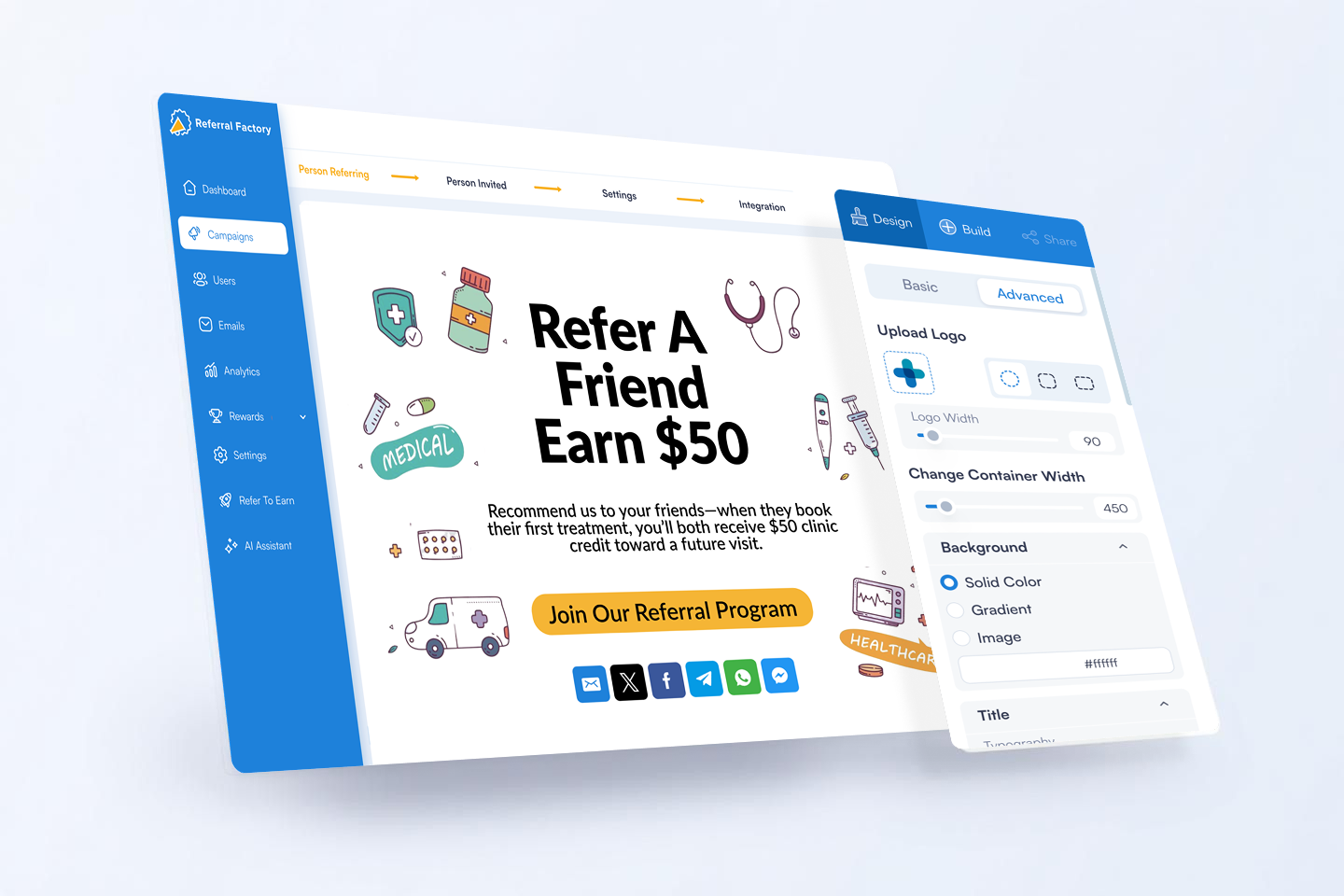
Typical reward range
$50-$300
Simple cash or account credit often works best when tied to a confirmed treatment or package milestone.
Medical Aesthetic
When treatments create visible results and patients feel more confident, referrals become one of the strongest growth levers in the category. This page shows how to structure those moments into a program that feels premium and easy to run.
Typical reward range
$50-$300
Simple cash or account credit often works best when tied to a confirmed treatment or package milestone.
Case-study patient bookings
800+
Visible outcomes and structured follow-up can turn happy patients into a meaningful acquisition channel.
Best time to ask
Referral timing matters
Best time to ask: after visible results, strong reviews, or repeat-treatment moments.
Referral-ready criteria
Do not launch a referral program just because the industry has word of mouth. Launch when customers are happy, the referral moment is obvious, the reward makes economic sense, and conversion can be tracked.
Why this works
Medical-aesthetic decisions are personal, trust-led, and highly visual. That makes referrals especially persuasive when patients are happy with the outcome and ready to talk about it.

Higher treatment values often leave room for a stronger reward without breaking the economics of the clinic.

When outcomes are noticeable, patients naturally receive questions and compliments that can turn into referrals.

Because the category is high trust, a personal recommendation reduces hesitation far more effectively than generic marketing.
Referred patients usually arrive with more trust and less skepticism.
You can pay only after a confirmed treatment or package milestone, which protects the channel economics.
Repeat-treatment categories create multiple chances to reactivate the referral ask.

Glow Aesthetics Clinic
800+ new patient bookings
Case study
This case-study framing shows what happens when a clinic turns visible patient results into a structured referral motion instead of relying only on reputation alone.
How many patients will you ask to refer?
Estimated annual referral leads
The estimate shows the lead volume available when referrals become part of post-treatment and follow-up workflows.
About 25% of customers asked will actively refer
Each referring customer generates roughly 2 leads per year
Program design
The referral experience should feel premium and easy to explain: a clear reward for the patient and a genuinely useful first step for the referred person.
Reward design
Cash or account credit usually works best because it is simple, professional, and easy to explain.
Friend-facing offer
The referred person still needs a reason to engage, such as a consultation, skin assessment, or first-visit treatment benefit.
You do not want them saying:
"Use my link so I can get paid."
You want them saying:
"Use my link and get a consultation plus a personalized treatment plan review."
That positions the referral as useful guidance. The reward motivates the patient to share, and the offer gives the friend a professional reason to book.
Timing
Medical-aesthetic referrals work best when the patient feels confident in the outcome and is naturally more open to talking about it.
After visible treatment results or a strong before-and-after moment.
When patients receive compliments or ask questions from friends.
During follow-up reviews or maintenance appointments.
After a positive review or strong service interaction.
Through periodic reminder sequences so the referral prompt stays active over time.
Timing rules
The best referral program still fails if the ask happens at the wrong moment. Build the timing into your process so the prompt shows up when the customer is most likely to share.
Ask once confidence in the result is high, not before the outcome is visible.
Keep the program premium and simple so it fits the brand experience.
Make the referred-person offer feel like helpful guidance rather than a hard sell.
Referral flow
The process should feel clean for the patient and manageable for the clinic team handling consultations, bookings, and follow-up.

Make it easy to share after appointments or in post-treatment follow-up.
Lead with a treatment review, skin assessment, or another useful first step.
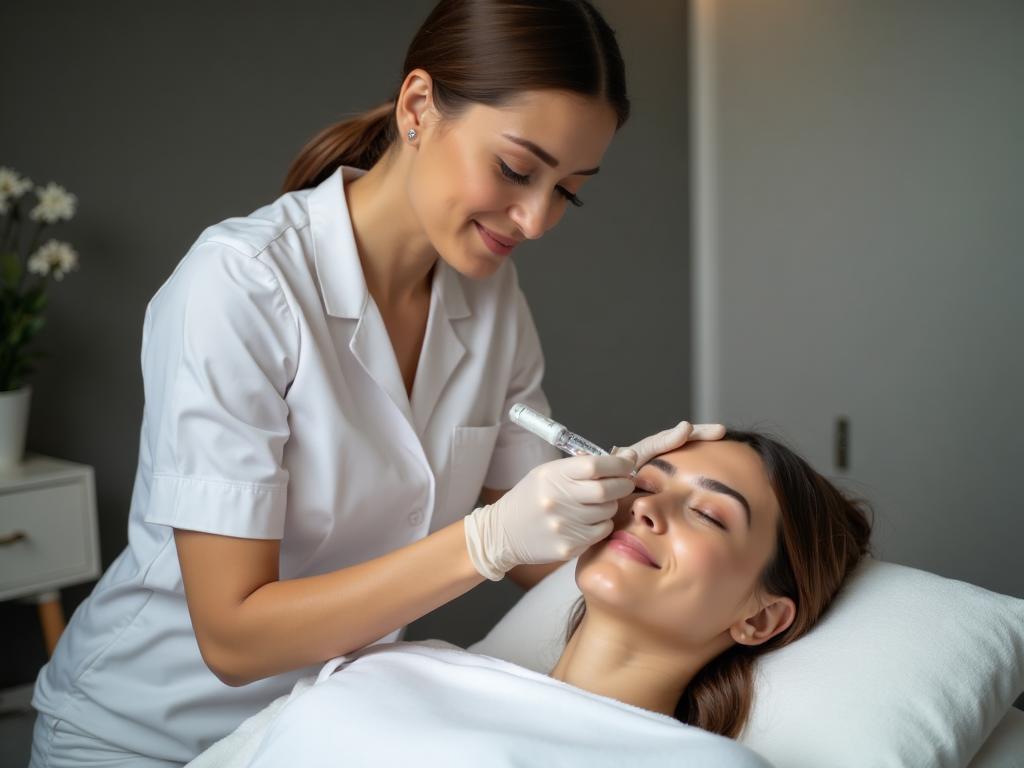
Track the journey from consultation to treatment or package milestone.
Pay after the agreed treatment milestone is met so the system stays commercially clear.
Launch requirements
You need one system that connects patients, consultations, treatment milestones, and reward payouts without creating extra admin load for the clinic team.
Use one system to manage the program and keep customer, referral, and payout data tied together.
Give people a simple way to share that does not require a long explanation from your team.
Make the qualifying milestone explicit so everyone knows when the reward is earned.
Follow up at the moments that matter so participation does not depend on memory.
Your team should know exactly how to introduce the program when the customer is most likely to share.
Measure participation, lead quality, and revenue so you can improve the program over time.
Exclusive offer
The next step is a live demo. We will walk you through the setup, reward timing, and operating model for your category, and if you decide to build with Referral Factory afterwards, you can get 50% off your first six months.
See how Referral Factory would fit your team, referral flow, and qualification milestones before you commit.
After the demo, if you decide to launch with Referral Factory, you can unlock 50% off your first six months.
Use proven follow-up, treatment-milestone, and client-care patterns instead of leaving referrals to chance.

FAQ