
Reward design, incentive strategy, payouts, and commission structures.

Quick answer: A brand ambassador program is a structured way to recruit people who already trust your brand, give them a clear role, and reward them for useful promotion, referrals, content, community activity, or introductions. In 2026, the best brand ambassador programs are not loose influencer campaigns. They are measurable customer marketing programs with clear eligibility, referral tracking, reward rules, content guidance, and reporting.
If you already have happy customers, active users, creators, partners, alumni, members, or community advocates, a brand ambassador program can turn that goodwill into a repeatable growth channel. The key is to keep the program authentic while still giving your team enough structure to track performance, manage rewards, prevent fraud, and understand which ambassadors create real value.
This guide explains how to start a brand ambassador program in 2026, including who to recruit, how to reward ambassadors, what to track, and how to use referral tracking, rewards, program features, and integrations to make the program measurable.
What is a brand ambassador program?
A brand ambassador program is an organized advocacy program where selected people promote a brand over time. Ambassadors may share referral links, publish content, join events, give product feedback, create tutorials, speak in communities, or introduce qualified buyers. Some programs are customer-led. Others involve creators, partners, employees, students, franchisees, alumni, or local community leaders.
The difference between casual word of mouth and a real ambassador program is structure. A real program defines who can join, what ambassadors are expected to do, what they are allowed to say, how referrals or activity are tracked, and when rewards are paid. Without those rules, the program quickly becomes hard to measure and hard to scale.
Brand ambassador programs vs influencer, affiliate, referral, and loyalty programs
| Program type | Primary role | Best for | Main metric |
|---|---|---|---|
| Brand ambassador program | Ongoing trusted promotion from selected advocates. | Community growth, referrals, content, social proof, events, and long-term advocacy. | Qualified referrals, content output, conversion rate, revenue, and ambassador quality. |
| Influencer campaign | Paid creator reach for a specific campaign. | Awareness spikes, launches, sponsored posts, and creative distribution. | Reach, engagement, traffic, and campaign conversions. |
| Affiliate program | Commercial promotion by partners, publishers, or creators. | Performance marketing where commission is tied to leads or sales. | Attributed conversions, commission cost, revenue, and partner quality. |
| Referral program | Customers invite people they know. | Turning trusted recommendations into measurable new customers. | Referred leads, qualified referrals, conversion rate, and referral CAC. |
| Loyalty program | Existing customers earn benefits for repeat activity. | Retention, repeat purchases, membership, and customer engagement. | Repeat rate, retention, frequency, LTV, and points activity. |
These models can overlap. For example, a customer ambassador can use a referral link, receive a reward after a qualified referral, and also create content for the brand. What matters is that each program has a clear job. If the goal is measurable acquisition, build tracking into the program from the beginning.
Step-by-step 2026 launch plan
1. Define the business goal
Start by choosing the outcome the program should create. Common goals include referred sales, qualified leads, app signups, booked demos, event attendance, community growth, reviews, user-generated content, or local awareness. Avoid measuring only vanity activity. A strong brand ambassador program should connect ambassador activity to commercial or customer outcomes.
Write one primary goal and one secondary goal. For example: "Generate 100 qualified referrals per quarter from customer ambassadors" is stronger than "get more people talking about us." The clearer the goal, the easier it is to choose ambassadors, rewards, and tracking rules.
2. Build your ambassador profile
The best ambassadors are not always the people with the biggest audience. Look for people who understand your product, reach the right buyers, communicate credibly, and are willing to follow program rules. For SaaS, that might be power users. For education, it might be alumni or parents. For beauty and wellness, it might be repeat customers with strong local trust. For B2B, it might be customers, consultants, agencies, or professional partners.
- They have real experience with your product or service.
- They can reach the audience you actually want.
- They are credible, consistent, and aligned with your brand values.
- They understand the reward rules and disclosure requirements.
- They can create referrals, introductions, content, reviews, or community trust repeatedly.
3. Recruit from warm audiences first
Start with people who already know the brand: loyal customers, high-NPS users, repeat buyers, community members, alumni, subscribers, employees, local partners, or creators who already mention you. Cold outreach can work later, but warm recruitment usually creates a more authentic first cohort.
Make the invitation specific. Explain who the program is for, what ambassadors will do, how they will be rewarded, and what support they will receive. If you need to source commercial partners or creators, see how to Find Affiliates and B2B influencers. If the program is customer-led, start with the customers most likely to recommend you anyway.
4. Create clear onboarding and guidelines
Ambassadors need freedom to use their own voice, but they also need guardrails. Give them a simple onboarding pack with brand guidelines, disclosure language, product claims they can and cannot make, creative examples, referral terms, reward rules, and contact points. Keep the first version short enough that people will actually read it.
For regulated or high-trust categories, involve legal or compliance before launch. This is especially important for finance, healthcare-adjacent services, insurance, employment, education, crypto, and enterprise B2B. The goal is not to slow the program down. The goal is to make it scalable without creating risk later.
5. Choose rewards that match the relationship
Brand ambassador rewards can include cash, commission, account credits, discounts, gift cards, free products, upgrades, early access, event invitations, status, exclusive content, charitable donations, or custom rewards. The best reward is the one that motivates the behavior you want without weakening trust.
For acquisition-focused programs, trigger rewards after a meaningful milestone such as qualified lead, approved application, paid purchase, booked appointment, signed contract, completed service, or retained customer. Paying only for clicks or vague activity can create noise. Paying for the right conversion keeps the program aligned with value.
6. Give every ambassador a trackable sharing path
Each ambassador should have a unique referral link. In many programs, it also helps to give them a referral code, QR code, or lead-submission path. Links are usually best for digital sharing because attribution is automatic. Codes help when referrals happen in podcasts, videos, events, checkout, communities, sales conversations, or offline settings.
Referral Factory can support referral links and referral codes so ambassadors can share in the way that fits their audience. If you use HubSpot, Salesforce, Stripe, Intercom, Zapier, Make, webhooks, API, or other systems, connect the program through integrations so conversion data flows back into your reward and reporting workflow.
7. Launch with a small cohort
Do not start by recruiting hundreds of ambassadors. Launch with a pilot group you can support properly. A good pilot proves whether people understand the offer, whether the share path works, whether referrals convert, whether rewards are clear, and whether your team can manage the operational load.
Use the pilot to improve emails, landing pages, ambassador instructions, reward timing, fraud rules, reporting, and customer support responses. Once the program is working, expand by segment: top customers, specific regions, creators, partners, alumni, or product communities.
8. Report on quality, not just activity
Ambassador programs can look busy without creating value. Track the full path from ambassador activity to business outcome. You should know who shared, who clicked, who converted, which referrals were qualified, which rewards are due, and which ambassadors are worth investing in.
Brand ambassador program metrics to track
| Metric | What it tells you | How to use it |
|---|---|---|
| Active ambassadors | How many approved ambassadors are actually participating. | Identify onboarding gaps and inactive cohorts. |
| Shares and link clicks | Whether ambassadors are distributing the program. | Spot channel fit, but do not treat clicks as success on their own. |
| Referred leads | How much demand ambassadors generate. | Compare ambassador cohorts, channels, and offers. |
| Qualified referrals | How many referrals meet your business rules. | Use this as the main operational milestone for many programs. |
| Conversion rate | How well referred traffic turns into customers or opportunities. | Improve landing pages, messaging, and audience fit. |
| Revenue or pipeline | The commercial value of the program. | Report impact to leadership and justify expansion. |
| Reward cost | How much the program costs per qualified outcome. | Compare against paid CAC, affiliate commission, and other channels. |
| Content and community activity | Whether ambassadors create awareness beyond direct referrals. | Useful for social, event, creator, and community programs. |
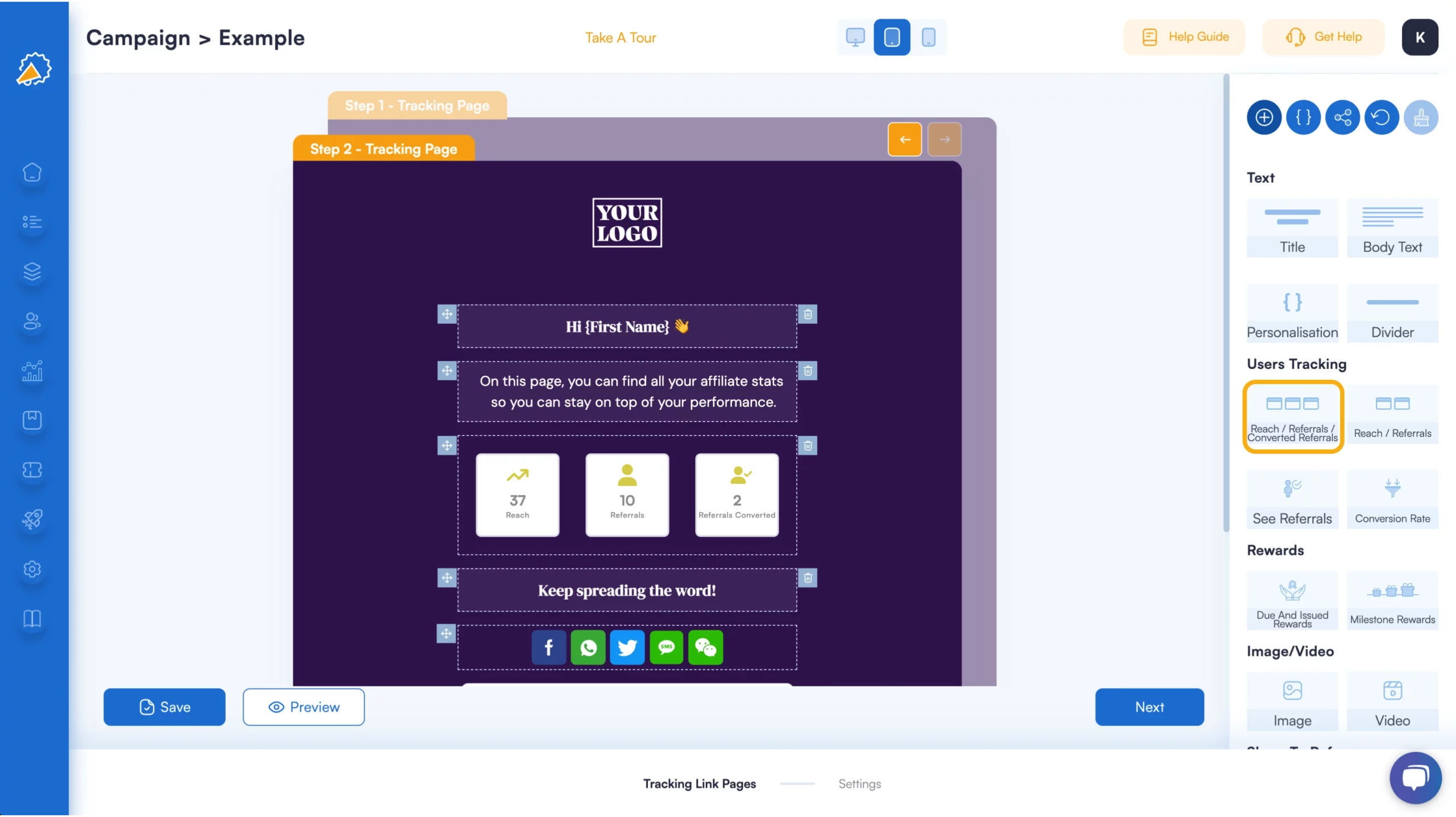
Brand ambassador rewards and incentives
There is no single reward that works for every ambassador program. Customer ambassadors may prefer credits, discounts, gifts, upgrades, exclusive access, or recognition. Commercial ambassadors may expect cash, commission, or performance-based rewards. Employees, students, franchisees, or regulated professionals may need a different policy altogether.
A strong reward structure answers four questions: who is eligible, what action triggers the reward, how long qualification takes, and what happens if a referral is rejected or refunded. For more detail, use the Referral Factory rewards page and the guide on calculating the value of a referral reward.
How to track brand ambassador programs
Tracking is what turns ambassador activity into a manageable channel. At minimum, each ambassador needs a unique referral link. Depending on your buyer journey, you may also need referral codes, QR codes, lead forms, CRM qualification, Stripe conversion tracking, API events, manual uploads, or webhook-based approvals.
The simplest setup is: invite ambassadors, give each person a unique link or code, send referred visitors to a branded page, qualify conversions in your source of truth, and issue rewards only when the referral meets your rules. See how referral tracking works if you want the operational detail.
Fraud and compliance guardrails
Good guardrails make brand ambassador programs easier to scale. Define excluded relationships, self-referral rules, duplicate lead handling, refund windows, minimum purchase rules, disclosure language, content approval rules, and reward review steps. If a reward is valuable, people will eventually test the edge cases.
For compliance-sensitive programs, document who can refer, what they can say, when consent is needed, how data is stored, and how rewards are approved. Enterprise teams should also decide who owns exceptions across marketing, sales, legal, finance, and customer success.
When to use Referral Factory for brand ambassador programs
Referral Factory is a good fit when you want brand ambassador programs to produce measurable referrals, not just general awareness. You can build branded ambassador journeys, give each ambassador unique links or codes, track conversions, connect to your CRM or payment stack, manage rewards, and review performance from one place.
If you want the broader platform view, start with the Referral Factory homepage. If you want to understand the specific tools available, compare the Referral Factory features. If the program needs CRM, payment, or automation workflows, review the integration options.
Brand ambassador program FAQ
How many ambassadors should I start with?
Start with a small pilot group you can support well. For many businesses, 10 to 50 ambassadors is enough to test messaging, tracking, rewards, and reporting before expanding.
Do brand ambassadors need to be customers?
No. Customers are often the most authentic starting point, but ambassadors can also be creators, partners, employees, students, alumni, franchisees, members, or local community leaders. The right choice depends on your audience and goal.
What is the difference between an ambassador and an affiliate?
An affiliate is usually a commercial promoter paid for attributed leads or sales. An ambassador often has a broader role that can include referrals, content, events, feedback, community participation, and long-term advocacy. Some ambassador programs also use affiliate-style rewards.
Should ambassadors get cash, discounts, or perks?
Use the reward that fits the relationship. Cash and commission work well for commercial outcomes. Credits, gifts, discounts, upgrades, access, and recognition can work well for customer-led programs.
Can brand ambassador programs use referral links and referral codes?
Yes. Referral links are usually best for online attribution, while referral codes help when promotion happens in video, audio, events, communities, checkout, or sales conversations. Many strong programs use both.
How do you know whether a brand ambassador program is working?
Measure qualified referrals, conversion rate, revenue or pipeline, reward cost, ambassador participation, content output, and customer quality. Activity matters, but the program should ultimately show business value.
Referral link generator (free)
We take your website, send it to Referral Factory, and provision a real referral program for your brand. The link you get is a live referral URL your customers can share, backed by tracking and rewards in the app - not a static "generator" preview. This is the fastest way to see what a real referral program would look like for your brand! Try it below...