
Examples, templates, checklists, and practical inspiration you can adapt quickly.
If you’re here, chances are one of two things is happening.
Either:
- You know referrals are powerful, but they’re not happening as often as you’d like
- Or referrals used to come in naturally… and then they slowed down
The quick answer: The fastest way to get referrals is to ask after a positive experience, be clear about who you help, and make it easy for your customers to make referrals through email, your website, or your customer portal.
Referrals aren’t something you can force. They don’t respond well to pressure, gimmicks, or clever tricks. They come from trust, and trust takes a bit of understanding to unlock.
This guide is here to do one thing: help you understand how referrals really work, and then show you exactly what to do to get more referrals for your business – without sounding pushy or awkward.
No hype. No buzzwords. Just practical guidance you can actually use.
What Referrals Really Are (And Why They Matter So Much)
A referral isn’t just a lead. It’s someone saying, “I trust this business enough to put my name behind them.”
That’s a big deal and that’s why referrals tend to:
- Convert faster
- Close more easily
- Stick around longer
But it’s also why people don’t hand them out casually. Customers don’t just refer you because they’re happy. They refer when they feel confident that recommending you won’t come back to bite them. Once you understand that, the rest of this article makes a lot more sense.
12 Ways to Get Referrals by Promoting Your Referral Program
Once someone wants to refer you, your job is to remove as much friction as possible, make it easy for customer to refer and lastly (this is the big one) ASK FOR REFERRALS!
Below are practical ways to promote your referral program, along with real examples of what this looks like in everyday businesses.
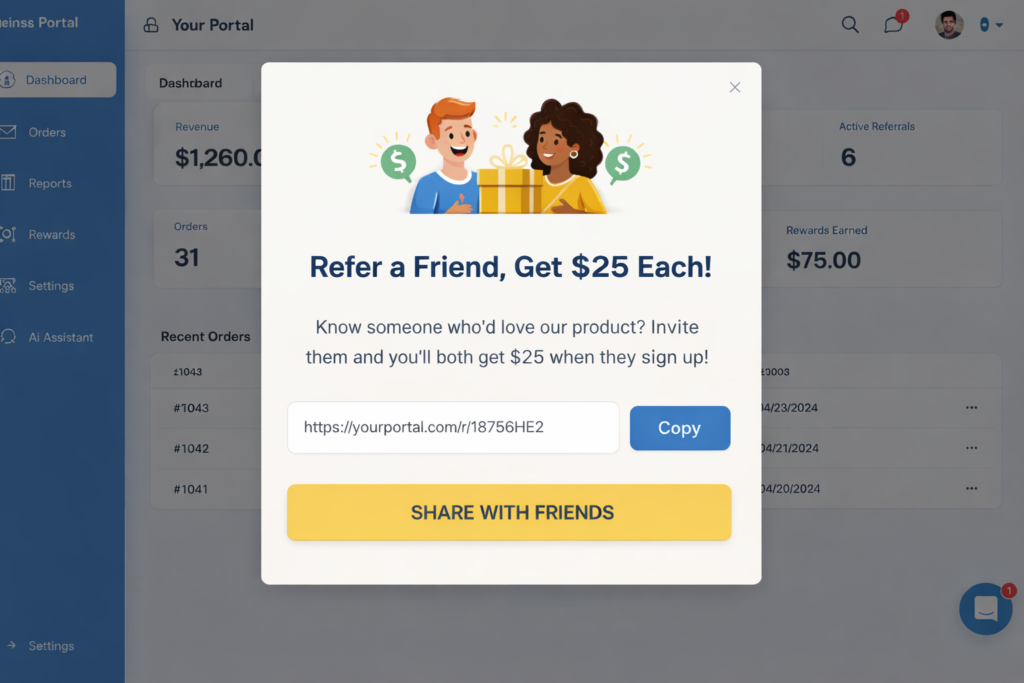
1. Promote referrals inside your customer portal or app
Your customer portal or app is one of the best places to promote referrals because it’s where your most engaged users spend time. A small, persistent prompt in the dashboard or navigation keeps referrals visible without interrupting what the customer came to do.
Example: A pop up in the customer dashboard that says, “Know someone who would love our product? Invite them and you’ll both get $25. It’s always there, but never in the way as the user can close the pop up.
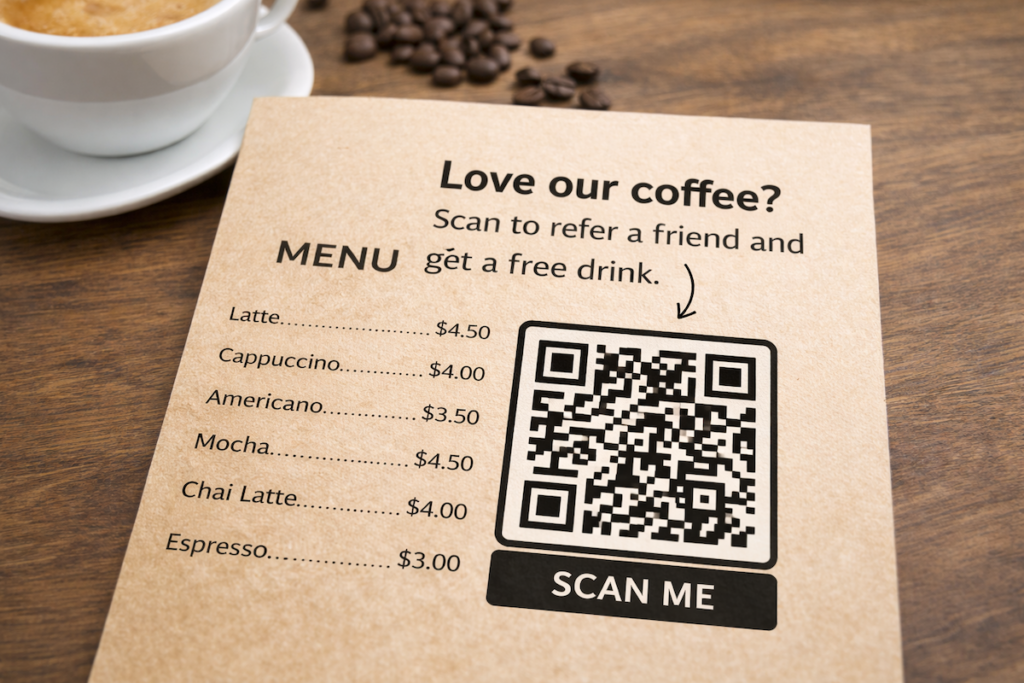
2. Promote your referral program using your physical assets
Use menus, posters, packaging, signage, or printed receipts to remind people they can refer.
Example: A café adds a QR code to its menu with the text: “Love our coffee? Scan to refer a friend and get a free drink.”
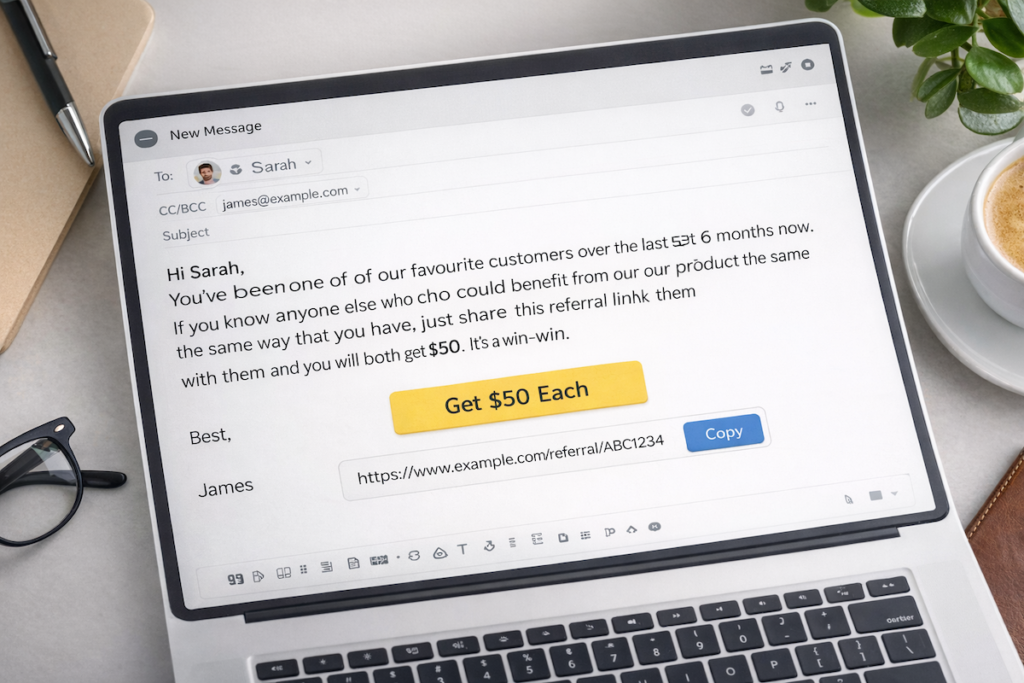
3. Send personalized emails to your customer base
Personal emails feel thoughtful and increase response rates. Use names, purchases, or milestones to make the message feel one-to-one.Example: “Hi Sarah – you’ve been with us for 6 months now. If you know anyone else who could use this, here’s an easy way to refer them.”
4.Your program should be a part of sales and support conversations
One-on-one asks work best after positive moments.
Example: After a customer leaves a 5-star review, a support rep replies: “If you ever know someone who needs help like this, we’d love an introduction.”
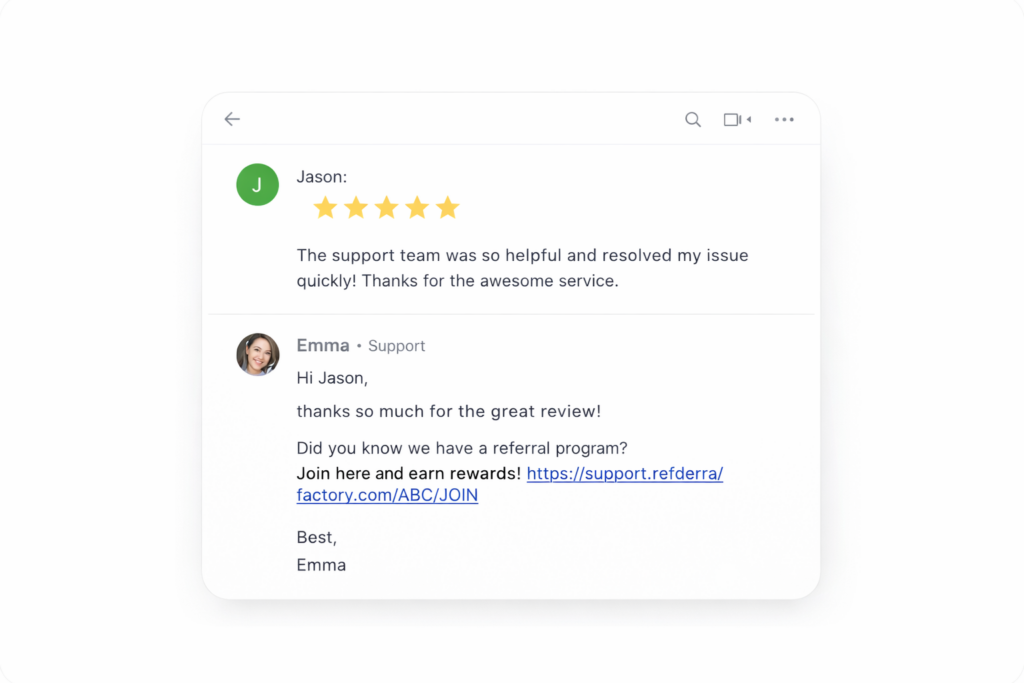
5. Use time-based pop-ups at the right moments
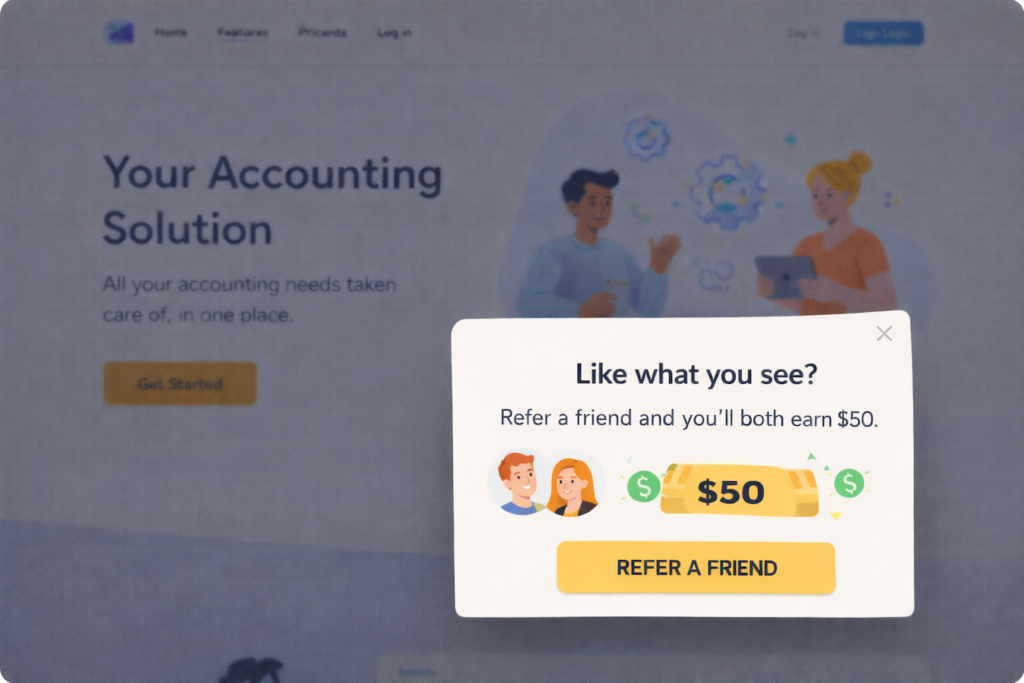
Trigger prompts when interest is high, not randomly.
Example: After someone spends three minutes browsing your site, a small pop-up appears: “Like what you see? Refer a friend and you’ll both earn $50.”
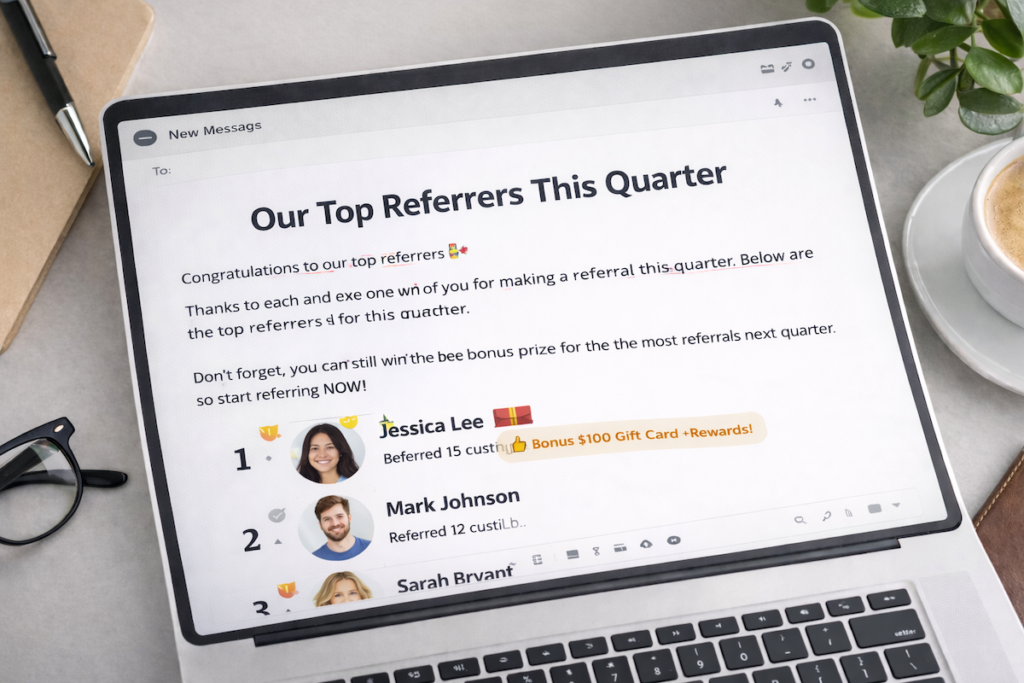
6. Send a quarterly leaderboard email of your top referrers
Showing that others are already referring builds social proof and friendly competition.Example: An email titled “Our Top Referrers This Quarter” highlights the top three referrers and offers a bonus prize for first place.
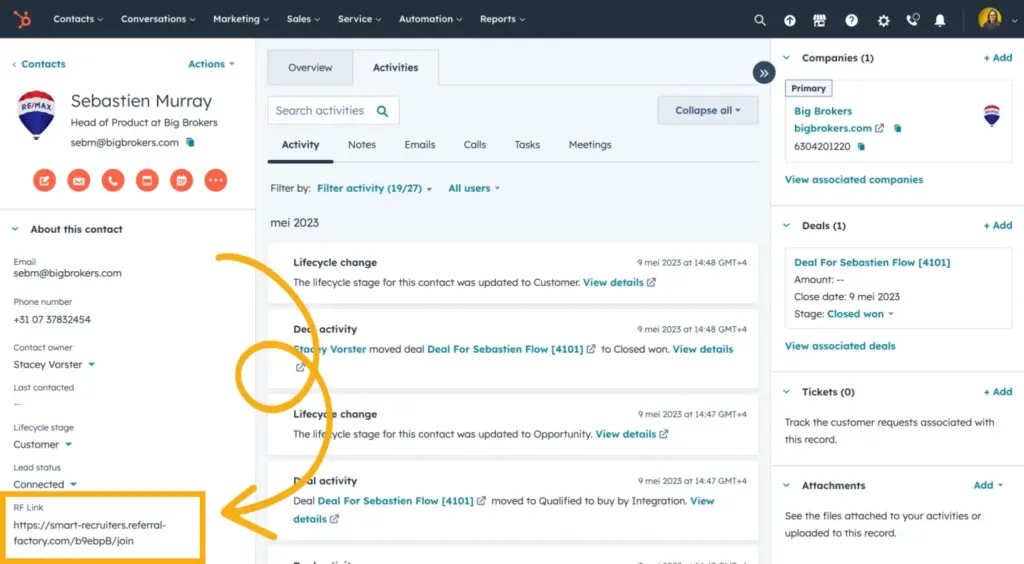
7. Generate referral links for all your CRM contacts
Create unique referral links for your contacts inside your CRM so it’s easy for your team to access so they can ask naturally during conversations or in automated workflows.
Example: A support agent sends a follow-up email after a resolved issue and includes the customer’s unique link.
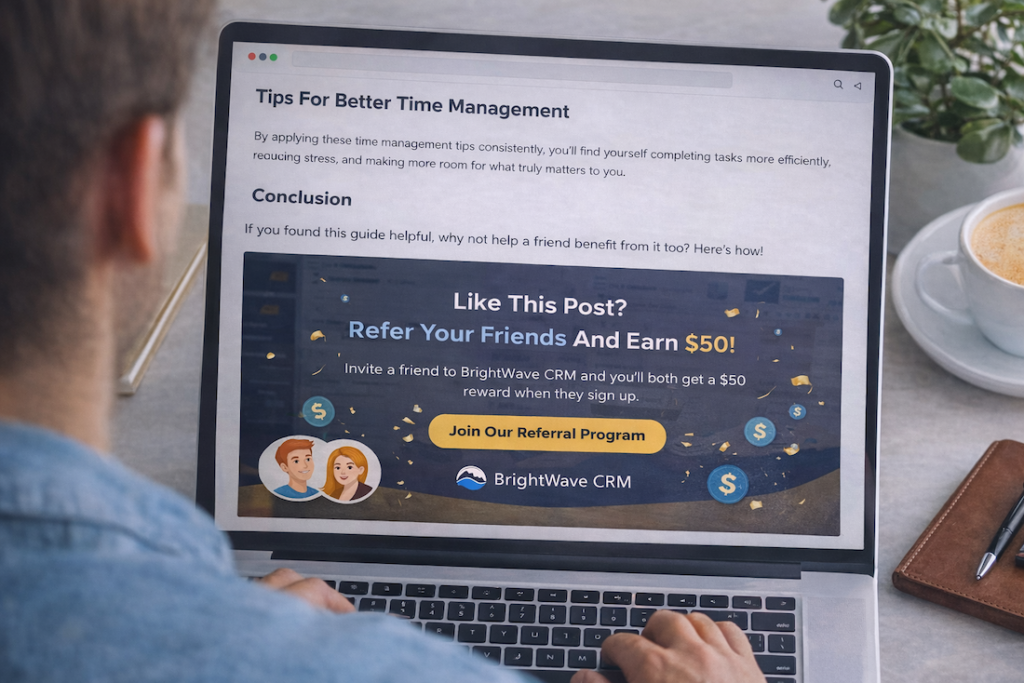
8. Embed your referral program in your blog posts
Readers already interested in your content are more likely to share.
Example: A blog post ends with: “If this helped you, you might know someone else who’d benefit – here’s how to refer them.”
9. Find micro-influencers to join your referral program
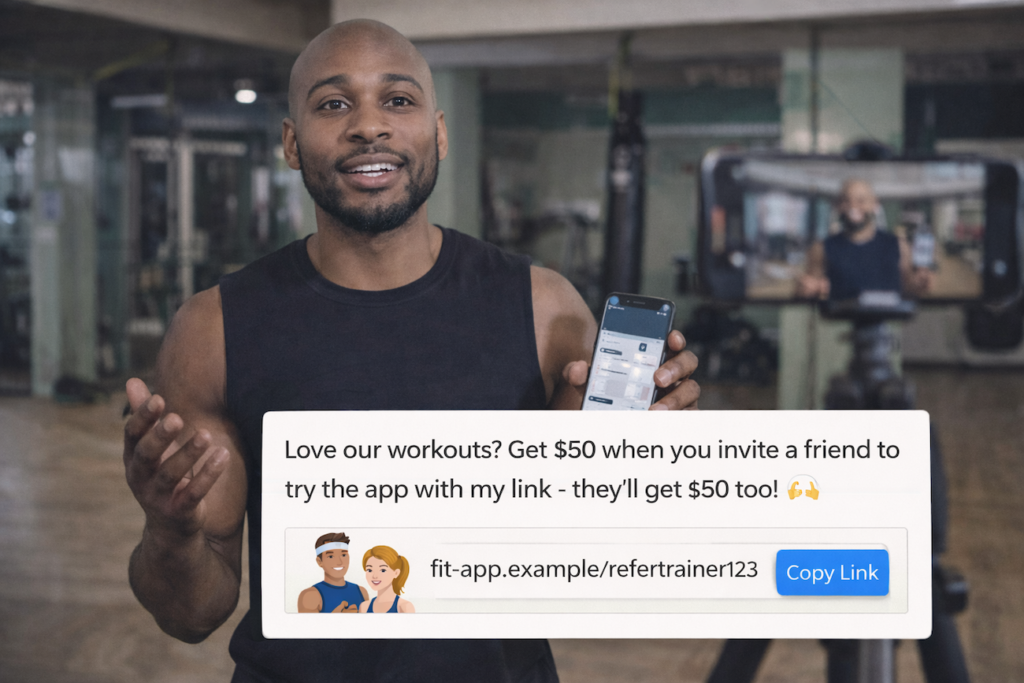
Work with people who already talk about your space and have smaller, engaged audiences.
Example: A fitness app partners with local trainers who refer clients using their own link.
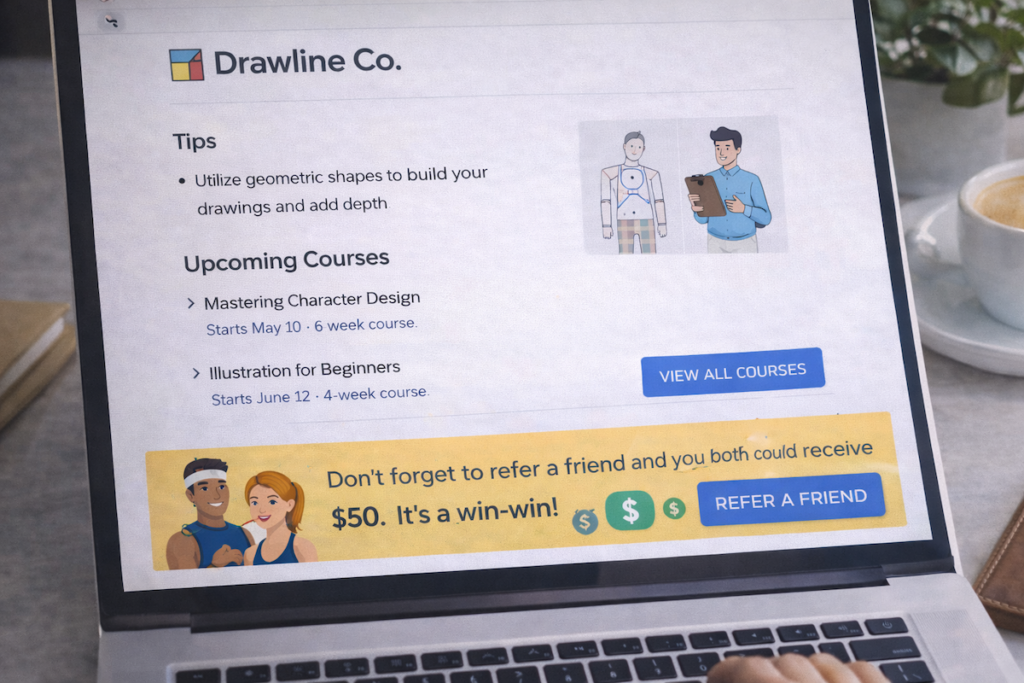
10. Include referral links in your newsletters
Newsletters are an easy way to keep referrals visible without making a hard ask.
Example: A short line at the bottom of the newsletter says: “Know someone who’d find this useful? Here’s how to refer them.”
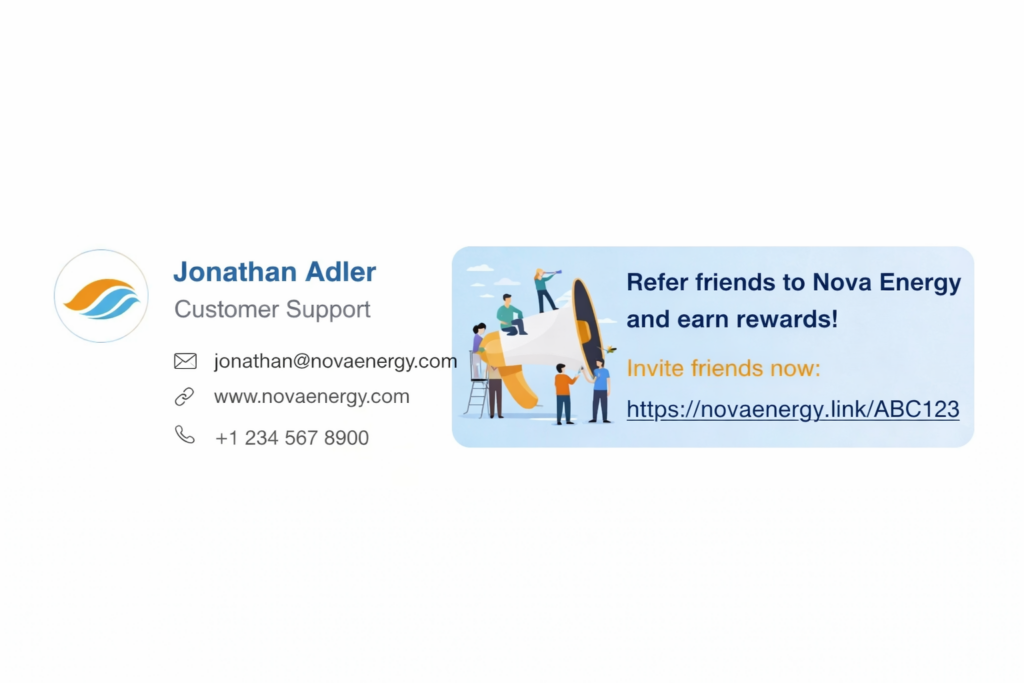
11. Add referral links to employee email signatures
Email signatures quietly keep referrals top of mind.
Example: Every employee signature includes: “Refer a friend and get rewarded – here’s how.”
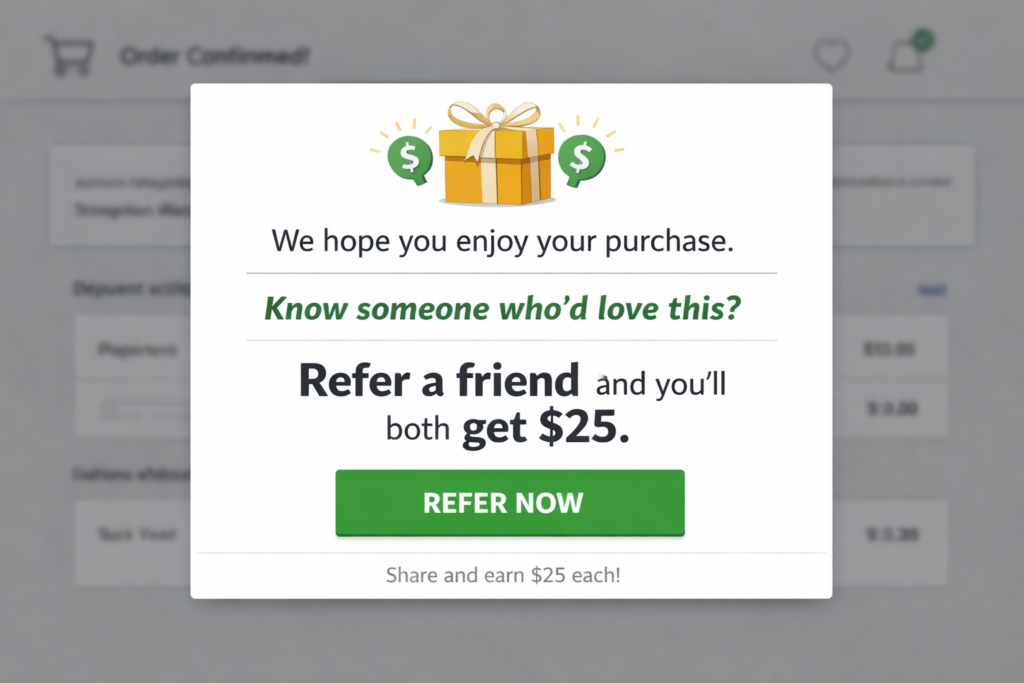
12. Show a referral prompt after a successful purchase
Right after a purchase or signup is when excitement and confidence are highest. A simple post-purchase prompt takes advantage of that moment without feeling pushy.
Example: After checkout, show a message like, “Thanks for your order. Know someone who’d love this too? Refer a friend and you’ll both get a reward.” The timing makes the ask feel natural, not forced.
When To Ask For Referrals (And When Not To)
Timing matters more than wording. You can say the perfect thing at the wrong time and still get nowhere.
The best times to ask
Ask when confidence is naturally high:
- Right after positive feedback
- After a clear result or win
- When a customer renews, upgrades, or reorders
- When someone thanks you or praises your team
These moments signal trust. You’re not interrupting – you’re continuing the conversation.
When to hold back
Avoid asking:
- When problems are unresolved
- Immediately after delivery, before results show up
- When the customer feels rushed or stressed
If someone hesitates, don’t push. A forced referral is rarely a good one.
Why Most Businesses Struggle To Get Referrals
In our experience, referrals usually stall for one of three reasons:
- They’re asking too early – before the customer has seen real value
- They make it feel transactional – rewards first, relationship second
- They aren’t asking at all – they leave the customer to figure it out themselves. No guidance, no reminder, no follow-up
None of these is necessarily a fatal mistake. But together, they destroy the momentum. Great referral strategies remove friction. Excellent ones make referring feel natural and easy.
Referral Best Practices (What Makes Referrals Work)
Before you think about where to place links or what emails to send, it helps to understand the rules referrals follow. These best practices aren’t tactics; they’re the principles that make every effort work better.
1. Earn trust before you ask
Referrals only happen when people feel confident recommending you. Focus on delivering value first, then ask once trust is clearly established.
2. Ask at moments of excellence
Positive feedback, clear wins, renewals, and thank-you messages are the best times to ask. These moments make referrals feel natural instead of forced.
3. Be specific about who you’re best suited for
People refer faster when they know exactly who you help. Clear positioning makes it easy for customers to think of the right person.
4. Make them feel helpful, not transactional
People refer to help friends solve problems, not to act as salespeople. Frame referrals around helping others, not earning rewards.
5. Reduce effort for the referrer
If referring requires explaining, remembering details, or extra steps, it won’t happen. The easier it is, the more referrals you’ll get.
6. Acknowledge every referral
Thanking people for referrals, even when they don’t convert. This reinforces the behavior and builds long-term momentum.
7. Keep asking!
The more people who know about your referral program, the more referrals you’ll get. Gentle reminders keep you top of mind without being pushy.
8. Choose the right software
The best referral software will come with built in features to make it easy for you to apply these best practices in real life.
How To Ask For Referrals Without Feeling Awkward
Most referral requests fail because they sound like this: “Do you know anyone who might need us?”
That question puts people on the spot and gives them nothing to work with. A better approach is to anchor the ask in their experience.
For example:
- “You mentioned this saved you a lot of time – who else do you know dealing with the same thing?”
- “We usually help teams like yours. If someone ever comes to mind, would you feel comfortable introducing us?”
You’re not demanding names. You’re opening the door.
Who you should ask for referrals
The strongest referrers usually:
- Have experienced a clear outcome
- Understand what you do and who you’re best for
- Interact with people who might actually need you
Pay attention to customers who already talk positively about you. Those conversations are already happening – you’re just giving them direction.
Final thought
Referrals don’t come from clever tactics. They come from confidence. When people trust you, and you make it easy for them, referrals follow naturally.
If you take one thing away from this guide, let it be this: Earn trust first. Then make it very easy for your team to ask for referrals and for your customers to make them.
That’s how real referral growth happens.
Need some guidance on how to start building your referral program? Give this article a read How To Create A Referral Program.
So… what are you waiting for?
How do I ask customers for referrals without being pushy?
Ask after something has gone well, like when a customer thanks you or gives positive feedback. Keep it casual and let them know it’s okay if no one comes to mind.
When is the best time to ask for a referral?
Right after a positive moment. That’s when people feel good about your business and are more open to recommending you.
Why don’t happy customers refer my business?
Most people don’t think about referrals unless they’re reminded. Others aren’t sure who to refer or how to explain what you do, so they end up doing nothing.
Should I offer rewards for referrals?
Absolutely!
What’s the easiest way to get referrals regularly?
Build it into things you already do, like follow-up emails, thank-you messages, or customer conversations. Small reminders work better than big campaigns.
Is it better to ask for referrals by email or in person?
In-person or one-on-one messages work best because they feel more natural. Email can still work if it’s personal and sent at the right time.
Do referral programs work for small businesses?
Yes. Small businesses often do very well with referrals because customers trust them and have real relationships with the people they recommend.
Referral link generator (free)
We take your website, send it to Referral Factory, and provision a real referral program for your brand. The link you get is a live referral URL your customers can share, backed by tracking and rewards in the app - not a static "generator" preview. This is the fastest way to see what a real referral program would look like for your brand! Try it below...